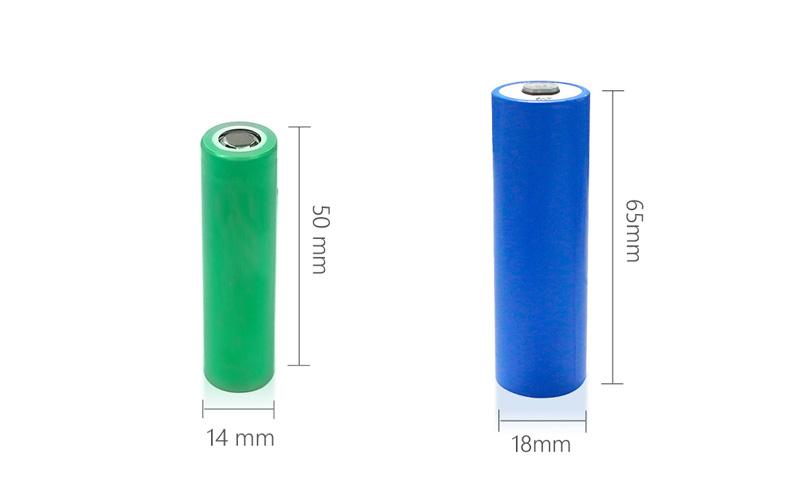
Lithium-ion batteries are the powerhouse behind today's gadgets, ranging from small flashlights to large electric vehicles. Among the most common cylindrical formats are the 14500 and 18650 batteries. While they share a nominal voltage of 3.7 volts and similar lithium-ion chemistry, they are worlds apart when it comes to physical size, energy capacity, runtime, and the jobs they are best suited for.
Knowing the distinctions between the 14500 and 18650 is key to picking the right power source for your device. The correct choice can boost performance, maximize runtime, and guarantee long-term safety and dependability.
The numbers in a lithium battery's name are a direct code for its physical size. The first two digits give the diameter in millimeters, the next two indicate the length, and the final zero denotes its cylindrical shape.
- 14500 battery: 14mm in diameter and 50mm in length.
- 18650 battery: 18mm in diameter and 65mm in length.
This size variation is the fundamental reason for the differences in their capacity, energy density, and overall performance.
The 14500 battery is a compact, rechargeable lithium-ion cell that closely matches the dimensions of a standard AA battery. However, don't let the size fool you. Unlike a disposable AA alkaline battery, which provides 1.5 volts, the 14500 delivers a robust 3.7 volts, offering a significant performance boost in devices designed to handle it.
Key Specifications of the 14500 Battery
- Diameter: 14mm
- Length: 50mm
- Nominal Voltage: 3.7V
- Capacity Range: 500mAh to 1200mAh
- Chemistry: Rechargeable Lithium-ion
Best Applications for the 14500 Battery
Thanks to its small footprint and light weight, the 14500 is the go-to choice for portable electronics that need a moderate amount of power.
- Flashlights and LED torches
- Remote controls
- Digital cameras
- Wireless accessories
- Other portable electronic devices
In compatible devices, they also serve as a reusable, eco-conscious alternative to single-use AA batteries.
The 18650 battery is a larger, more powerful lithium-ion cell engineered for high-capacity and high-performance scenarios. Its bigger chassis allows it to pack significantly more energy, translating to much longer runtimes.
Key Specifications of the 18650 Battery
- Diameter: 18mm
- Length: 65mm
- Nominal Voltage: 3.7V
- Capacity Range: 1800mAh to 3500mAh
- Chemistry: High energy density Lithium-ion
Common Applications for the 18650 Battery
- Laptop battery packs
- Power banks
- Electric vehicles
- Power tools
- High-performance flashlights
- Solar energy storage systems
The 18650's high capacity and power output make it a staple for demanding electronic applications.
- Battery Size Comparison: The 14500 is the clear winner for compact, lightweight electronics. The 18650 is physically larger, a trade-off made for the sake of high capacity.
- Capacity and Runtime Comparison: The 18650's capacity can be three to seven times higher than that of a 14500. This directly results in a much longer runtime between charges.
- Energy Density and Performance: With more internal volume, the 18650 achieves a higher energy density. It can store more energy and deliver it consistently over longer periods. While the 14500 has lower energy density, it remains highly efficient for its intended portable use.
- Power Output and Discharge Rate: The 18650 is built to handle higher discharge rates, making it perfect for high-drain devices like power tools and e-bikes. The 14500 is better suited for devices with moderate power demands.
| Feature | 14500 Battery | 18650 Battery |
| Diameter | 14mm | 18mm |
| Length | 50mm | 65mm |
| Nominal Voltage | 3.7V | 3.7V |
| Capacity | 500mAh – 1200mAh | 1800mAh – 3500mAh |
| Energy Density | Lower | Higher |
| Best Use | Portable electronics | High-drain devices |
Both 14500 and 18650 batteries typically have a lifespan of 300 to 1000 charge cycles, depending on their quality and how they are used. Following proper charging practices is the most effective way to extend their useful life.
Key factors that affect battery longevity include:
- Charging habits (using the correct charger and avoiding overcharging)
- Operating temperature
- Depth of discharge (how much of the capacity is used before recharging)
- Storage conditions
Higher-capacity 18650 batteries may often have a longer service life in practice, as they undergo less stress per charge cycle in moderate-use applications.
Handling lithium-ion batteries correctly is critical for both safety and longevity.
- Always use a charger specifically designed for lithium-ion batteries.
- Protect batteries from extreme temperatures.
- Immediately stop using any battery that appears damaged.
- Store unused batteries in a dry, cool place.
- Prevent short circuits by keeping them away from loose coins, keys, or other metal objects.
14500 Battery Pros
- Compact and lightweight design.
- Fits in devices designed for AA batteries (with voltage considerations).
- Highly portable and convenient.
- Rechargeable, offering an eco-friendly option.
14500 Battery Cons
- Lower energy capacity.
- Shorter runtime.
- Limited power output for demanding devices.
18650 Battery Pros
- Very high energy capacity.
- Long runtime between charges.
- Strong power output for high-drain devices.
- Ideal for demanding, high-performance applications.
18650 Battery Cons
- Larger physical size.
- Heavier weight.
- Not suitable for compact or slim devices.
- Choose a 14500 battery if your device is a compact, portable gadget that requires moderate power and a small, lightweight power source.
- Choose an 18650 battery when your device demands high capacity, long runtime, and robust performance—essentially, for any high-drain application.
The core difference between 14500 and 18650 batteries boils down to a trade-off between size and power. The 14500 excels in portability and compatibility with smaller electronics, while the 18650 is the undisputed champion of capacity and performance for high-demand uses.
Selecting the appropriate battery not only enhances your device's efficiency and runtime but also ensures reliable operation and long-term safety. Understanding these key differences allows for more informed decisions, whether for everyday consumer gadgets or professional-grade equipment.
Next:Samsung SDI Vows to Protect Its Prismatic Battery Patent at InterBattery 2026
Previous:CATL Accelerates Sulfide Solid-State Battery Development Toward 2027 Pilot