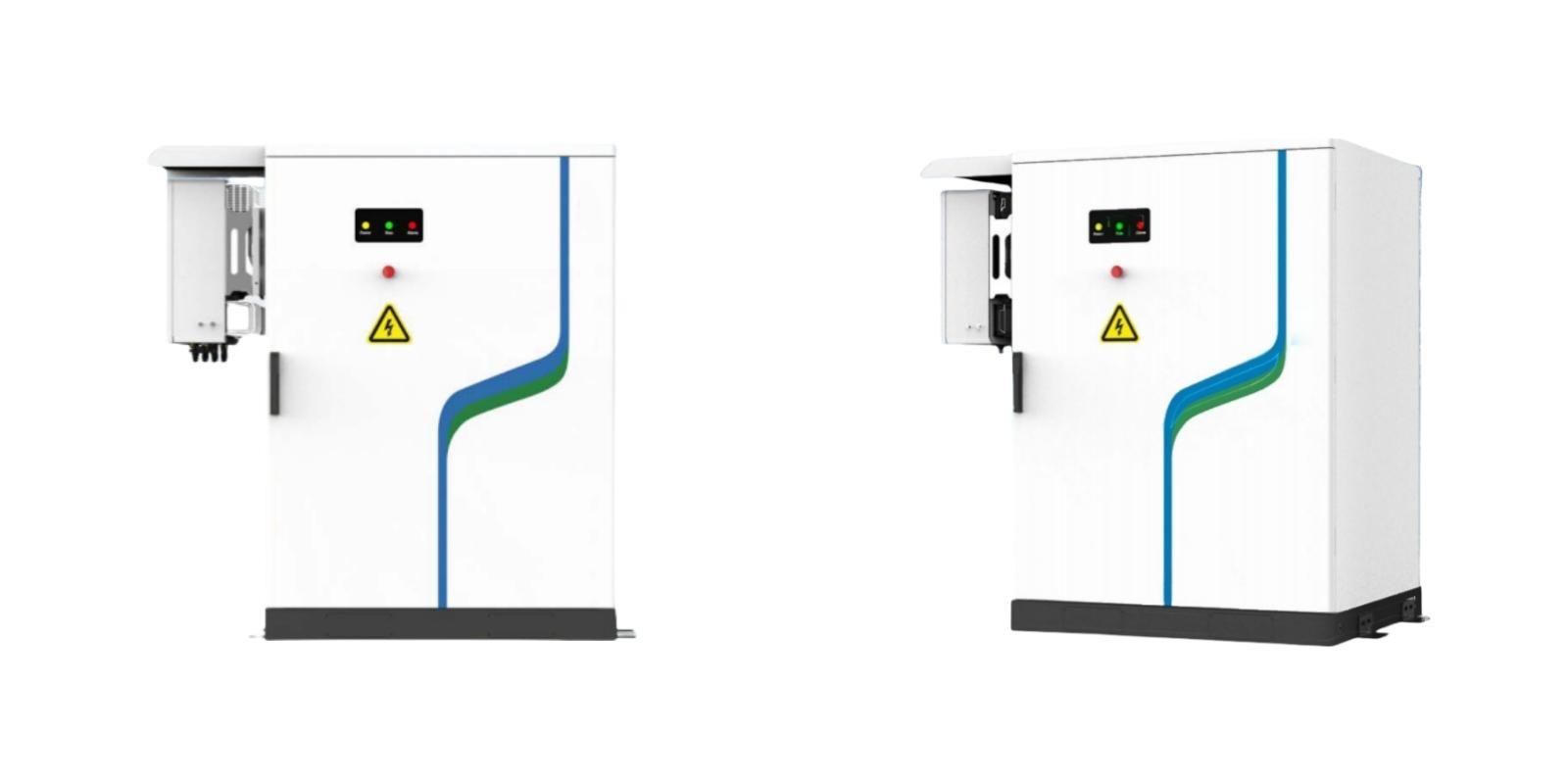
Within every energy storage product, the battery assembly forms the central core. It not only represents the largest portion of total system cost but is also the sole element capable of absorbing and retaining electrical energy.
A simple analogy helps illustrate its role: batteries function much like muscle tissue in the human body. They establish the limits for total energy that can be stored, define how long power can be discharged continuously, and determine the overall stamina of the storage system as a whole.
Commercial battery storage hardware is built according to a hierarchical framework composed of four basic levels:
- Battery Cell: The most elementary unit that produces and stores electrochemical energy.
- Battery Module: Multiple cells connected in series and parallel to increase voltage and overall energy capacity.
- Battery Pack: Modules assembled with metal frames, wiring harnesses, protective circuits, and integrated monitoring hardware. In large cabinet-style or containerized BESS installations for industrial sites, dozens or even hundreds of standardized packs are commonly stacked to achieve the required power and capacity ratings.
Each finished battery pack incorporates a sophisticated built-in BMS board. This system continuously monitors critical cell parameters in real time, including:
- Voltage of every individual cell
- Charging and discharging current
- Internal temperature
- State of Charge (SOC)
- State of Health (SOH)
- Cell voltage balancing status
The primary protective functions of the BMS guard against overcharging, deep over-discharging, excessive heat accumulation, and uneven cell voltage distribution. These are all common conditions that can shorten battery life or lead to dangerous thermal runaway events.
In the end, the safety, longevity, and dependability of the complete battery system are directly shaped by the quality of the raw cells, the consistency of their performance, and the intelligence embedded in the BMS programming.
Batteries store energy in the form of direct current (DC), whereas factories, commercial buildings, solar installations, and utility grids operate on alternating current (AC). This basic electrical difference makes the PCS an indispensable component within any storage architecture.
Unlike simple one-way solar inverters, modern PCS equipment supports two-way energy conversion to accommodate both charging and discharging cycles. During charging, the PCS converts AC power drawn from the grid or solar panels into DC power, which is then fed into the battery packs for storage. During discharging, the process is reversed: stored DC power is converted back into usable AC electricity and delivered either to on-site equipment or exported to the utility grid.
Without functioning PCS equipment, the energy held in the batteries would remain inaccessible for standard commercial loads and grid connections.
High-quality PCS hardware provides clear operational benefits, including:
- High overall energy conversion efficiency
- Extremely fast response during load shifts
- Stable and consistent AC voltage output
- Minimal energy loss throughout conversion cycles
- Smooth and automatic switching between charge and discharge modes
Low-cost, poorly performing PCS equipment leads to continuous energy waste and can undermine the stability of the entire storage system’s power output during daily operation.
While hardware provides the physical capability to store power, the EMS determines whether the storage installation operates efficiently and delivers consistent financial savings.
Industry professionals often describe the EMS as the central brain of a BESS. It gathers operational data continuously in real time and automatically adjusts charging and discharging schedules to achieve economic targets.
Rather than simply following fixed peak and off-peak electricity price schedules, the EMS platform constantly cross-references multiple live data streams, such as:
- Local utility tariff rates
- Real-time power demand from on-site commercial loads
- Daily solar PV generation output
- Current battery state of charge
- Local weather forecasts that affect solar production
- Operating temperatures of internal equipment
- Live grid conditions
Using built-in optimization algorithms, the EMS determines and implements the most cost-effective operating strategy for the storage system around the clock.
A properly programmed EMS unlocks a range of financial benefits for commercial operators:
- Fully charging battery packs during low-cost off-peak tariff periods
- Discharging stored energy during expensive peak demand hours
- Reducing costly utility demand charges each billing cycle
- Capturing surplus power generated by on-site solar panels
- Increasing the self-consumption ratio of renewable energy
- Lowering overall monthly energy operating expenses
Beyond financial optimization, the EMS also exchanges signals with the BMS, PCS, thermal management system, and fire safety equipment. When abnormal operating conditions are detected, it initiates immediate corrective actions, thereby improving both site profitability and operational safety standards.
Power distribution hardware is frequently overlooked by newcomers to the industry, yet it ranks among the most critical engineering components in any energy storage system. This subsystem manages all power flow paths and shields every connected piece of equipment from electrical faults.
A complete power distribution cabinet contains the following essential components:
- Circuit breakers
- Electrical contactors
- Copper busbars
- Surge suppression devices
- Lightning protection modules
- Current transformers
- Voltage monitoring sensors
- Data collection modules
Together, these components ensure safe and low-loss power transmission throughout every section of the storage system.
Professionally engineered distribution systems offer multiple layers of safety coverage, including:
- Overcurrent cut-off protection
- Short-circuit fault isolation
- Ground leakage fault prevention
- Lightning and surge voltage suppression
- Automatic circuit disconnection when faults occur
Field engineers consistently report that most unplanned storage system downtime is caused by poorly designed distribution wiring and protection hardware rather than defective battery cells.
Battery performance depends heavily on consistent operating temperatures. Extreme heat, freezing ambient conditions, or uneven temperature distribution across cell packs can lower energy efficiency and accelerate permanent cell degradation. The thermal management system maintains a stable and safe temperature range inside the battery cabinet throughout the year.
A well-designed thermal system performs several critical tasks:
- Regulating uniform operating temperatures across all battery packs
- Eliminating concentrated hot spots inside cabinet enclosures
- Reducing temperature differences between individual battery cells
- Maintaining consistent charge and discharge efficiency
- Lowering the risk of thermal runaway events
Stable and controlled operating temperatures can add several years to the usable service life of lithium battery packs.
Commercial energy storage installations typically rely on one of two cooling approaches, each with distinct advantages and disadvantages.
Air cooling offers lower upfront equipment costs and simpler routine maintenance, making it well suited for small-scale, low-power storage systems. However, it provides less uniform temperature control, has limited cooling capacity, and is not ideal for continuous high-power discharge applications.
Liquid cooling delivers strong heat dissipation, balanced cell temperature control, quieter operation, support for higher energy density designs, and stable output during long-duration, high-load operation. For modern commercial and utility-grade containerized BESS projects, liquid cooling has become the standard cooling choice.
Because energy storage cabinets contain large volumes of concentrated electrical energy, comprehensive fire safety hardware is an absolute design requirement. Modern fire protection systems focus on early hazard detection and risk prevention rather than extinguishing large fires after they have already ignited.
Fire safety equipment performs non-stop scanning for multiple risk indicators, including:
- Smoke particle concentration inside cabinet enclosures
- Abnormal internal temperature spikes
- Combustible gas emissions from damaged cells
- Irregular battery operating signals
When any abnormal reading is detected, the system automatically initiates a full response sequence:
- Activating local and remote site safety alarms
- Sending alert signals to the central EMS control platform
- Disconnecting all battery charge and discharge circuits
- Deploying built-in fire suppression equipment
Most commercial BESS installations use residue-free suppression technology to avoid damaging sensitive power electronics. Common options include:
- Aerosol fire suppression units
- Novec clean fire suppression fluid
- FK-5-1-12 environmentally friendly suppression agents
- HFC-227ea (where permitted by regional regulations)
These systems extinguish battery compartment fires rapidly without leaving corrosive residue on wiring, circuit boards, or battery cells. Safety compliance always takes precedence over operational revenue, making fire protection one of the most vital subsystems in any BESS project.
The seventh essential component is the outer cabinet or container shell of the storage system. Although many buyers regard enclosures as purely cosmetic framing, industrial-grade structural housing serves far more critical functional purposes.
Well-engineered cabinet and container structures provide:
- Rigid mechanical support for all internal hardware
- Full waterproof sealing for outdoor installation
- Resistance to dust and particle ingress
- Anti-corrosion coatings for coastal or high-humidity locations
- Integrated electrical insulation layers
- Organized and dedicated cable routing channels
- Pre-designed ventilation paths for thermal cooling
- Safe and accessible openings for routine equipment maintenance
Most commercial energy storage systems operate outdoors under harsh and variable conditions, including extreme heat, freezing winters, heavy rainfall, and direct sunlight. A robust sealed enclosure protects all internal power hardware, supports efficient cooling cycles, and simplifies long-term maintenance for on-site technicians.
An industrial battery energy storage system is far more than a collection of lithium battery cells. It is an integrated engineering solution built from seven mutually dependent subsystems:
- The Battery System stores usable electrical energy.
- The BMS safeguards cell health and prevents internal faults.
- The PCS enables bidirectional conversion between DC battery power and AC grid power.
- The EMS optimizes charge cycles to reduce energy costs and increase revenue.
- The Power Distribution System delivers steady, fault-protected power flow.
- The Thermal Management System stabilizes temperatures to extend battery lifespan.
- The Fire Protection and Enclosure Hardware ensure safe long-term outdoor operation.
Each subsystem depends on the others to perform as intended. A deficiency in any single component will reduce overall energy efficiency, shorten battery service life, create safety hazards, or eliminate the project’s planned financial returns.
Global adoption of commercial and industrial energy storage continues to accelerate. For project investors, design engineers, storage developers, and facility operators, a clear understanding of full BESS architecture is essential.
Batteries remain the core energy-carrying component, but consistent high-performance storage operation depends on coordinated collaboration among all seven integrated subsystems. Premium battery cells, intelligent energy management software, efficient bidirectional power conversion, robust electrical fault protection, precise thermal regulation, complete fire safety frameworks, and durable structural cabinet engineering together create storage systems that are safe, energy-efficient, and financially viable long-term assets.
For newcomers learning the energy storage industry, mastering the function and interaction of these seven core components enables accurate assessment of supplier quality, comparison of competing technical solutions, optimization of project performance, and data-backed purchasing and investment decisions.
Welcome to contact us:
Inquire more product details from the: Lithium Ion Battery Suppliers
WhatsApp/Wechat/Mobile: +86 13326321310
Email: info@battery-energy-storage-system.com
Website: www.battery-energy-storage-system.com
Ready to power your energy systems with the best in the industry?
Contact us today to get the latest pricing and discuss your needs with our team!
Next:Winston 3.2V 700Ah LiFePO4 Batteries Shipped to Trinidad and Tobago
Previous:25.6V 36Ah LiFePO4 Battery Packs Shipped to the UK