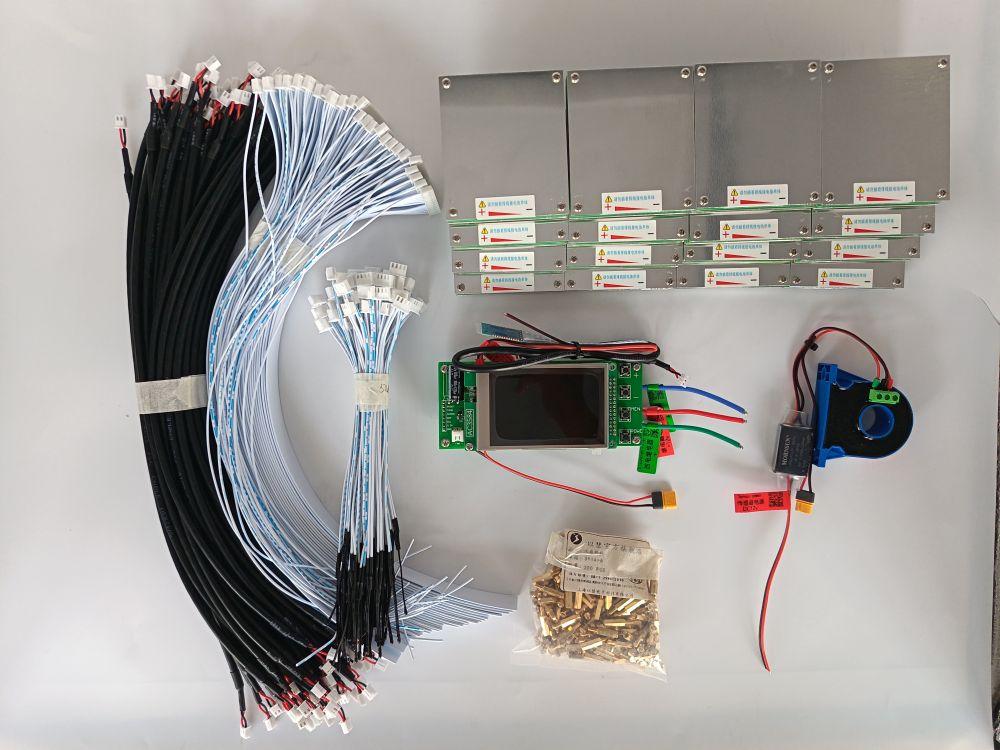
With the rapid rise of electric vehicles and energy storage systems, the Battery Management System (BMS) has emerged as a cornerstone technology in modern battery packs. Often called the “brain” of the battery, a BMS goes far beyond simple monitoring—it safeguards operations, boosts performance, and prolongs the life of lithium-ion systems.
Whether in electric cars, renewable energy storage, or industrial battery applications, the quality of a BMS design has a direct impact on efficiency, reliability, and safety. This article offers a deep dive into the essential functions, hardware building blocks, and prevalent architectures of a BMS, providing engineers and newcomers alike with a solid grasp of what makes these systems tick.
A Battery Management System (BMS) is an electronic system designed to oversee, regulate, and protect rechargeable battery packs. It continuously gathers real-time data from individual cells, evaluates performance indicators, and ensures the battery stays within safe operating boundaries.
Today, BMS technology is found across a wide spectrum of applications:
- Electric vehicles (EVs, HEVs, PHEVs)
- Renewable energy storage systems
- Industrial energy storage setups
- Power tools and micromobility devices
- UPS and backup power systems
Without a properly engineered BMS, lithium batteries are vulnerable to issues like overcharging, overheating, capacity mismatch, or even thermal runaway—each posing serious safety threats.
A robust BMS performs several vital tasks to maintain both safety and performance. These can be grouped into four primary functions.
1. Real-Time Monitoring: Keeping a Constant Watch
At its core, a BMS is a monitoring system. Much like the nervous system in a living organism, it continuously tracks critical parameters from every cell in the pack.
Key data points include:
- Individual cell voltages
- Cell temperatures
- Pack current
- Total battery voltage
Using this data, the BMS applies advanced algorithms—such as coulomb counting, Kalman filtering, or model-based estimation—to compute essential battery metrics:
- State of Charge (SOC): how much energy remains
- State of Health (SOH): how much the battery has aged
- State of Power (SOP): the maximum power it can deliver
These figures are crucial for vehicle control units and broader energy management strategies.
2. Safety Protection: Guarding Against Catastrophe
Safety is paramount in battery system design. Lithium cells must operate within strict electrical and thermal limits to avoid hazardous failures.
A BMS actively identifies abnormal conditions such as:
- Overcharging
- Deep discharge
- Overcurrent events
- Temperature extremes
- Short circuits
To reduce risk, BMS designs typically combine hardware safeguards with software-based controls.
Hardware protections include:
- Fuses
- Contactors or relays
- Circuit breakers
On the software side, the BMS can limit charge or discharge current and, in critical scenarios, isolate the battery pack in milliseconds—helping to prevent thermal runaway and protect both the system and its surroundings.
3. Cell Balancing: Overcoming the Barrel Effect
Battery packs are made up of many cells wired in series and parallel. Due to manufacturing variations and differing operating conditions, cells rarely degrade uniformly.
Over time, some cells may hold more or less charge than others. This imbalance reduces the usable energy of the whole pack—a phenomenon known as the “barrel effect,” where the weakest cell dictates overall performance.
To counteract this, BMS systems incorporate cell balancing techniques. There are two main approaches:
- Passive Balancing: Excess energy from higher-voltage cells is dissipated as heat through resistors. It’s simple and low-cost, but energy efficiency takes a hit.
- Active Balancing: Energy is shuffled from stronger cells to weaker ones using capacitors, inductors, or DC-DC converters. This method is far more efficient, though it adds complexity and cost.
Balancing not only extends battery life but also ensures consistent performance across the entire pack.
4. Communication and Coordination
Modern battery systems don’t operate in isolation—they’re deeply integrated into larger electrical networks. A BMS must therefore communicate effectively with other controllers and external systems.
Common communication protocols include:
- CAN bus
- CAN FD
- LIN
Through these links, the BMS exchanges data with components like the Vehicle Control Unit (VCU), onboard chargers, and energy management systems.
In more advanced setups, BMS platforms support remote connectivity via 4G, 5G, Bluetooth, or cloud services, enabling real-time diagnostics and Over-the-Air (OTA) firmware updates.
A typical BMS consists of several interconnected hardware modules, each playing a distinct role in ensuring safe and reliable battery operation.
1. Data Acquisition Module (AFE)
The Analog Front End (AFE) serves as the BMS’s sensory layer. Its job is to accurately capture:
- Cell voltages
- Temperature readings from NTC thermistors
- Pack current via shunt resistors or Hall sensors
Given the electrically noisy environment of a battery pack, AFE chips must offer high precision and robust noise immunity.
2. Main Control Unit (MCU)
The Microcontroller Unit (MCU) is the computational heart of the BMS. It typically runs on high-performance processors like ARM Cortex-R series or DSPs.
The MCU handles:
- Data processing
- SOC and SOH estimation
- Fault diagnosis
- Execution of control logic
Many modern BMS platforms rely on real-time operating systems such as AUTOSAR or FreeRTOS to manage complex tasks.
3. Cell Balancing Module
This module ensures voltage uniformity across cells. Depending on the design, it may implement:
- Passive balancing resistors
- Active energy transfer circuits
- Capacitor- or inductor-based balancing
- DC-DC converter systems
Its role is critical in maximizing the battery’s usable lifespan.
4. Communication Module
The communication module manages data exchange both internally and externally.
- Internal communication links the main controller with distributed monitoring units, often via CAN or daisy-chain interfaces.
- External communication connects the BMS to other vehicle or system controllers and, in some cases, remote networks.
5. High-Voltage Management Module
This module acts as the BMS’s power interface. It controls:
- Main positive and negative contactors
- Pre-charge circuits
- High-voltage relays
It also performs essential safety checks, including:
- Insulation resistance monitoring
- High Voltage Interlock Loop (HVIL) supervision
Together, these functions ensure that high-voltage systems operate safely and reliably.
Depending on the application, BMS designs generally fall into one of two architectural categories.
Centralized BMS
In a centralized design, all monitoring, control, and protection functions are housed in a single unit. This controller connects directly to each cell via wiring harnesses.
Advantages:
- Lower hardware cost
- Simpler design
- Compact form factor
Disadvantages:
- Single point of failure reduces reliability
- Complex and bulky wiring
- Limited scalability for larger packs
- Higher electromagnetic interference risk
Typical applications include:
- Power tools
- E-bikes and scooters
- Low-speed EVs
- Small battery packs (under 20 series cells)
Distributed BMS
A distributed BMS splits responsibilities between a master controller and multiple slave modules.
- BMU (Battery Management Unit): the central brain
- CSC (Cell Supervision Circuit): module-level monitors
Each CSC handles local data collection and communicates with the BMU via a daisy-chain or CAN network.
Advantages:
- Higher reliability through modularity
- Excellent scalability
- Simplified wiring
- Better electromagnetic compatibility
Disadvantages:
- Higher hardware cost
- More complex communication management
This architecture is standard in:
- Electric passenger vehicles
- Hybrid vehicles
- Large commercial energy storage systems
- Grid-scale battery installations
Selecting the optimal BMS architecture depends on the application’s specific demands.
For example:
- 48V mild hybrids or e-bikes often go with centralized BMS for cost efficiency.
- Long-range EVs and megawatt-scale storage systems typically adopt distributed BMS for superior safety, scalability, and ease of maintenance.
There’s no one-size-fits-all solution—the best design is the one that aligns with both technical and economic requirements.
As battery technology marches forward, BMS designs are evolving in step. Several trends are shaping the next generation of battery management.
Wireless BMS (wBMS)
By replacing traditional wiring with wireless communication, wBMS reduces weight, simplifies pack design, and frees up valuable space.
AI-Driven Battery Management
Next-generation platforms are integrating AI and machine learning to enhance diagnostics and predict battery lifespan more accurately. These systems can process vast datasets to deliver sharper SOH estimates and enable predictive maintenance.
Integration with Domain Controllers
Future BMS designs may converge with other vehicle control units, such as Power Distribution Units (PDU) or Vehicle Control Units (VCU), supporting the shift toward domain-based electronic architectures in next-gen EVs.
The Battery Management System is the central intelligence behind every modern battery pack. By monitoring cell conditions, guarding against faults, balancing energy, and coordinating communication, it ensures batteries operate safely and efficiently.
While centralized BMS architectures remain popular in smaller applications for their simplicity and cost benefits, distributed systems have become the go-to choice for electric vehicles and large-scale storage, thanks to their scalability and reliability.
As energy storage continues to advance, BMS technology will keep evolving—toward wireless connectivity, AI-powered analytics, and deeper integration with broader vehicle systems—cementing its role as a cornerstone of the electrification and renewable energy revolution.
Next:EVE Energy Unveils Two New Solid State Battery Models
Previous:Donut Lab Solid State Battery Pack Charges 10–50% in 5 Minutes in Motorcycle Test