China’s electric vehicle market is already powered mainly by lithium iron phosphate (LFP). In the first half of 2026, according to China EV DataTracker, 335.6 GWh of power batteries were installed nationwide, and LFP accounted for 272.0 GWh—81.0% of the total.
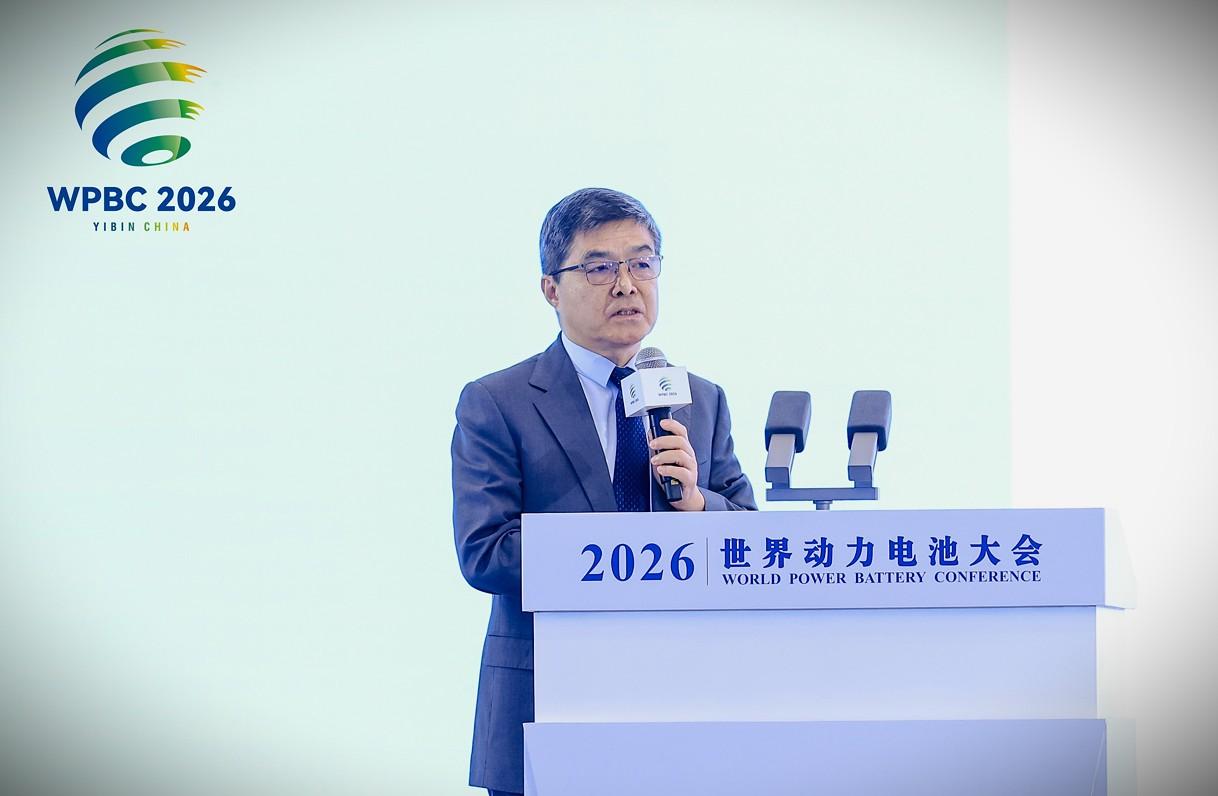
That dominance has not stopped work on improving the chemistry. At the 2026 World Power Battery Conference in Yibin, Sichuan, Ouyang Minggao—an academician, Tsinghua University professor, and leading figure in China’s national EV research programs—disclosed a fourth-generation high-compaction LFP cell benchmark above 200 Wh/kg. The result indicates that LFP can continue gaining energy density without moving to nickel-rich cathode materials.
The same conference also brought a manufacturing disclosure: automated prismatic-cell winding reached 7.5 cells per minute, against a cited baseline of 4.4 cells per minute. The two announcements cover different parts of the battery value chain, but both point to sustained efforts in China to raise cell performance and production efficiency.
Recent LFP progress has largely come from better cell and pack integration, including cell-to-pack designs that cut inactive material. Further gains in range and weight reduction, however, increasingly hinge on the cell itself. The reported high-compaction method is meant to pack more active cathode material into a given volume. Cited compacted powder density is roughly 2.65–2.80 g/cm³, with volumetric energy density above 430 Wh/L. These are material- and cell-level figures, not finished pack-level values.
Higher compaction creates engineering trade-offs. As pore volume falls, electrolyte transport can become harder, making electrode formulation, particle-size control, conductive pathways, and manufacturing precision more important.
The reported figure is still below the energy density of high-nickel ternary cells. CATL’s Qilin battery, for instance, has been reported at around 285 Wh/kg. Still, the new benchmark suggests LFP development is moving beyond pack-level optimization.
On the production side, the manufacturing update points to similar momentum. A winding rate of 7.5 cells per minute is about 70.5% higher than the cited baseline, though total factory output still depends on downstream steps such as formation, ageing, inspection, and assembly.
Welcome to contact us:
Inquire more product details from the: Lithium Ion Battery Suppliers
WhatsApp/Wechat/Mobile: +86 13326321310
Email: info@battery-energy-storage-system.com
Website: www.battery-energy-storage-system.com
Ready to power your energy systems with the best in the industry?
Contact us today to get the latest pricing and discuss your needs with our team!
Next:None
Previous:32 pcs CALB 3.2V 230Ah LiFePO4 Cells Shipped to the UK