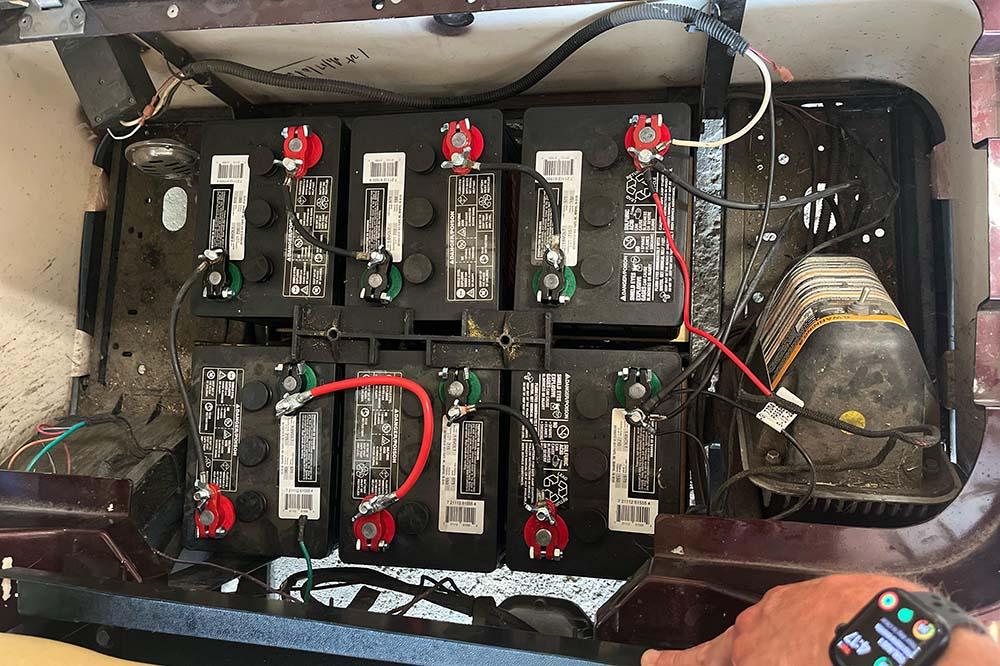
When you own an electric golf cart, the battery pack shapes much of what the cart can do. It affects acceleration, travel distance, pulling power, and how dependable the vehicle feels over time. Lithium golf cart batteries have become a mainstream option, and the voltage classes most owners encounter are 36V, 48V, and 72V. A newer choice, the 51.2V lithium pack, is also gaining popularity as an upgrade. Understanding voltage makes it easier to choose a replacement battery that fits, avoid charging headaches, and decide whether moving from lead-acid to lithium is worth the cost.
A golf cart usually draws power from a pack made up of multiple batteries, not from one standalone battery. The pack’s total voltage is determined by how those batteries are connected in series.
You will commonly see:
- 36V systems
- 48V systems
- 72V systems
- 51.2V lithium systems
The right choice is not simply the highest number. The motor, controller, charger, cables, and overall electrical design must all be compatible. Installing a higher-voltage battery just to gain speed can harm components unless the rest of the cart is built or upgraded for that voltage.
Before buying a replacement or planning an upgrade, identify the voltage of the current setup.
Lift the seat and inspect the batteries. On most carts, the pack sits under the seat. Check each battery label for voltage. If the print is worn or unreadable, measure the pack or individual batteries with a voltmeter rated for the job.
A fully charged lithium battery made for a nominal 48V system may read somewhere in the low 50V range. That is normal. The voltage you measure at full charge is not the same as the nominal rating.
Lead-acid carts often use several batteries joined in series. Typical examples include:
- Six 6V batteries = 36V
- Three 12V batteries = 36V
- Eight 6V batteries = 48V
- Six 8V batteries = 48V
- Four 12V batteries = 48V
- Twelve 6V batteries = 72V
- Nine 8V batteries = 72V
- Six 12V batteries = 72V
The formula is:
Total pack voltage = voltage of one battery × number of batteries in series
This works well when the labels are still readable.
The most reliable source is the owner’s manual and the manufacturer’s specifications. Electrical layouts vary by model, so do not assume another cart’s battery will fit yours. Brands such as Yamaha and Club Car have produced carts with different configurations. Confirm the required voltage before you buy.
These are the two most familiar voltage classes.
Older carts often run on 36V. That can be fine for basic use on flat ground, but 36V generally delivers less power and efficiency than a modern 48V setup.
A 48V cart tends to perform better when you deal with hills, heavier loads, longer trips, or higher performance expectations.
A 36V pack may suit light-duty use. It can be simple to operate and may cost less upfront when replacement time comes.
Still, compared with a well-designed 48V system, a 36V cart may accelerate more slowly, struggle more on inclines, and offer less real-world range, depending on battery capacity and how the cart is configured.
The 48V golf cart battery has become standard on many newer electric carts.
Benefits can include:
- Quicker acceleration
- Better hill-climbing
- Higher possible top speed
- Stronger support for heavy loads
- More flexibility in modern cart designs
For many owners, 48V hits a sensible balance among performance, efficiency, availability, and price.
A 51.2V lithium golf cart battery is usually intended as a lithium replacement for a nominal 48V lead-acid pack.
Why 51.2V instead of 48V? It comes down to cell count. A common LiFePO4 design uses 16 cells in series, and each cell has a nominal voltage of about 3.2V:
3.2V × 16 = 51.2V
That makes a 51.2V LiFePO4 pack a natural match for many carts originally built around a 48V nominal system, as long as the controller, charger, wiring, and other parts are compatible.
Lithium packs have gained popularity because they weigh less, last through more cycles, and need less upkeep than traditional lead-acid batteries.
Lead-acid batteries are often rated for roughly 300–500 cycles. Lithium batteries can exceed 3,000 cycles. Real service life depends on chemistry, depth of discharge, temperature, charging habits, and operating conditions.
| Feature | Lead-Acid | Lithium |
| Initial cost | Lower | Higher |
| Cycle life | About 300–500 cycles | 3,000+ cycles |
| Maintenance | Regular upkeep required | Very low |
| Weight | Heavy | Much lighter |
| Long-term value | More frequent replacement | Longer service life |
Lithium batteries also remove the need to water flooded lead-acid cells. Their built-in battery management system, or BMS, watches key operating conditions and helps protect against overcharging, over-discharging, and excessive heat.
A 72V golf cart battery system is usually tied to high-performance use.
Raising voltage lets the electrical system produce the same power with less current:
Power = Voltage × Current
But voltage by itself does not guarantee better performance. Motor design, controller programming, battery capacity, current limits, vehicle weight, gearing, and drivetrain efficiency all shape speed, acceleration, and range.
A 72V pack may make sense for high-performance, off-road, or specialized carts. It should only be installed when the cart’s electrical components are designed or upgraded for 72V operation.
Voltage affects how much electrical power is available to the motor and controller. A properly built higher-voltage system can support stronger acceleration and better performance.
However, raising voltage without upgrading compatible parts can damage the controller, motor, charger, or other electrical equipment.
Voltage is only one piece of the range puzzle.
Battery energy is best measured in watt-hours:
Energy (Wh) = Voltage (V) × Capacity (Ah)
Two batteries with different voltages can store similar amounts of energy if their amp-hour ratings are adjusted accordingly.
When comparing golf cart batteries, look at both voltage and capacity. Do not assume that a higher voltage automatically means a longer drive.
Carts that climb steep grades or carry heavy loads need enough motor power and battery discharge capability.
Higher-voltage systems can support higher power levels when the motor and controller are properly matched. That can improve acceleration and hill-climbing.
Good care can lengthen battery life and keep performance consistent.
For lead-acid batteries:
- Keep terminals clean and corrosion-free.
- Check electrolyte levels regularly.
- Add distilled water when needed.
- Keep connections tight.
- Use the correct charger.
- Avoid overcharging.
- Recharge after use.
- Do not leave batteries deeply discharged for long periods.
- Check voltage regularly.
- Store batteries in a suitable environment.
Lithium batteries need far less routine maintenance. Even so, keep terminals and connections clean, use a charger made for the battery, and follow the manufacturer’s instructions for charging and storage.
Yes. Many carts can be converted from lead-acid to lithium. But a successful conversion involves more than pulling out the old batteries and dropping in a lithium pack.
Compatibility matters in these areas:
The replacement pack must match the cart’s electrical design. A 48V system, for example, should use a compatible nominal-voltage lithium battery, not just any higher-voltage pack.
Lithium batteries need a suitable charging profile. A standard lead-acid charger may not work correctly with lithium.
The motor controller must support the battery’s voltage and current behavior. Some conversions require a new controller or reprogramming.
Cables and connectors must safely carry the current. Wiring that is too small can cause voltage drop, heat, and reliability issues.
Lithium packs are often much lighter than lead-acid packs. The new battery must be mounted securely so it does not shift or vibrate during use.
A good lithium golf cart battery should have a suitable BMS. The BMS monitors and protects the battery while charging and discharging.
If the whole electrical system is not checked, upgrades can create compatibility problems.
| Installation Issue | Recommended Approach |
| Undersized wiring | Use cables with the correct rating |
| Incompatible charger | Install a charger designed for the new battery |
| Wrong state-of-charge reading | Update or replace the gauge |
| Controller incompatibility | Replace or reprogram the controller |
| Battery movement | Use proper mounting brackets |
| Charger will not start | Check voltage, connections, and charger compatibility |
| Shorter range than expected | Check capacity, tire pressure, vehicle weight, and driving conditions |
Be sure to follow the installation guidance provided by both the battery maker and the golf cart manufacturer.
The best voltage depends on the cart and how you use it.
Before buying, consider:
- Golf cart model and year
- Existing battery voltage
- Motor and controller specs
- Desired driving range
- Terrain and hills
- Vehicle load
- Charging requirements
- Battery chemistry
- Available installation space
- Budget and expected service life
For a standard golf cart, a compatible 48V system is often a practical choice. For an older cart, keeping the original 36V setup may be more economical unless you plan a larger electrical upgrade.
For owners who want less maintenance and longer cycle life, a properly matched 51.2V LiFePO4 golf cart battery can be an appealing alternative to lead-acid.
Choosing the right golf cart battery voltage is not just a matter of picking 36V, 48V, 51.2V, or 72V. The battery has to work as part of a complete electrical system that includes the motor, controller, charger, wiring, and BMS.
For many modern golf carts, 48V remains a practical and widely used setup. For owners who want lower maintenance and better long-term battery performance, a compatible 51.2V LiFePO4 battery can be a strong upgrade path.
Before you buy, verify the manufacturer’s specifications and make sure the replacement battery is compatible with your specific golf cart.
Many use 36V or 48V. Newer models often use 48V, and some high-performance carts use 72V. A 51.2V lithium battery is also common as a lithium option for nominal 48V applications.
Only after checking the full electrical system. A higher-voltage battery can damage the motor, controller, charger, wiring, or other parts if they are not designed for that voltage.
No. Do not mix different voltages in the same pack. Batteries should also match in chemistry, capacity, age, and specifications.
Watch for shorter range, sluggish acceleration, trouble on hills, unusual voltage readings, corrosion, swelling, or inconsistent performance.
Lead-acid batteries often last about 3–5 years. Lithium batteries may last up to 10 years, depending on use and care. Actual life varies widely with operating conditions, charging practices, depth of discharge, temperature, and battery quality.
Welcome to contact us:
Inquire more product details from the: Lithium Ion Battery Suppliers
WhatsApp/Wechat/Mobile: +86 13326321310
Email: info@battery-energy-storage-system.com
Website: www.battery-energy-storage-system.com
Ready to power your energy systems with the best in the industry?
Contact us today to get the latest pricing and discuss your needs with our team!
Next:14 pcs Sinopoly 40Ah LiFePO4 Batteries Shipped to Serbia in Europe
Previous:16 pcs GFL 3.2V 314Ah LiFePO4 Batteries and One 4S 100A BMS Shipped to Fiji