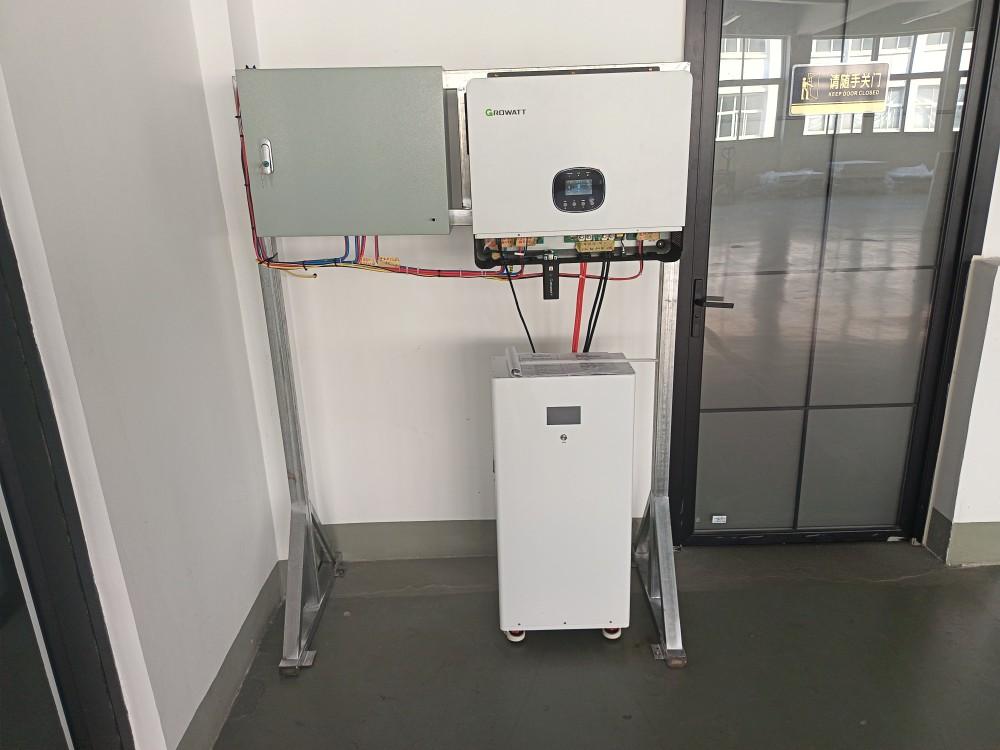
A home battery only delivers real value when its capacity fits the job it is expected to do. If the bank is undersized, it can be drained before an outage ends. If it is oversized, the upfront cost climbs while the extra capacity may sit unused. The goal is not to buy the biggest battery available, but to match storage to the way your home actually uses electricity.
A proper home battery storage capacity calculator should weigh daily energy use, outage length, depth of discharge (DoD), battery efficiency, inverter conversion losses, solar output, and seasonal demand. This guide sets out a practical way to work through those variables and choose an appropriate LiFePO4 or lithium-ion battery system.
Three outcomes depend heavily on capacity:
- How long your home can run when the grid fails
- How much solar energy you can store and use later
- How much you can reduce electricity costs over time
Household demand is often underestimated. Heating, cooling, refrigeration, computers, lighting, and other appliances can push consumption far beyond what a homeowner expects. The original source notes that an average U.S. household may use about 29.2 kWh per day, though actual figures vary widely from one property to another.
For that reason, choosing a familiar 5 kWh, 10 kWh, or 15 kWh battery before calculating your own demand is the wrong order of operations. Start with the load, then size the battery.
The foundation of any sizing exercise is daily electricity consumption.
List the appliances you want to include and record:
- Wattage
- Daily hours of use
- Estimated daily energy use
The basic formula is:
Daily Energy (kWh) = Wattage × Hours Used Per Day ÷ 1,000
A 150 W refrigerator running continuously for 24 hours illustrates the math:
150 × 24 ÷ 1,000 = 3.6 kWh per day
Do the same for refrigeration, lighting, televisions, computers, fans, pumps, heating equipment, and any other electrical load. Add the results to estimate total daily consumption.
Utility bills are also useful. They show how much energy the household typically consumes and can help validate your appliance-level estimate.
During a blackout, not every appliance needs to run. A backup battery should be sized around essential loads.
Common critical loads include:
- Refrigerators and freezers
- Lighting
- Medical equipment
- Internet and communication devices
- Security systems
- Computers
- Selected heating or cooling equipment
Once non-essential loads are removed from the backup plan, the required battery capacity often falls sharply.
For every critical appliance, estimate how much energy it will use during the outage. Sum those figures to find the energy needed for the backup circuits.
How long the battery must last is another key input.
Imagine the selected critical loads need 5 kWh per day and the goal is two days of autonomy. The basic energy requirement is:
5 kWh × 2 days = 10 kWh
That figure is only a starting point. The battery must then be enlarged to cover DoD and system efficiency.
Longer outages require more storage. Seasonal conditions also matter, particularly when solar charging plays a major role.
A battery’s rated capacity is not the same as the energy a home can actually draw from it.
Total capacity is the maximum energy the battery can store, measured in kWh.
Usable capacity is what remains available after operating limits, depth of discharge, and system losses are taken into account.
This difference matters when comparing chemistries. The original source contrasts lead-acid AGM batteries with lithium-ion systems and stresses that usable energy should guide the economic comparison. For home storage, comparing usable kWh is far more informative than comparing nameplate kWh alone.
Depth of discharge, or DoD, describes how much of a battery’s stored energy is drawn down before recharging.
An 80% DoD, for example, means that roughly 80% of rated capacity is treated as available under the specified operating conditions.
A higher DoD can release more usable energy from the same battery, but manufacturer limits and operating conditions must always be respected. The source notes that many lithium-ion systems use approximately 80% DoD as a practical compromise between usable energy and battery life.
With LiFePO4 home batteries, follow the manufacturer’s specified operating range. Do not assume that every product shares identical DoD characteristics.
Energy is lost on the way into and out of a battery. Losses occur during:
- Charging
- Discharging
- DC-to-AC conversion
- Heat generation
- Other system-level processes
If overall system efficiency is 90%, more energy must be stored than the household ultimately consumes.
The sizing equation is:
Required Battery Capacity (kWh) = Daily Energy Consumption ÷ Efficiency ÷ DoD
Assume:
- Daily energy consumption = 10 kWh
- System efficiency = 90%, or 0.90
- DoD = 80%, or 0.80
The calculation becomes:
10 ÷ 0.90 ÷ 0.80 = 13.89 kWh
Under those assumptions, a battery system with roughly 14 kWh of nominal capacity would meet the requirement.
Consider a household that needs an estimated 18.08 kWh per day.
Assume:
- Energy consumption = 18.08 kWh/day
- System efficiency = 90%
- DoD = 80%
The required capacity is:
18.08 ÷ 0.90 ÷ 0.80 = 25.11 kWh
A single 5 kWh battery would clearly be insufficient. Several battery units, arranged as a modular system, would be needed to reach approximately that level of storage.
This example shows why actual demand should be calculated before purchase. Advertised battery size alone is not a reliable guide.
When a home battery works with solar panels, storage and generation must be planned together.
Solar output rises and falls through the year. Winter usually brings shorter days and weaker production. Summer can generate substantial surplus energy.
A correctly sized battery captures excess daytime solar power and makes it available later, when household demand rises.
For a solar-plus-storage design, consider:
- Daily household consumption
- Solar panel output
- Seasonal solar production
- Required backup duration
- Usable battery capacity
- Days of autonomy
- Grid availability
This prevents both under-sizing and unnecessary oversizing.
Environmental conditions influence battery performance and efficiency.
Heat can speed up degradation. Cold can reduce available capacity and affect charging. Humidity can damage electrical components through condensation and corrosion.
Install the battery according to the manufacturer’s environmental requirements. A suitable location helps maintain stable operating conditions and supports long-term performance.
No single battery size suits every home.
A 5 kWh home battery may work for smaller energy needs, essential-load backup, or a modular system intended for later expansion.
A 10 kWh battery offers considerably more usable energy and may suit households with moderate consumption and backup requirements.
A 15 kWh or larger system may be appropriate for high-energy homes or applications needing longer backup periods.
The right choice depends on actual consumption, critical loads, solar production, budget, and future expansion plans. Modular systems are often useful because capacity can be added as needs grow.
For a single-day requirement:
Battery Capacity (kWh) = Daily Energy Consumption ÷ System Efficiency ÷ DoD
For multi-day backup, multiply daily energy by the number of backup days first:
Battery Capacity = Daily Energy × Backup Days ÷ Efficiency ÷ DoD
Then round up to an available battery-system capacity.
If a home needs 10 kWh per day and two days of backup, the starting point is:
10 × 2 = 20 kWh
That result is then adjusted for efficiency and the usable DoD of the chosen battery.
Before buying a residential energy storage system, confirm these parameters:
- Daily energy consumption – Know how many kWh the home actually uses.
- Critical loads – Identify which appliances must run during an outage.
- Backup duration – Decide whether hours, one day, or several days are needed.
- Usable capacity – Compare usable kWh, not only nominal capacity.
- DoD – Use the manufacturer’s recommended operating range.
- Efficiency – Account for battery and inverter losses.
- Solar production – Match storage to the solar generation profile.
- Temperature – Install the battery where its operating specifications can be met.
- Future expansion – Consider a modular system if energy needs may increase.
Sizing home battery storage is not simply a matter of estimating daily electricity use. A dependable home battery storage capacity calculator must account for energy demand, critical loads, backup duration, usable capacity, DoD, efficiency, solar production, environmental conditions, and inverter losses.
For many residential solar-storage applications, LiFePO4 batteries are a practical choice because of their energy density, usable capacity, and suitability for repeated cycling. Even so, the correct battery size depends on the individual home’s energy profile.
By calculating requirements before choosing a battery, a homeowner can build a storage system that provides reliable backup power, makes better use of solar energy, and avoids paying for capacity that is not needed.
Welcome to contact us:
Inquire more product details from the: Lithium Ion Battery Suppliers
WhatsApp/Wechat/Mobile: +86 13326321310
Email: info@battery-energy-storage-system.com
Website: www.battery-energy-storage-system.com
Ready to power your energy systems with the best in the industry?
Contact us today to get the latest pricing and discuss your needs with our team!
Next:None
Previous:48 pcs CALB 3.2V 314Ah LiFePO4 Battery Cells Shipped to Puerto Rico