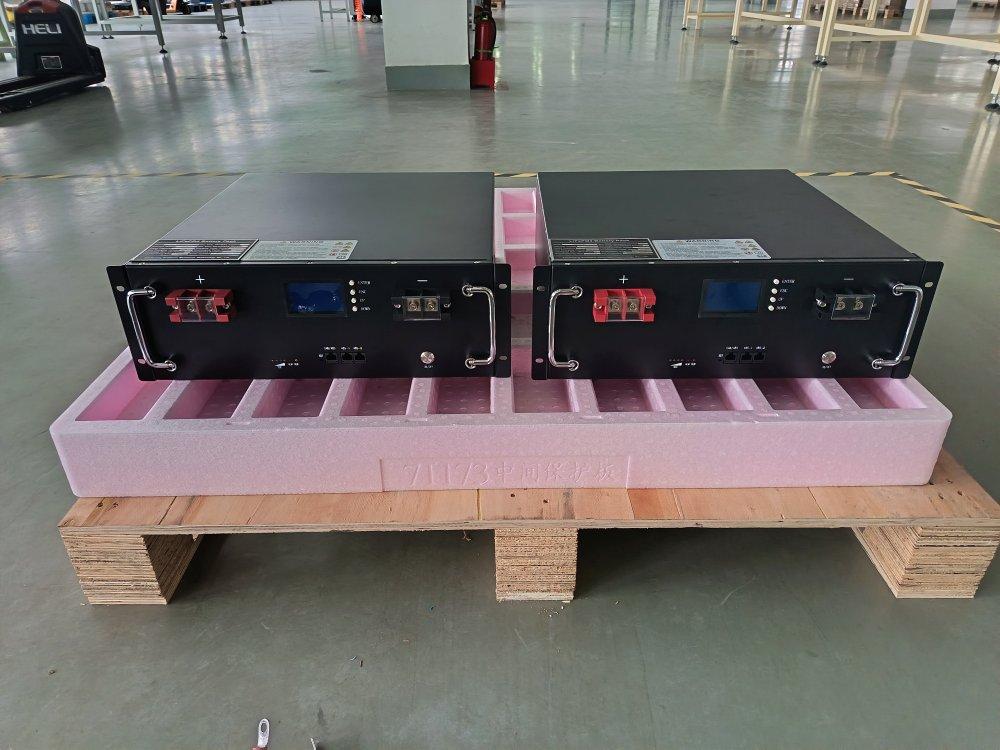
The question “How long does a 5kWh battery last?” is frequently asked by homeowners who are exploring solar energy storage systems or reliable backup power solutions. However, there is no universal answer. The actual runtime of a 5kWh battery depends on several factors, including the appliances being powered, total energy consumption, inverter efficiency, battery chemistry, and overall battery condition.
For modern energy storage applications, LiFePO4 batteries and other lithium-ion battery technologies are widely used because of their high efficiency, long cycle life, and reliable performance. Understanding how these factors affect runtime can help homeowners better estimate whether a 5kWh battery meets their backup power requirements.
A 5kWh (kilowatt-hour) battery theoretically stores enough energy to provide:
5 kilowatts of power for 1 hour
1 kilowatt of power for 5 hours
500 watts of power for approximately 10 hours
In real-world applications, the actual operating time will be different because of energy losses and usage conditions. Factors such as battery depth of discharge (DoD), inverter efficiency, discharge rate, and battery aging all influence the amount of usable energy available.
When used for essential household devices, a 5kWh LiFePO4 battery can provide backup power for an extended period.
Typical examples include:
10 LED lights (10W each): approximately 50 hours
Wi-Fi router and modem (20W): approximately 250 hours
Laptop and phone charging (25W): approximately 200 hours
55-inch LED TV (100W): approximately 50 hours
Combined Example:
A continuous 300W load, including lights, internet equipment, a TV, and mobile device charging, can run for approximately 16.5 hours on a fully charged 5kWh battery.
High-power appliances consume battery energy much faster. Examples include:
Refrigerator (200W, with compressor cycling): approximately 12–24 hours
Microwave oven (1,200W): about 15 minutes of operation uses around 0.3kWh
Electric kettle (1,500W): about 10 minutes of operation uses around 0.25kWh
Air conditioner (1,500W): approximately 3.3 hours
Combined Example:
Running a refrigerator (200W) together with a small space heater (1,500W) creates a 1,700W load, which may reduce runtime to around 2.9 hours.
The depth of discharge determines how much of the battery capacity can actually be used. Most LiFePO4 batteries support an 80–90% DoD. Therefore, a 5kWh battery system typically provides around 4–4.5kWh of usable energy.
Since most household appliances use AC power, the battery’s DC energy must be converted through an inverter. During this process, approximately 5–10% of energy may be lost. In practical applications, the available AC energy may be around 4.3kWh.
Like all rechargeable batteries, lithium-ion batteries gradually lose capacity after repeated charge and discharge cycles. Proper battery management and high-quality battery cells can help maintain performance and extend service life.
Higher power demands can slightly reduce the usable capacity of a battery due to internal resistance and heat generation. A battery operating under moderate loads will generally deliver better efficiency.
You can estimate battery runtime with a few simple steps:
Make a list of the appliances you plan to operate.
Check the power consumption of each device from labels or manuals.
Add the total wattage of all connected loads.
Calculate usable battery energy by considering DoD and inverter efficiency.
For example:
Usable Energy ≈ 5kWh × 90% × 95% = approximately 4.3kWh
Then calculate:
Runtime = Usable Energy ÷ Total Power Load
For example, with a 500W load:
4.3kWh ÷ 0.5kW = approximately 8.6 hours
A 5kWh lithium-ion battery is a practical energy storage solution for powering essential household devices such as lighting, internet equipment, refrigerators, and small appliances during outages. In many residential applications, it can provide backup power for approximately 12–24 hours, depending on energy usage and system efficiency.
However, a 5kWh battery is not designed for long-term operation of energy-intensive appliances such as electric heaters or large air conditioning systems. Homes with higher energy demands may benefit from larger-capacity LiFePO4 battery systems or modular energy storage solutions.
Choosing a trusted lithium-ion battery manufacturer is essential for achieving long cycle life, improved safety, and stable performance. At BESS, we provide high-quality, customizable LiFePO4 energy storage batteries designed to meet global standards and help homeowners achieve greater energy independence and reliable backup power.
Welcome to contact us:
Inquire more product details from the: Lithium Ion Battery Suppliers
WhatsApp/Wechat/Mobile: +86 13326321310
Email: info@battery-energy-storage-system.com
Website: www.battery-energy-storage-system.com
Ready to power your energy systems with the best in the industry?
Contact us today to get the latest pricing and discuss your needs with our team!
Next:2.4V 30Ah LTO Battery Cells and 21S 48V 200A BMS Shipped to Italy
Previous:Headway 40152S 3.2V 15Ah Cylindrical LiFePO4 Cells Shipped to India