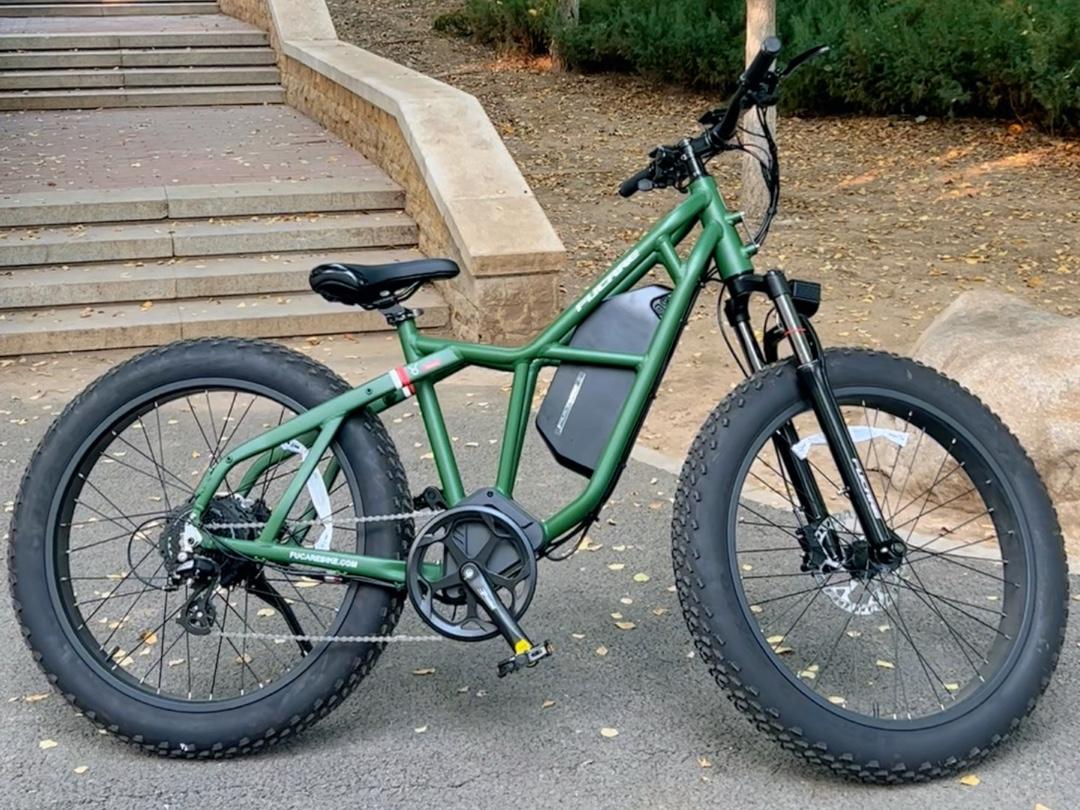
Think of selecting a battery for your electric bike like choosing the perfect fuel for a car—it’s essential to how your bike performs, how far it can travel, and how enjoyable every ride feels. Thanks to advances in technology, there are more options available than ever, each with its own set of advantages. But how do you pick the right one for you? Understanding what’s out there is the first step toward making a choice that fits your riding style and needs. So, what kind of experience are you after? Let’s explore the details to help you decide.
Lithium-ion Batteries
Widely considered the top choice for modern e-bikes, lithium-ion batteries are prized for their high energy density, light weight, and long lifespan. They generally provide more range per charge than other types.
Among lithium-ion batteries, there are a few common variations:
- LiFePO4 (Lithium Iron Phosphate): Known for exceptional longevity and stability.
- NMC (Lithium Nickel Manganese Cobalt Oxide): Offers high energy density in a relatively light package.
Lead-Acid Batteries
These have been used in e-bikes for a long time and are generally more affordable than lithium-ion options. However, they are heavier, bulkier, and offer lower energy density and a shorter lifespan. They can still be a practical choice for shorter trips or entry-level e-bikes.
Nickel-Metal Hydride (NiMH) Batteries
Before lithium-ion became dominant, NiMH batteries were common in e-bikes. They provide moderate energy density, a fairly decent lifespan, and are more eco-friendly than lead-acid batteries. Their use has declined as lithium-ion technology has taken over the market.
To ensure great performance and compatibility, keep these factors in mind:
- Voltage (V): Determines power output. Common voltages are 36V and 48V—higher voltage usually means more power and speed, though it can reduce range.
- Capacity (Ah or Wh): Indicates how much energy the battery stores. Higher capacity means longer range but adds weight.
- Compatibility: Make sure the battery matches your bike’s voltage, connector type, and mounting system.
- Weight & Size: Affects your bike’s balance and handling. Integrated or frame-mounted batteries often distribute weight better.
- Charging Time: Depending on your routine, fast-charging capability may be important.
- Lifespan & Warranty: Check the expected number of charge cycles and the warranty to gauge long-term value and reliability.
Voltage is crucial to your bike’s performance—think of it like the horsepower in a car. Higher voltage typically means faster speeds, better hill-climbing ability, and more power for carrying loads.
- 24V: Suitable for entry-level e-bikes—enough to get you moving, but not built for speed or steep hills.
- 36V: A popular choice for casual riders, offering a good mix of power, speed, and range.
- 48V: Delivers stronger acceleration, higher top speeds, and improved hill performance—ideal for more demanding rides.
- 52V: The high-performance option, providing maximum power and capability for challenging terrain and long distances.
Battery capacity is usually measured in watt-hours (Wh) or amp-hours (Ah). Wh reflects total energy storage, while Ah indicates current delivery over time.
- For short commutes and casual riding: 5–10 Ah may be enough.
- For longer adventures or rugged terrain: 10–20 Ah or more will provide the range you need.
Higher capacity batteries store more energy and extend your riding distance per charge.
A simple formula can help estimate your ideal battery capacity:
Battery Capacity (Ah) = (Power Consumption (W) ÷ Voltage (V)) × Riding Time (h)
Example:
If your e-bike uses 500W at 36V and you plan to ride for 2 hours:
(500 ÷ 36) × 2 ≈ 27.8 Ah
Note: This assumes consistent power use. Real-world conditions may vary.
No, e-bike batteries are not universal. Differences in voltage, physical size, mounting style, and connector types mean batteries are generally model-specific. Always choose a battery designed for your e-bike to ensure safety and performance.
Some batteries may need a reset to resolve performance issues or recalibrate the system. Not all batteries allow manual resets—some manage this automatically. If yours requires a manual reset:
1. Turn off the e-bike and disconnect the battery.
2. Remove any connected accessories.
3. Wait 10–15 minutes for residual power to dissipate.
4. Reconnect the battery securely.
5. Turn the bike back on and check if the issue is resolved.
1. Plug the charger into a wall outlet.
2. Connect it firmly to the battery’s charging port.
3. Monitor the indicator lights on the charger or bike display.
4. Allow the battery to charge fully before disconnecting.
5. Store the battery in a cool, dry place away from direct sunlight.
6. Avoid overcharging to preserve battery life.
7. Follow the manufacturer’s charging guidelines.
8. Consider a smart charger with auto-shutoff for efficiency and safety.
- Temperature matters: Charge and store batteries at room temperature. Avoid extreme heat or cold.
- Use in winter: Consider a battery cover if riding regularly in freezing conditions.
- Avoid overcharging/discharging: Use only the recommended charger. A good Battery Management System (BMS) helps prevent damage.
- Disconnect when full: Don’t leave a lithium battery connected after it’s fully charged.
- Beware of unrealistic claims: Very cheap batteries with extreme life claims may be poorly calibrated and fail early.
- Handle with care: Protect the battery from vibration, drops, or impacts.
- Long-term storage: If storing for months, follow the manufacturer’s guidance on charge level for storage.
Choosing the right battery for your electric bike means considering your riding habits, your bike’s specs, and what you value most in your ride. By learning about battery types, voltage, capacity, and compatibility, you can make a smart decision that improves your e-biking experience—whether you’re commuting, exploring, or just enjoying the ride.
Next:CATL Debuts New 5C Ultra-Fast Charging Battery
Previous:Sungrow Debuts DC-Coupled Solution for Large-Scale European Solar-Plus-Storage Projects