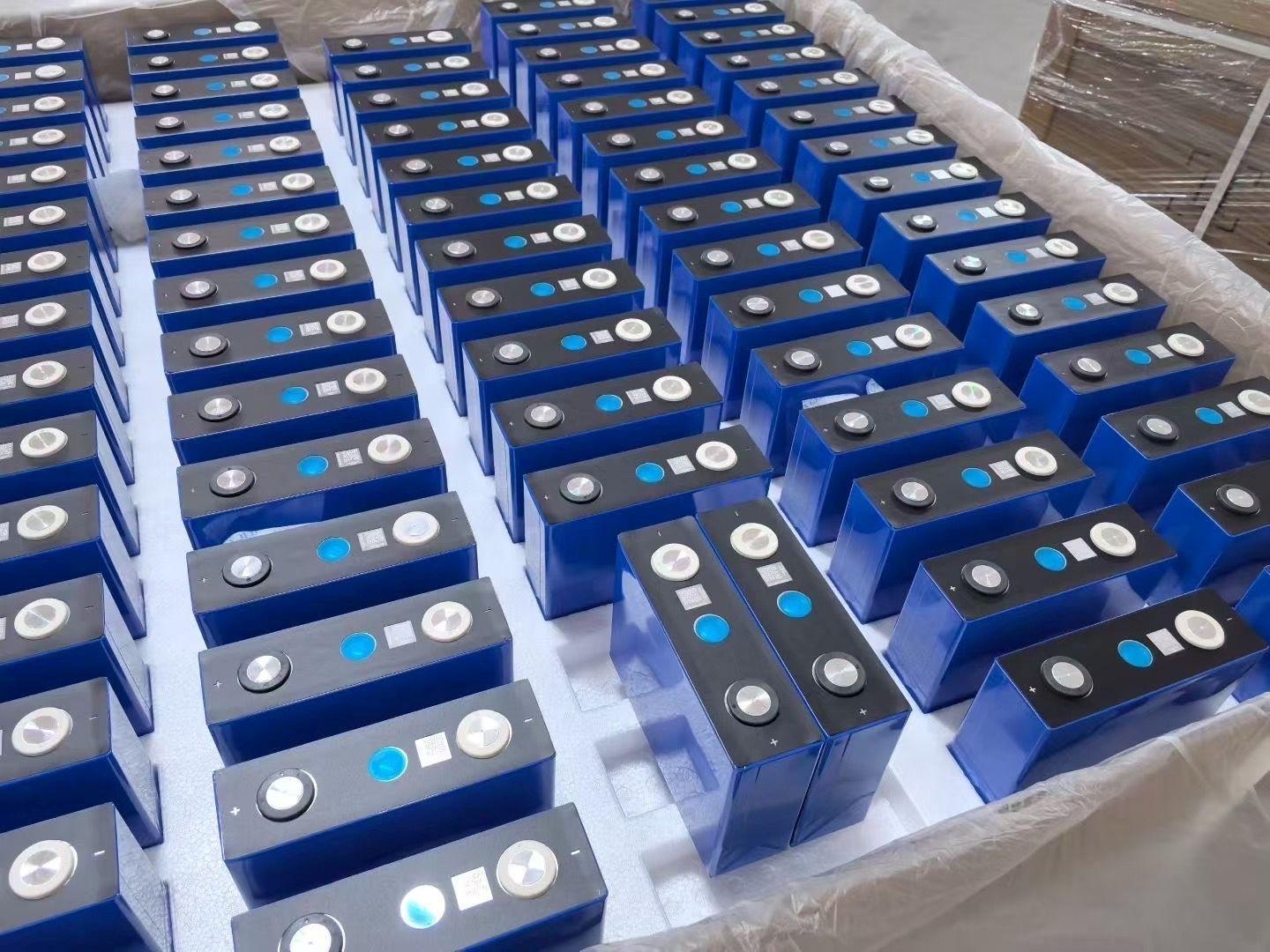
The voltage you use to charge a lithium iron phosphate (LiFePO4) battery has a direct impact on how well it performs, how safe it remains, and how many cycles it will deliver over its lifetime. While each LiFePO4 cell has a nominal voltage of about 3.2V, the commonly accepted upper charging limit is 3.65V per cell. Scaling this up to common pack sizes gives you roughly 14.6V for a 12V system, 29.2V for 24V, and 58.4V for 48V. But those numbers are only starting points. The truly appropriate charge voltage depends on the specific battery design, the BMS, the charger profile, ambient temperature, and how the battery is actually used.
A LiFePO4 cell does not sit at a fixed 3.2V during operation. Its voltage moves with state of charge, current flow, temperature, and cell health. When cells are wired in series, their voltages add up. That is why a typical 12V LiFePO4 battery uses four cells in series (4 × 3.2V = 12.8V nominal), an 8S pack gives 25.6V nominal, and a 16S pack gives 51.2V nominal. Parallel connections, by contrast, keep the voltage roughly the same while increasing capacity and current capability.
The 3.65V per cell figure is widely cited as the maximum charge voltage. Reaching it allows the battery to approach a full state of charge. However, it should be treated as an upper boundary rather than a target that must be hit every time. LiFePO4 has a very flat discharge curve, meaning most of its usable energy is available even if you stop charging at a slightly lower voltage. In many applications, charging to a voltage below the absolute maximum can reduce stress on the cells and extend service life without sacrificing meaningful runtime.
For a single LiFePO4 cell, the typical maximum charge voltage is 3.65V. For multi-cell packs, the calculation is simple multiplication:
- 4S (12V nominal): 4 × 3.65V = 14.6V
- 8S (24V nominal): 8 × 3.65V = 29.2V
- 16S (48V nominal): 16 × 3.65V = 58.4V
These numbers appear frequently in battery specifications, but they are not universal. Always check the manufacturer's documentation for the exact voltage range recommended for your specific battery and BMS. Higher-voltage systems also demand extra attention to insulation, thermal management, and overall electrical safety.
Most LiFePO4 batteries are charged using a two-stage constant-current/constant-voltage (CC/CV) method. In the first stage, the charger delivers a steady current while the pack voltage gradually rises. Once the voltage reaches the configured upper limit, the charger switches to constant-voltage mode. The voltage is held steady while the current tapers off. Charging is complete when the current drops below the manufacturer's termination threshold.
Unlike lead-acid batteries, LiFePO4 packs generally do not need to be held at a float voltage indefinitely. Continuous float charging is unnecessary for most applications and can actually accelerate aging if the battery is kept at 100% state of charge for long periods. Some chargers offer a standby or maintenance voltage, but it should be set according to the battery maker's guidance. Never assume a charger designed for lead-acid will work correctly with LiFePO4 without verifying the voltage profile and BMS compatibility.
Temperature has a major influence on charging safety. Charging a standard LiFePO4 cell below 0°C can cause lithium plating, which permanently degrades the cell and creates a safety hazard. Many packs include low-temperature charge protection, temperature sensors, or built-in heaters to prevent this. At the other extreme, high temperatures speed up chemical aging and increase thermal stress. Always respect the manufacturer's specified charging temperature range.
A Battery Management System (BMS) monitors individual cell voltages, pack voltage, current, temperature, and other parameters. It can disconnect the battery if any cell exceeds safe limits or if temperature moves outside the allowed window. However, a BMS is a safety net, not a replacement for a correctly configured charger. The two must work together.
Cell balancing becomes more important as the number of series cells increases. Even well-matched cells can drift apart in capacity or state of charge over time. Without balancing, one cell may hit the upper voltage limit before the others, limiting the pack's usable capacity and stressing the weaker cells. A BMS with active or passive balancing helps keep cell voltages aligned. This is why looking only at total pack voltage is insufficient—individual cell behavior matters.
Several recurring errors can shorten LiFePO4 battery life or create unsafe conditions:
- Using a charger intended for lead-acid or another chemistry.
- Exceeding the manufacturer's maximum charge voltage.
- Charging at temperatures below freezing or above the rated maximum.
- Relying solely on pack voltage without monitoring individual cells.
- Keeping the battery at 100% state of charge when it is not needed.
To get the most from a LiFePO4 battery, use a charger specifically designed for LiFePO4, set the voltage according to the manufacturer's specifications, respect temperature limits, use a properly configured BMS for multi-cell packs, and avoid unnecessary prolonged storage at full charge. Matching the charger current to the battery's rated charging current is equally important, as is ensuring the BMS can balance cells effectively in series-connected configurations.
The widely used maximum charge voltage of 3.65V per cell translates to 14.6V, 29.2V, and 58.4V for 12V, 24V, and 48V LiFePO4 packs respectively. But optimal charging is not a matter of simply dialing in the highest number. Charger profile, current, temperature protection, BMS behavior, cell balancing, and the intended application all shape the right settings.
For industrial equipment, energy storage, robotics, medical devices, backup power, and other demanding uses, the charging voltage should be engineered around the complete battery system—not pulled from a generic table. When in doubt, follow the battery manufacturer's instructions and consider a custom battery pack designed with matching BMS and charger parameters for your specific requirements.
Welcome to contact us:
Inquire more product details from the: Lithium Ion Battery Suppliers
WhatsApp/Wechat/Mobile: +86 13326321310
Email: info@battery-energy-storage-system.com
Website: www.battery-energy-storage-system.com
Ready to power your energy systems with the best in the industry?
Contact us today to get the latest pricing and discuss your needs with our team!
Next:48 pcs REPT 3.2V 280Ah LiFePO4 Cells Shipped to the United States
Previous:80 pcs 400Ah LiFePO4 Cells and One BMS Shipped to the USA