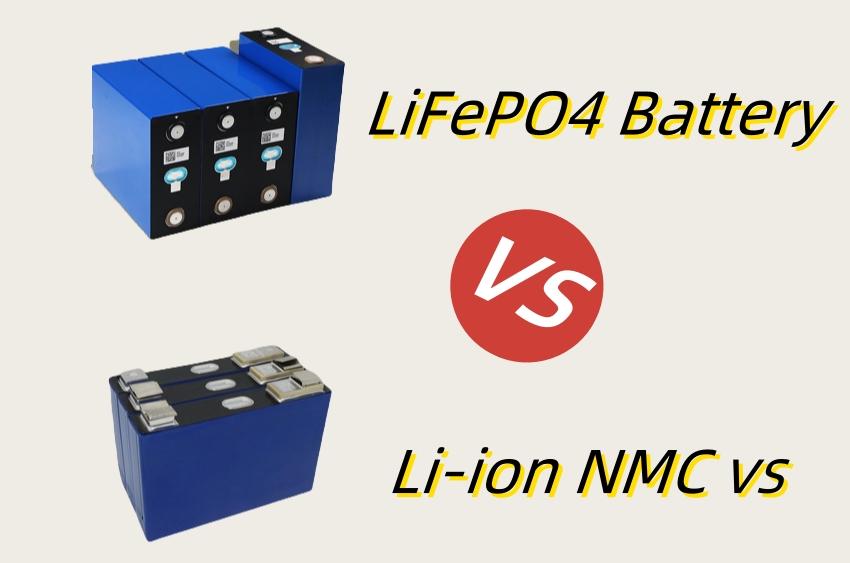
The fundamental difference between these two lithium-ion chemistries starts at the cathode. From that single chemical distinction flow downstream differences in voltage, energy density, cycle life, thermal stability, and cost.
A lithium iron phosphate battery pairs an iron phosphate cathode with a graphite anode. There is no cobalt or nickel in LFP chemistry, which simplifies sourcing and shields the supply chain from price volatility in those commodities.
The nominal voltage of a standard LFP cell is around 3.2V. What sets LFP apart is its combination of exceptionally long cycle life, strong thermal stability, and high tolerance for deep discharge. Those characteristics have made it the default choice for stationary storage, residential backup, and commercial fleets.
You will typically find LFP batteries in the following roles:
- Grid-scale and commercial energy storage
- Home backup battery systems
- Electric buses and commercial vehicles
- Forklifts and material handling equipment
- Marine and RV house battery banks
- UPS and critical backup power systems
An NMC battery uses a cathode composed of nickel, manganese, and cobalt. By shifting the proportions of these three metals, manufacturers can tune the cell toward higher energy density through increased nickel, better thermal stability through more manganese, or improved conductivity and cycle life through additional cobalt.
A typical NMC cell operates at a nominal voltage of roughly 3.6V to 3.7V. Because NMC packs more energy into a given weight, it dominates portable electronics, electric vehicles, and any application where compact dimensions and low mass are essential.
NMC batteries appear most often in:
- Electric vehicles and plug-in hybrids
- Smartphones, laptops, and other consumer electronics
- Power tools and garden equipment
- Drones and aerospace systems
- Portable power stations
- High-density commercial storage with limited physical footprint
| Specification | LiFePO4 (LFP) | NMC |
| Nominal cell voltage | ~3.2V | ~3.6–3.7V |
| Energy density | 90–160 Wh/kg | 150–250 Wh/kg |
| Cycle life at 80% DoD | 3,000–6,000+ cycles | 1,000–3,000 cycles |
| Thermal runaway onset | ~270°C+ | ~180–210°C |
| Self-discharge rate | Very low, about 2–3% per month | Low, about 3–5% per month |
| Weight | Heavier | Lighter |
| Upfront cost | Generally lower per kWh | Generally higher per kWh |
| Cobalt content | None | Yes |
| Depth of discharge tolerance | Excellent, typically 80–90% DoD | Good, typically 70–80% DoD |
| Typical applications | Stationary storage, heavy-duty use | EVs, portable devices, high-density storage |
Voltage is among the most consequential differences. LFP cells sit at approximately 3.2V, whereas NMC cells are closer to 3.7V. As a result, the two chemistries cannot be swapped into the same pack without redesigning the series configuration and recalibrating the BMS. A 48V LFP system requires 16 cells in series, written 16S, while a 48V NMC system uses either 13 or 14 cells, written 13S or 14S.
Using a BMS or charger configured for the wrong chemistry can lead to overcharging, undercharging, or irreversible cell damage.
Longevity has two dimensions: cycle life, the number of charge-discharge cycles before capacity falls to 80% of its original rating, and calendar life, how long the battery remains usable regardless of cycling frequency.
Several factors influence actual cycle life:
- Depth of discharge
- Charge and discharge rates
- Operating temperature
- Precision of charging voltage and current
- BMS quality
- Manufacturing grade of the cells
Under identical operating conditions, LFP consistently outlasts NMC. Premium LFP cells can exceed 4,000 to 6,000 full cycles at 80% DoD, while NMC cells under the same conditions typically manage 1,000 to 3,000 cycles.
For daily-cycling use cases such as solar self-consumption, peak shaving, or time-of-use arbitrage, that longevity gap translates directly into lower cost per cycle and longer intervals between replacements.
Both chemistries have low self-discharge compared with older nickel-based systems. LFP loses roughly 2–3% per month, while NMC loses about 3–5% per month.
For equipment that may sit idle for long stretches, both perform well. LFP holds a slight edge in long-term storage stability and resists capacity fade better during prolonged idle periods at moderate states of charge.
No. The correct chemistry depends entirely on the application. Selecting NMC solely for its higher energy density is a mistake when the use case demands long cycle life and maximum safety.
LFP excels in these scenarios:
- Daily deep-cycling storage: Solar self-consumption, peak shaving, and grid services benefit directly from LFP's 3,000–6,000+ cycle life.
- Safety-critical installations: Indoor storage, data centers, and densely occupied buildings gain from LFP's higher thermal runaway threshold and its lack of oxygen release during thermal events.
- Budget-constrained projects: Lower per-kWh cost plus longer cycle life yields the lowest levelized cost of storage for most stationary applications.
- High-temperature environments: LFP tolerates heat better than NMC, reducing the need for active cooling in warm climates.
- Long-duration storage: Systems discharging for four hours or more benefit from LFP's deep discharge tolerance and lower cost per cycle.
NMC becomes the stronger candidate when energy density, compactness, and low weight are the primary requirements:
- Space-limited storage: Urban installations, retrofits, and containerized systems with tight volume constraints gain from NMC's higher Wh/L density.
- Mobile and portable use: Portable power stations, RVs, and marine systems where reduced weight improves performance or payload.
- High-power, short-duration applications: NMC's superior discharge capability suits UPS, frequency regulation, and power-quality functions that demand rapid response.
- EVs and e-mobility: NMC's energy-to-weight ratio remains the benchmark for passenger EVs, e-bikes, and drones.
- Cold-climate operation: NMC typically delivers better low-temperature cranking and discharge performance than LFP.
No. LFP and NMC require different charging profiles, and a charger built for one chemistry is not automatically safe for the other.
Both use a Constant Current / Constant Voltage profile, but the voltage setpoints differ significantly:
- LFP: upper charge limit typically 3.60V to 3.65V per cell
- NMC: upper charge limit typically 4.10V to 4.20V per cell
An NMC charger used on LFP cells would undercharge them, preventing full capacity. Conversely, an LFP charger used on NMC cells could overcharge them, causing permanent damage or creating a safety hazard.
Additionally, the BMS must be programmed for the correct series cell count and voltage thresholds. A 48V LFP pack with 16 cells in series and a 48V NMC pack with 13 cells in series have different full-charge and cut-off voltages, despite both being labeled 48V.
Always pair the battery with a BMS and charger specifically configured for its chemistry, voltage, and capacity.
Upfront price is only one component of total cost of ownership.
LFP batteries generally carry a lower upfront cost per kWh. The reasons include the absence of costly cobalt and nickel, simpler cathode production, and the enormous manufacturing scale achieved by Chinese producers.
For stationary storage projects that cycle daily, LFP's longer cycle life, 3,000–6,000+ cycles versus 1,000–3,000 for NMC, means fewer replacements over the project lifetime. On a per-cycle basis, LFP is almost always the cheaper option.
NMC batteries cost more per kWh because of their cobalt and nickel content, more complex cell manufacturing, and stricter quality control requirements.
That premium is justified when the application demands:
- High energy density within a constrained footprint
- Light weight for mobile or vehicle platforms
- High discharge rates for power-intensive tasks
- Better performance in cold temperatures
The meaningful comparison is not simply LFP price versus NMC price. Instead, calculate total project lifetime cost, including replacements, cooling infrastructure, and the value of any performance advantage each chemistry provides.
Both LFP and NMC are rechargeable and recyclable, but their environmental and safety footprints differ.
- Cobalt- and nickel-free, reducing ESG supply chain risk
- Higher thermal stability lowers fire risk in storage installations
- Longer cycle life means fewer batteries manufactured and disposed of over time
- Cobalt sourcing carries documented ESG and human rights concerns
- Lower thermal runaway threshold requires more robust thermal management and fire suppression
- Higher energy density stores more energy per unit volume, which can intensify thermal events
Both chemistries need proper end-of-life recycling. Global lithium battery recycling infrastructure is expanding, and responsible manufacturers offer take-back programs or partner with certified recyclers. Lithium batteries should never be discarded in ordinary waste.
The most sustainable choice is the battery that meets performance requirements with the longest service life and is properly recycled at end of life.
There is no universal winner between LiFePO4 and NMC.
Choose LFP when the priorities are long cycle life, maximum safety, low cost per cycle, and high-temperature tolerance. That covers most stationary energy storage applications.
Choose NMC when energy density, compact size, low weight, or high power output are critical. That covers mobile, portable, and space-constrained applications.
Before specifying a battery for any project, confirm the following:
- Battery chemistry and nominal voltage
- Required capacity and discharge rate
- Available footprint and weight limits
- Operating temperature range
- Charger and BMS compatibility
- Cycle life requirements and project lifetime
- Total cost of ownership, not merely upfront price
The most expensive or densest battery is not necessarily the best. The best battery is the one that matches your project's electrical, mechanical, and economic requirements.
The LiFePO4 versus NMC debate has no single winner. Each chemistry excels in its own domain.
LFP is the practical choice for most stationary storage because it offers the longest cycle life, the lowest cost per cycle, the best thermal safety, and a cobalt-free supply chain. For grid storage, commercial backup, solar self-consumption, and heavy-duty applications, LFP is the default recommendation.
NMC holds the advantage where energy density, lightweight construction, high power, and compact size are decisive. For electric vehicles, portable power, drones, power tools, and space-constrained storage, NMC remains the stronger performer.
In simple terms:
- Choose LFP for stationary storage, daily cycling, and safety-critical installations.
- Choose NMC for mobile, portable, high-power, and space-constrained applications.
- Never substitute one chemistry for the other without first verifying voltage, BMS configuration, and charger compatibility.
- Always use the BMS and charger designed for the specific battery chemistry.
Understanding your project's unique requirements is the most reliable way to select the right lithium battery technology.
Not directly. Even if the cells fit physically, the nominal voltage differs: 3.2V for LFP versus 3.7V for NMC. That changes the pack's total voltage and requires a different BMS configuration and charger profile. Converting a pack from NMC to LFP means redesigning the series-parallel arrangement, replacing the BMS, and reconfiguring the charger. In most cases, buying a purpose-built LFP pack is more cost-effective.
LFP is generally considered the safer chemistry for stationary storage. Its thermal runaway onset temperature is approximately 270°C or higher, compared with 180–210°C for NMC. LFP also does not release oxygen during thermal events, which reduces fire propagation risk. NMC requires more robust thermal management and fire suppression in large installations. Both chemistries are safe when properly engineered with BMS protection and thermal management.
Under standard test conditions of 80% depth of discharge, 25°C, and 0.5C charge/discharge, premium LFP cells typically deliver 3,000 to 6,000 or more cycles before reaching 80% capacity retention. NMC cells under the same conditions usually deliver 1,000 to 3,000 cycles. Real-world cycle life depends on depth of discharge, C-rate, temperature, BMS quality, and cell grade. LFP's cycle life advantage is most noticeable in daily deep-cycling applications.
Generally, yes. LFP batteries have a lower upfront cost per kWh because they contain no expensive cobalt or nickel, and cathode manufacturing is simpler. When total cost of ownership includes replacement cycles, LFP's longer service life makes it even more economical for stationary storage. NMC costs more but offers higher energy density, which may justify the premium when size and weight are limited.
NMC generally outperforms LFP in cold temperatures. NMC cells maintain higher discharge capacity and lower internal resistance at sub-zero temperatures, while LFP experiences significant capacity loss and increased internal resistance below 0°C. For cold climates or outdoor winter use, NMC may be preferable unless the LFP pack includes active heating.
The choice between LiFePO4 and NMC is one of the most important specification decisions in any lithium battery project. Both chemistries are mature, proven, and widely available, but they are optimized for different operating profiles and economic priorities.
For system integrators and procurement teams, the decision framework is clear: evaluate the project's cycling requirements, space constraints, temperature environment, safety priorities, and total cost targets. For most stationary energy storage applications, LFP delivers the best balance of cycle life, safety, and cost. For mobile, portable, and high-density applications, NMC's energy density advantage often justifies the higher price.
As both chemistries continue to improve, with LFP gaining energy density and NMC gaining cycle life, the gap will narrow. For now, matching the chemistry to the application remains the surest path to a successful, cost-effective, and safe battery system.
Welcome to contact us:
Inquire more product details from the: Lithium Ion Battery Suppliers
WhatsApp/Wechat/Mobile: +86 13326321310
Email: info@battery-energy-storage-system.com
Website: www.battery-energy-storage-system.com
Ready to power your energy systems with the best in the industry?
Contact us today to get the latest pricing and discuss your needs with our team!
Next:20 pcs 3.3kW 48V On Board Chargers Shipped to Austria
Previous:16 pcs EVE 3.2V 173Ah LiFePO4 Battery Cells Shipped to Fiji