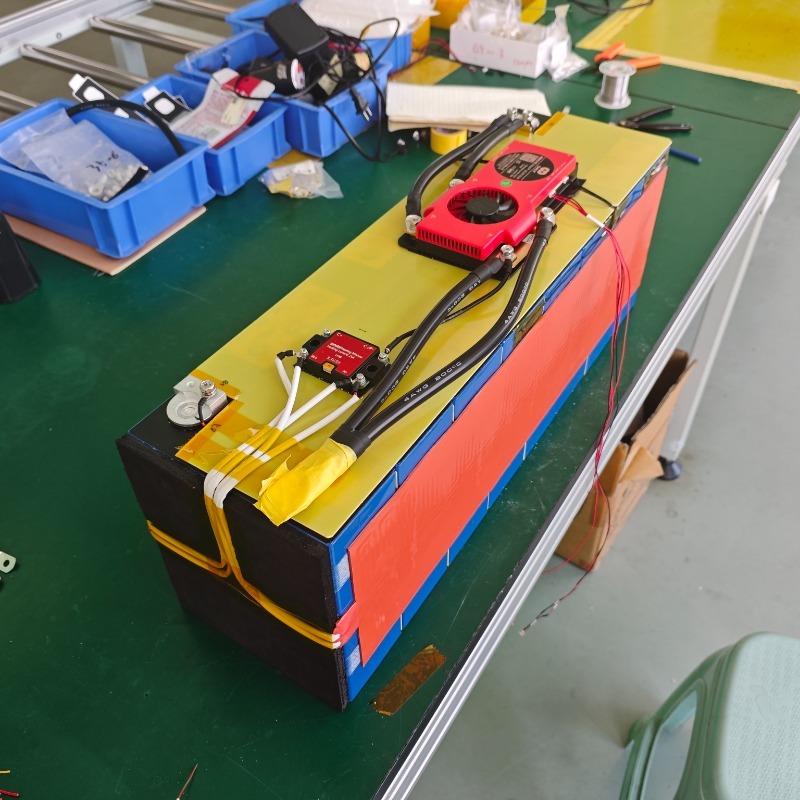
Lithium iron phosphate (LFP) batteries installed in cold regions—whether at northern latitudes, high elevations, or inside unheated outdoor cabinets—lose both charge acceptance and usable capacity once temperatures fall below freezing. One practical solution is a self-heating LiFePO4 pack, which incorporates heating elements and thermal regulation directly into the battery enclosure. This allows the system to charge and discharge reliably even in sub-zero conditions. For anyone specifying batteries in off-grid, telecom, mobile, or cold-weather backup applications, it is important to know how this technology works, when it genuinely pays off, and which specifications matter most.
Standard LFP cells face two separate problems in freezing weather. Discharging becomes less efficient: at −20°C, available capacity can drop by 20–40%, depending on cell quality and the rate of discharge. Charging, however, is the greater concern. At low temperatures, lithium ions cannot properly insert into the graphite anode. Instead, they deposit as metallic lithium on the anode surface. This plating effect permanently reduces capacity, raises internal resistance, and can eventually lead to internal short circuits. To prevent damage, most well-designed battery management systems block charging entirely below 0°C. As a result, a standard pack cannot accept power from solar panels, generators, or other sources until the cells warm up.
A self-heating battery pack positions thin resistive heating films or positive temperature coefficient (PTC) elements between the cells or against the inner walls of the case. These heaters are powered either by the battery’s own stored energy or by an external DC supply. The BMS monitors temperature sensors placed throughout the pack and switches the heaters on when the cells fall below a preset threshold—usually between 0°C and 5°C. Once the cells reach a safe charging range, typically 5°C to 10°C, the BMS allows charging to begin and cycles the heaters as needed to hold the temperature within that window.
Some designs take a different approach by passing high-frequency alternating current through the cells themselves. This internal AC heating warms the battery more quickly and uniformly than external heating films, but it requires more advanced BMS hardware. Most commercial self-heating batteries on the market today use resistive film heating because it is simpler, more affordable, and proven in the field.
Heating energy comes from one of two sources: the battery itself or an external charging system. Self-powered packs are straightforward to install at remote sites, but they use a portion of stored capacity to stay warm. In sustained cold conditions, daily self-consumption often ranges from 3% to 8% of the battery’s total capacity, depending on how well the enclosure is insulated and how low the ambient temperature drops. Externally powered configurations, sometimes called grid-assisted or charge-warming systems, use incoming solar, generator, or utility power to raise the cell temperature before charging starts. This approach preserves the battery’s own energy. Many higher-end packs can switch between these modes automatically.
The main benefit is straightforward: a heated LiFePO4 battery can accept charge in conditions that would force a standard battery to shut down. For off-grid solar installations in winter, this means the system can continue storing energy from short daylight hours instead of sitting idle. For backup applications, the battery can begin recharging from a generator immediately after a cold-weather outage, rather than waiting for the environment to warm up.
Keeping cells within a suitable temperature range during both charging and discharging also improves winter capacity and extends the battery’s useful life. The permanent damage caused by lithium plating is avoided. Over a multi-year service life, this can reduce total cost of ownership compared with a standard pack that is either damaged by cold charging or unavailable for part of the year.
Self-heating also removes much of the external thermal management burden. Without it, installers often need to construct insulated enclosures, mount separate heating pads, or place the battery in a heated room. Each of those measures adds cost and potential failure points. An integrated solution simplifies the installation: mount the pack, make the electrical connections, and let the BMS handle temperature control automatically. This is especially valuable in remote cold-climate sites where maintenance visits are difficult or expensive.
Remote and off-grid power systems—such as telecom towers, weather stations, cabins, and pipeline monitors—frequently operate in unheated locations with minimal winter access. A self-heating battery helps these systems remain operational through the coldest months, reducing the number of service trips and avoiding outages caused by standard packs refusing to charge.
In RVs, boats, and other mobile applications, freezing temperatures at night are common during spring and autumn. A self-heating house battery keeps inverters, lights, and water pumps running, and it can accept a charge from the alternator or shore power the next morning. For full-time travelers, not having to manage battery temperature manually is a significant convenience.
Commercial and industrial backup systems also benefit. Outdoor UPS cabinets and unheated utility rooms in cold regions need batteries that can perform without special climate control. A self-heating pack stays ready to deliver power instantly when the grid fails.
In larger distributed storage applications, such as community solar, microgrids, and edge-of-grid installations, active HVAC is often unavailable. Self-heating batteries can reduce the need for conditioned enclosures and lower overall project cost.
Several specifications deserve close attention before selecting a self-heating LiFePO4 battery.
First, verify the heating method and the temperature range. Determine whether the pack uses resistive film, PTC elements, or AC internal heating. Check the minimum discharge temperature—often −20°C to −30°C—and the minimum charge temperature with heating active, which should also be clearly stated. Some BMS units allow the user to adjust the heating setpoints; others are fixed at the factory.
Second, examine heating energy use. A well-insulated pack with efficient heaters may consume only 3–5% of its capacity per day at −10°C, while a poorly insulated unit can require 10% or more. Ask for measured data rather than relying only on marketing claims.
Third, review the BMS and safety certifications. The BMS should manage heating independently from charging and discharging, and it must provide standard protections: over-charge, over-discharge, over-current, short-circuit, and temperature cutoff. Depending on the target market, look for UN38.3, IEC 62619, UL 1973, or CE certification. For grid-connected projects, confirm compliance with local electrical and fire codes.
Fourth, confirm cell quality and expected cycle life. Self-heating protects the cells, but the underlying cell chemistry and manufacturing quality determine how long the battery will last. Request the cell manufacturer’s datasheet, the cycle life rating at 80% depth of discharge, and confirmation that the pack uses grade-A cells.
Finally, consider physical fit, communications, and warranty. Check the dimensions against your enclosure, the supported communication protocols (CAN, RS485, Bluetooth), and compatibility with your inverter or charge controller. If you may add capacity later, confirm whether parallel expansion is supported. A quality pack should carry a warranty of five to ten years that covers not only the cells but also the BMS and heating system.
Self-heating is not a substitute for sound system design. Resistive heating consumes energy, and in extremely cold environments below about −30°C with no external charging source, a self-powered pack can eventually drain itself just keeping warm. In those conditions, a combination of heavy insulation, external heating assistance from a generator or grid, and a larger battery bank may be more practical than relying on self-heating alone.
Self-heating packs also carry a higher upfront cost than standard LFP batteries of the same capacity. That premium only makes sense when cold-weather charging is actually required. In temperature-controlled spaces or climates that never freeze, a standard LiFePO4 pack remains the more economical option.
A self-heating LiFePO4 battery addresses a serious limitation of conventional LFP chemistry: the inability to charge safely in freezing temperatures. By integrating heating elements, multiple temperature sensors, and BMS-controlled thermal management into a single pack, these batteries offer dependable year-round operation in off-grid, mobile, backup, and distributed storage applications located in cold climates.
The technology is not universally necessary. It costs more and consumes energy for heating. But when winter charging is a genuine requirement, an integrated self-heating pack is often more reliable and cost-effective than building a separate heated enclosure or managing external heating pads. When comparing suppliers, prioritize verified heating performance data, BMS quality, cell grade, certifications, and warranty terms. The right choice will reduce maintenance visits, prolong battery life, and keep the system running through the harshest winter conditions.
Most packs activate heating when cell temperature falls below 0°C to 5°C. The BMS then keeps the cells between 5°C and 10°C during charging. Some models allow the user to adjust these thresholds through software.
Yes. Discharge is generally permitted at temperatures as low as −20°C to −30°C, though available capacity will be reduced. The heater mainly exists to make charging safe.
Daily self-consumption typically ranges from 3% to 10% of pack capacity, depending on insulation, ambient temperature, and heater efficiency. Externally powered heating modes can eliminate self-consumption when another power source is available.
When properly designed and certified, yes. The BMS continuously monitors cell temperatures and prevents overheating. Choose packs with recognized certifications and avoid unbranded products with undocumented BMS behavior.
It can be done, but external pads require separate temperature control and careful installation. Unless approved by the battery manufacturer, they may void the warranty. Integrated self-heating packs are engineered as a complete system and are generally safer and more reliable.
Welcome to contact us:
Inquire more product details from the: Lithium Ion Battery Suppliers
WhatsApp/Wechat/Mobile: +86 13326321310
Email: info@battery-energy-storage-system.com
Website: www.battery-energy-storage-system.com
Ready to power your energy systems with the best in the industry?
Contact us today to get the latest pricing and discuss your needs with our team!
Next:2 pcs 3.3kW Onboard Chargers Shipped to Colombia
Previous:16 pcs EVE 3.2V 105Ah LiFePO4 Battery Cells Shipped to Sweden