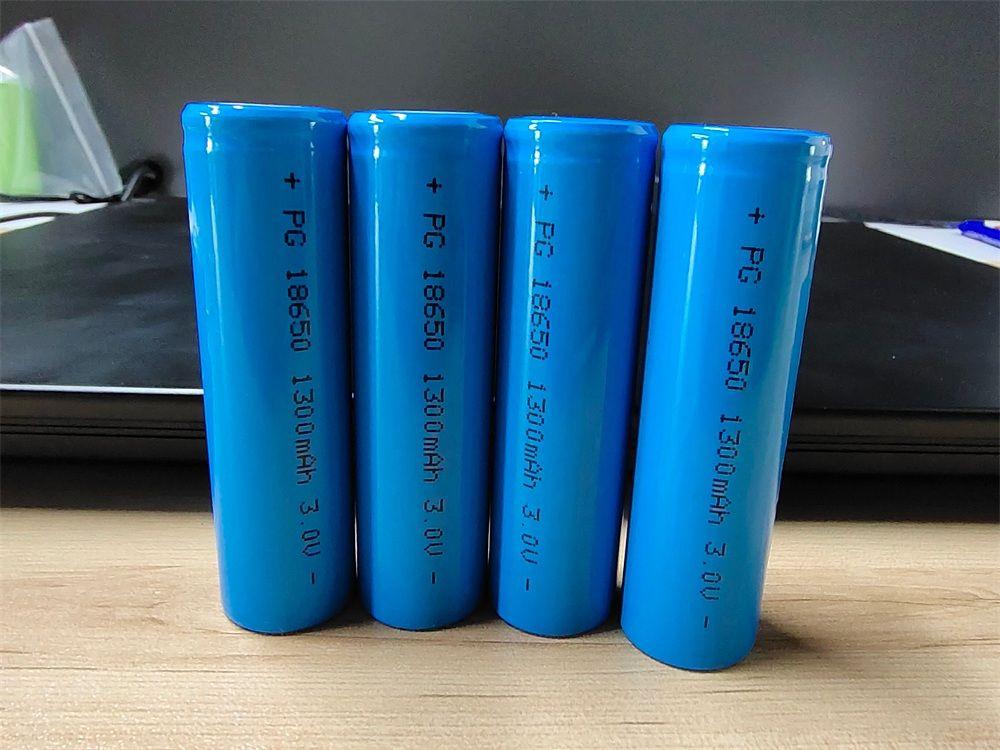
The designation “18650” directly reflects the cell’s physical dimensions: an 18‑millimeter diameter and a 65‑millimeter length. The trailing zero signals a cylindrical shape. Thanks to this standardization, cells from different manufacturers can be mechanically interchanged in the majority of pack designs.
The 18650 format became prominent in the early 2000s, largely propelled by the laptop computer industry. As manufacturing volumes grew, costs dropped and quality rose, opening the door to broader uses including electric vehicles, power tools, and eventually stationary energy storage.
Although newer formats such as the 21700 have captured market share in recent years, the 18650 lithium battery continues to serve as a workhorse. It offers the deepest supply chain, the widest base of manufacturers, and the most extensive set of real‑world performance data of any cylindrical lithium cell.
A high‑quality NMC 18650 cell typically meets the following baseline specifications:
- Nominal voltage: 3.6 V to 3.7 V
- Capacity range: 2 Ah to 3.5 Ah (premium storage‑grade cells generally fall between 2.5 Ah and 3 Ah)
- Energy per cell: roughly 9 to 12 watt‑hours
- Continuous discharge rate: 0.5C to 2C standard; high‑drain variants can reach 10C or more
- Cycle life: 500 to 2,000 full cycles at 80% depth of discharge, depending on chemistry and grade
- Weight: approximately 45 to 50 grams per cell
LFP 18650 cells operate at a nominal 3.2 V and usually deliver 1.5 Ah to 2.5 Ah, but they provide substantially longer cycle life and superior thermal stability. Specifications vary widely by manufacturer, cell grade, and intended application—industrial storage‑grade cells differ markedly from consumer‑grade units.
Nickel manganese cobalt (NMC) is the most prevalent chemistry in 18650 lithium battery production. NMC cells achieve the highest energy density in this format, with top‑tier cells reaching 3.5 Ah or more at a nominal 3.7 V.
NMC 18650 cells are offered in multiple formulations optimized for different targets:
- High‑energy variants: maximum capacity, lower discharge rates; suitable for energy storage and consumer electronics
- High‑power variants: lower capacity but higher discharge current; ideal for power tools and e‑bikes
- General‑purpose variants: balanced performance; the most common grade for general storage applications
NMC cells deliver excellent energy density but have a shorter cycle life and a lower thermal runaway threshold than LFP alternatives.
Lithium iron phosphate (LFP) chemistry is also available in the 18650 format, though it is less common because of its lower energy density. LFP 18650 cells typically supply 1.5 Ah to 2.5 Ah at 3.2 V nominal, with cycle life ratings of 2,000 to over 5,000 full cycles.
For stationary energy storage applications where longevity and safety are paramount, LFP 18650 cells bring clear advantages:
- Outstanding thermal stability with minimal risk of thermal runaway
- Long cycle life suited to daily deep‑cycling
- No dependence on cobalt, improving supply‑chain stability and ESG profiles
The trade‑off is a lower energy density—roughly 30 to 40 percent less energy per cell than an equivalent NMC 18650—meaning more cells and greater physical space are required for the same energy capacity.
18650 cells are often identified by three‑letter chemistry codes:
- ICR: Lithium cobalt oxide (LiCoO₂). High energy density but lower safety; primarily consumer‑grade.
- INR: Lithium nickel manganese cobalt (NMC). Balanced performance; the most common industrial and storage‑grade format.
- IFR: Lithium iron phosphate (LFP). Long cycle life, excellent safety; increasingly adopted in storage applications.
- IMR: Lithium manganese oxide (LiMn₂O₄). High discharge rate, shorter cycle life; intended for high‑drain uses.
For B2B energy storage projects, INR (NMC) and IFR (LFP) are the relevant designations. ICR cells are generally consumer‑grade and are unsuitable for industrial storage because of safety and longevity limitations.
The most apparent difference is physical size and the resulting energy capacity. A 21700 cell has roughly 50 percent greater volume than an 18650 and delivers about 35 to 50 percent more energy per cell.
For battery pack designers, this translates into:
- Fewer cells per kWh: 21700 packs require fewer cells, reducing assembly complexity and BMS channel count
- Higher packing efficiency: larger cells can achieve better volumetric energy density at the pack level
- Smaller footprint: 21700 packs are generally more compact for the same energy capacity
Nevertheless, 18650 cells still hold advantages when space is less constrained and proven reliability takes priority. The format’s longer market presence means more performance data, more qualified manufacturers, and often better pricing at moderate volumes.
Despite their smaller size, 18650 cells actually possess a thermal advantage: the shorter distance from the core to the surface improves heat dissipation per unit volume.
In practice, both formats are thermally viable for stationary storage when properly designed. The safety profile depends far more on chemistry (NMC vs. LFP) and pack‑level thermal management than on the choice between 18650 and 21700 form factors. Both formats incorporate standard safety features such as positive temperature coefficient (PTC) devices, current interrupt devices (CID), and pressure venting mechanisms.
The 18650 lithium battery benefits from the longest production history and the largest number of manufacturing sources. This creates a competitive market with multiple qualified suppliers, which can be advantageous for price negotiation and supply‑chain diversification.
21700 production has expanded rapidly due to EV industry demand, narrowing the cost gap and, in some cases, achieving lower per‑kWh pricing at very high volumes. For small to medium production runs, however, 18650 cells frequently remain more price‑competitive because of broader supplier availability and commodity market dynamics.
Designing an 18650 lithium battery pack starts with determining the correct series‑parallel arrangement. Cells connected in series raise voltage; cells in parallel boost capacity.
A common low‑voltage storage configuration is 13S NMC cells (13 × 3.7 V = 48.1 V nominal) or 16S LFP cells (16 × 3.2 V = 51.2 V nominal), both compatible with standard 48 V inverter platforms. Parallel groups—designated as “P”—determine the total amp‑hour capacity: a 13S5P configuration, for instance, delivers the voltage of 13 cells in series with five times the capacity of a single cell.
Mechanical assembly options include:
- Plastic cell holders: standardized holders that position cells in grid patterns; ideal for low‑ to medium‑volume production
- Cell bonding and potting: adhesive or epoxy encapsulation for ruggedized or vibration‑resistant designs
- Welding methods: spot welding is standard for 18650 tab connections; laser welding is used for high‑volume production
Effective thermal design is critical for maximizing the life and safety of an 18650 pack. The cylindrical shape creates natural air gaps between cells, which can be either an advantage or a disadvantage depending on the cooling strategy.
Common thermal approaches for 18650 packs:
- Natural convection: suitable for low‑C‑rate applications with adequate cell spacing; the simplest and lowest‑cost approach
- Forced air cooling: fans or blowers directing airflow through cell gaps; effective for moderate power levels
- Liquid cooling: cold plates or immersed cooling for high‑power applications; more complex but provides uniform temperature control
- Phase‑change materials: thermal pads or potting compounds that absorb peak heat; a passive solution for rugged environments
For stationary energy storage operating at charge‑discharge rates of 0.5C or lower, natural or forced air cooling is generally adequate when proper cell spacing is maintained.
The battery management system must match the pack’s series cell count and deliver adequate monitoring precision. For 18650 packs, key BMS requirements include:
- Cell voltage monitoring: per‑cell voltage sensing with millivolt accuracy across all series positions
- Current measurement: shunt or Hall‑effect sensing rated for the maximum charge and discharge currents
- Cell balancing: passive balancing is standard for 18650 storage packs; active balancing may be justified for systems with a high series count
- Temperature sensing: multiple NTC thermistors distributed across the pack to detect hot spots
- Communication: CAN bus or RS‑485 compatibility with the inverter and energy management system
Integrators building 18650‑based storage systems should give priority to BMS platforms with proven compatibility with their target inverter brand, since communication protocol mismatches are a frequent source of integration difficulties.
18650 lithium battery cells are widely used in residential and small commercial energy storage systems, particularly in modular 48 V battery packs that can be paralleled to scale capacity. Many early residential storage products were built on 18650 platforms, and the format remains common in entry‑level and mid‑tier storage solutions.
For small C&I installations up to several hundred kWh, 18650‑based modular systems offer a good balance of cost, performance, and scalability. Systems can be expanded incrementally by adding extra battery modules as energy needs grow.
The combination of strong energy density and proven reliability makes 18650 cells well‑suited for portable power stations and off‑grid storage. Portable applications benefit from the compact size and light weight of 18650‑based packs when compared with lead‑acid alternatives.
Portable power stations ranging from 300 Wh to 3 kWh commonly employ 18650 cell configurations, paired with integrated inverters, MPPT solar charge controllers, and multiple output ports to create all‑in‑one power solutions for camping, emergency backup, construction sites, and remote equipment power.
18650 cells are also used in various specialty storage applications where the format’s maturity and broad availability offer distinct advantages:
- Telecom backup power: 48 V battery banks for cell tower and communication site backup
- Solar street lighting: small battery packs combined with PV panels for off‑grid lighting
- Medical and laboratory equipment: uninterruptible power for sensitive instruments
- Marine and RV storage: compact battery banks for auxiliary power
In these specialty segments, the 18650’s long track record and standardized form factor reduce engineering risk compared with newer cell formats.
Not all 18650 cells are created equal. The market spans everything from premium automotive‑grade cells to low‑cost consumer‑grade units with markedly different performance and reliability characteristics.
Key certifications and quality indicators for B2B storage applications include:
- IEC 62133: international safety standard for lithium cells and batteries
- UN 38.3: mandatory transportation testing for lithium batteries
- UL 1642: Underwriters Laboratories standard for lithium battery safety
- ISO 9001: manufacturer quality management certification
Reputable industrial‑grade suppliers furnish detailed datasheets containing cycle‑life curves, temperature derating data, and impedance specifications. Cells marketed mainly for vaping, flashlights, or general consumer use are generally inappropriate for commercial energy storage applications.
For B2B integrators sourcing 18650 cells at volume, several strategic factors influence procurement decisions:
- Multiple sourcing: the 18650 format’s broad manufacturer base permits multi‑sourcing strategies that mitigate supply‑chain risk
- Cell matching: graded and matched cells improve pack performance and longevity but add cost. For storage applications, matched cells are worth the premium
- MOQ flexibility: mid‑tier 18650 manufacturers often offer lower minimum order quantities than premium 21700 suppliers, making the format accessible for smaller production runs
- Long‑term availability: while 21700 is the growth format, 18650 production remains substantial and is expected to continue for many years due to the installed base and replacement demand
Working with authorized distributors or directly with tier‑1 or tier‑2 manufacturers ensures traceable production batches, consistent quality, and reliable technical support.
The 18650 lithium battery remains a foundational technology in energy storage, despite the growing popularity of larger cylindrical formats. Its proven reliability, wide manufacturer base, and extensive history of real‑world deployment make it a low‑risk choice for many storage applications, from residential battery systems to portable power stations and specialty industrial storage.
For system integrators and procurement professionals, successful 18650‑based storage design hinges on selecting the appropriate chemistry and quality grade for the application, implementing sound thermal and BMS designs, and sourcing from qualified, traceable suppliers. While 21700 and larger formats will continue to gain market share in high‑volume storage applications, the 18650 format will stay relevant for years to come—particularly in segments where proven performance, multi‑sourcing capability, and moderate production volumes are the priorities.
The primary difference is physical size: 18650 cells measure 18 mm × 65 mm, whereas 21700 cells measure 21 mm × 70 mm. The larger 21700 format delivers roughly 35 to 50 percent more energy per cell, enabling smaller, lighter battery packs. The 18650 format has a longer production history, more manufacturers, and often better pricing at moderate volumes. Both formats are used in energy storage applications, with 21700 gaining ground in newer, higher‑density designs.
Cycle life hinges on chemistry, depth of discharge, and operating temperature. Standard NMC 18650 cells typically deliver 500 to 1,500 full cycles at 80 percent DOD, while LFP 18650 cells achieve 2,000 to over 5,000 cycles. In practical stationary storage terms with daily moderate cycling, this equates to 3 to 10 years of service before reaching 80 percent capacity retention. Storage‑grade cells operated within temperature specifications and at conservative depths of discharge will last significantly longer than consumer‑grade cells operated aggressively.
Consumer‑grade 18650 cells are not recommended for commercial energy storage applications. They are designed for low‑cycle consumer electronics use and generally have shorter cycle life, looser capacity tolerances, and less consistent quality. Commercial storage systems require industrial‑grade cells with matched capacity and internal resistance, proper certifications, and manufacturer‑backed datasheets and warranties. Mixing unmatched cells in a pack leads to accelerated degradation, reduced capacity, and potential safety issues.
The number 18650 refers to the physical dimensions of the cylindrical cell: 18 millimeters in diameter and 65 millimeters in length. This follows the standard lithium‑ion cell naming convention where the first two digits indicate the diameter, the next two the length, and the trailing zero denotes a cylindrical shape. Other common cylindrical formats follow the same rule, including 14500 (AA size), 16340 (CR123 size), 21700, and 26650.
18650 batteries are lithium‑ion cells housed in a cylindrical metal can, not lithium‑polymer. Lithium‑polymer (LiPo) cells use a soft pouch or polymer packaging and come in various non‑standard shapes. The rigid metal casing of 18650 cells provides structural integrity and contributes to their safety profile by containing internal pressure and adding thermal mass. Both are lithium‑based chemistries but employ different packaging and electrolyte formats.
Welcome to contact us:
Inquire more product details from the: Lithium Ion Battery Suppliers
WhatsApp/Wechat/Mobile: +86 13326321310
Email: info@battery-energy-storage-system.com
Website: www.battery-energy-storage-system.com
Ready to power your energy systems with the best in the industry?
Contact us today to get the latest pricing and discuss your needs with our team!
Next:3.3kW On Board Battery Charger Shipped to India
Previous:2.4V 6Ah LTO Batteries Shipped to New Zealand