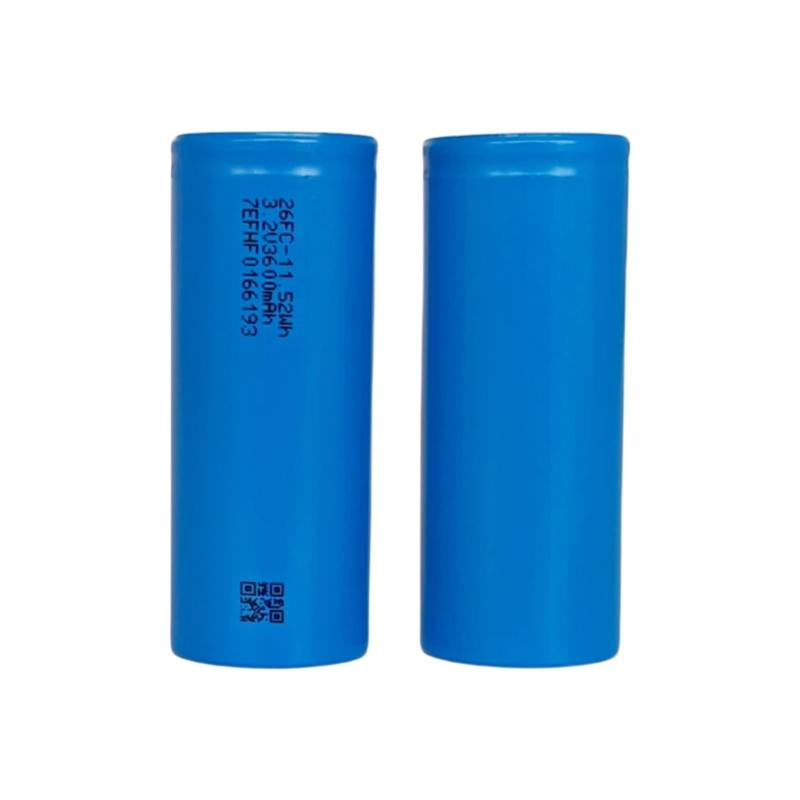
If your work involves power tools, energy storage, or electric mobility, you’ve likely come across the 26650 lithium cell. It’s larger than the common 18650, stores more energy, and lasts longer. Here’s what sets it apart and where it fits best.
A 26650 is a rechargeable cylindrical cell measuring roughly 26.3 mm across and 65.3 mm tall. That extra girth compared to an 18650 translates into noticeably more stored energy.
Most 26650 cells deliver a nominal voltage of 3.2 V when using LiFePO4 chemistry. Capacity typically falls between 3,000 mAh and 6,000 mAh, depending on the manufacturer and the specific chemistry inside.
Common chemistry types:
• LiFePO4 (Lithium Iron Phosphate) – safe and long‑lasting
• NMC (Nickel Manganese Cobalt) – higher energy density
• LCO (Lithium Cobalt Oxide) – good for compact electronics
You’ll find these batteries in gear that demands steady power over long stretches.
More Energy, Longer Runtime
A quality 26650 can reach around 180 Wh/kg. Devices run longer without needing a larger pack.
What that gives you:
• Longer intervals between charges
• Fewer charge cycles overall
• Better efficiency
• Dependable performance in high‑drain equipment
That’s why they appear in energy storage systems, EVs, industrial machinery, and portable power stations.
Bigger Capacity Range
Compared with smaller cylindrical cells, the 26650 packs significantly more capacity.
Typical numbers:
| Parameter | Typical Value |
| Capacity | 3,000 – 6,000mAh |
| Nominal Voltage | 3.2V (LiFePO4) / 3.6V (NMC) |
| Max Continuous Discharge Current | Up to 30 A |
More capacity means fewer recharge cycles — a critical advantage in demanding applications.
Handles Heavy Loads Smoothly
Some jobs pull a lot of current fast. The 26650 delivers.
Typical discharge performance:
• Continuous discharge: up to 20 A
• Pulse discharge: over 40 A
• Stable voltage even under heavy load
This makes it a strong choice for:
• Power tools
• High‑output flashlights
• Drones
• Robotics
• Electric mobility
You get consistent power even when pushing hard.
Built‑In Safety Features
Safety is critical with lithium batteries. Modern 26650 cells come with:
• Overcharge protection
• Over‑discharge protection
• Short‑circuit protection
• Thermal management
• Rugged outer casing
LiFePO4 versions are especially safe because they resist thermal runaway far better than other chemistries.
That makes them suitable for:
• Medical equipment
• Backup power systems
• Security installations
• Solar storage
Many carry certifications such as CE, RoHS, and UN38.3.
Long Cycle Life
One reason businesses choose 26650 batteries is their longevity.
Depending on chemistry and how they’re used:
• LiFePO4: 2,000 to 5,000 cycles
• Often retain over 80% capacity after thousands of cycles
• Fewer replacements = lower long‑term costs
For industrial users, that durability adds up to real savings.
Robust Cylindrical Build
The round shape isn’t just for looks. It gives you:
• Good impact resistance
• Better heat dissipation
• Reliable performance under vibration
• Easy integration into battery packs
Standard dimensions also simplify manufacturing and pack assembly.
Size and Capacity
| Feature | 26650 Battery | 18650 Battery |
| Diameter | 26mm | 18mm |
| Length | 65mm | 65mm |
| Capacity | 3,000 – 6,000mAh | 1,500 – 3,600mAh |
| Weight | ~94g | ~45g |
| Discharge Rate | Higher | Lower |
LiFePO4
Pros:
• Extremely safe
• Up to 5,000 cycles
• Handles heat well
• Reliable year after year
Best for:
• Energy storage systems
• Electric buses
• Solar installations
• Industrial gear
NMC
Pros:
• High energy density
• Lighter weight
• Strong performance
Best for:
• Electric vehicles
• Portable electronics
• Mobility devices
LCO
Pros:
• Decent energy density
• Compact
Best for:
• Smartphones
• Laptops
• Consumer electronics
Industrial Equipment and Power Tools
Factory machinery often needs dependable high‑current power. 26650 cells drive drills, saws, industrial robots, and automated lines. Their long lifespan helps cut maintenance costs.
Energy Storage Systems
Solar and other renewable installations are turning to 26650 LiFePO4 batteries more and more.
Why:
• Excellent capacity retention
• Long service life
• Stable temperature behaviour
• Low self‑discharge
Typical uses: residential solar storage, commercial systems, solar street lights, and backup power.
Robotics and Automation
Robots need stable power for motors, sensors, and controllers. 26650 batteries deliver steady voltage, high discharge rates, and long operating life.
Medical Devices
Medical gear demands reliable power and maximum safety. LiFePO4 26650 cells are common in portable monitors, emergency equipment, and diagnostic tools.
Security and Surveillance
Security systems can’t afford downtime. 26650 batteries power cameras, alarms, and backup infrastructure with long life and stable performance.
Keep these factors in mind:
Capacity Requirements
Match capacity to your use case:
• Light duty: 3,000–4,000 mAh
• Medium duty: 4,000–5,000 mAh
• Heavy duty: 5,000–6,000 mAh
Discharge Rate
If your equipment draws high current, make sure the battery can handle it without excessive voltage sag.
Chemistry
Choose based on your priorities:
• LiFePO4 when safety and lifespan matter most
• NMC when you want higher energy density
• LCO for compact consumer devices
Certifications and Quality
Buy from known manufacturers. Look for certifications like CE, RoHS, and UN38.3.
A few simple habits help a lot:
• Keep the charge between 20% and 80% whenever practical
• Avoid fully draining the battery too often
• Store in a cool, dry place
• Use a charger designed for 26650 cells
• Recharge stored batteries every 3–6 months
• Check battery health from time to time
Proper care can add years to battery life.
The 26650 lithium battery combines high capacity, solid energy density, long cycle life, and strong safety features. Whether you’re powering industrial machinery, solar storage, robots, medical gear, or security systems, it delivers dependable performance in demanding environments.
What’s the typical capacity of a 26650 lithium battery?
Most fall between 3,000 mAh and 6,000 mAh, depending on chemistry and brand.
Are 26650 batteries better than 18650?
For high‑power applications, yes. They offer higher capacity, better discharge rates, and longer runtime. They are, however, bigger and heavier.
How long does a 26650 LiFePO4 battery last?
A good one can handle 2,000 to 5,000 charge cycles — among the longest you’ll find in rechargeable batteries.
Are 26650 batteries safe?
Quality cells include multiple protection mechanisms. LiFePO4 versions are among the safest lithium chemistries available.
Which industries use 26650 batteries most?
Renewable energy, industrial manufacturing, healthcare, robotics, security, transportation, and infrastructure development.
Welcome to contact us:
Inquire more product details from the: Lithium Ion Battery Suppliers
WhatsApp/Wechat/Mobile: +86 13326321310
Email: info@battery-energy-storage-system.com
Website: www.battery-energy-storage-system.com
Ready to power your energy systems with the best in the industry?
Contact us today to get the latest pricing and discuss your needs with our team!
Next:3.2V 400Ah Thunder Sky Winston LiFeYPO4 Batteries Shipped to Canada by FedEx
Previous:Headway 38120S 10Ah and 40152S 15Ah LiFePO4 Batteries Shipped to Canada