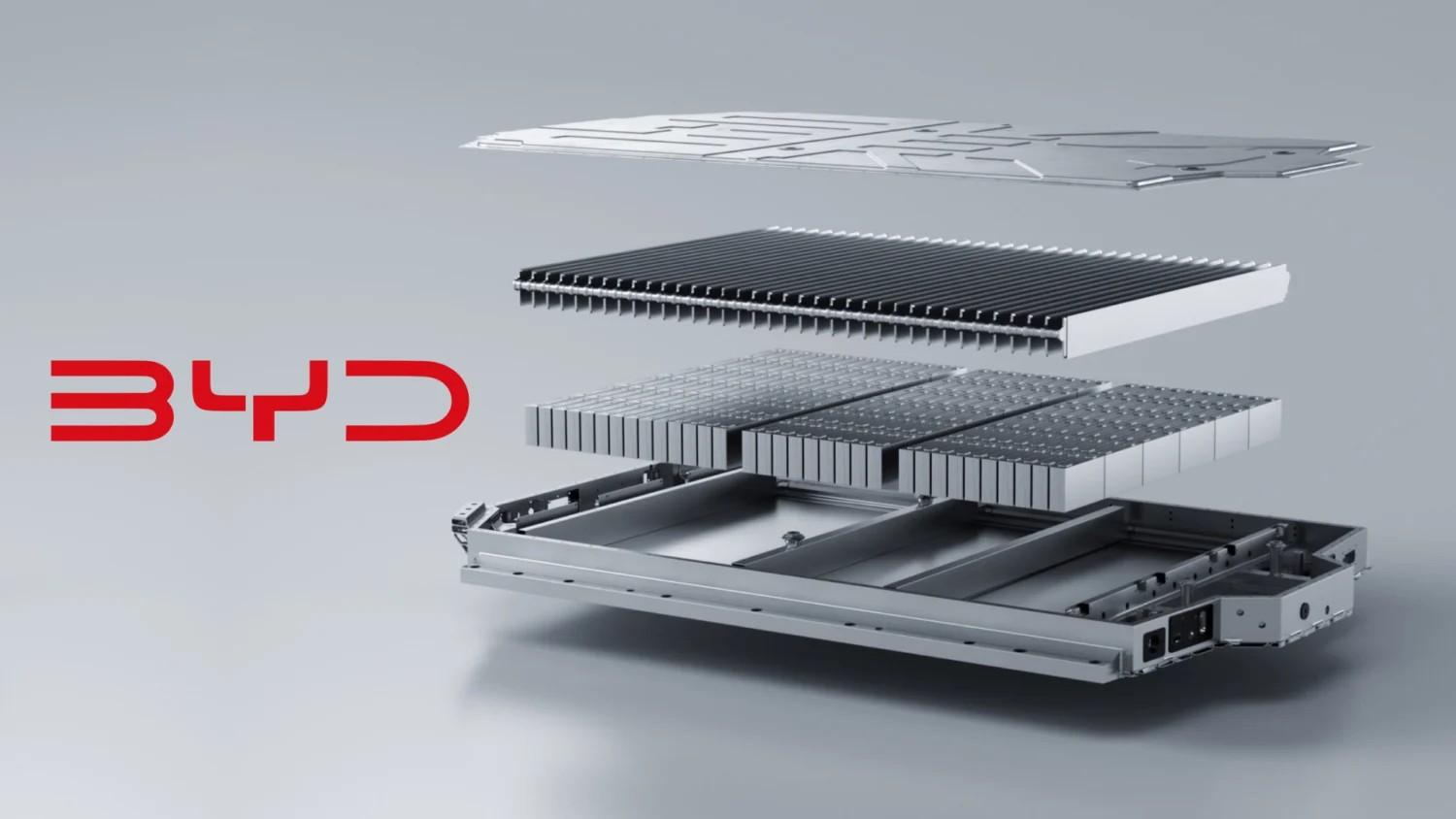
Chinese automaker BYD has recently submitted six new patents related to solid-state battery (SSB) technology, further expanding its research efforts following an earlier patent approval for cathode composite structures. These latest filings focus on improving the interface compatibility between solid electrolytes and electrodes, addressing key challenges in material design, manufacturing processes, and battery reliability.
Among the six patents, four are centered on advanced cathode structures. One patent introduces an ion-conductive and electrochemically stable intermediate layer placed between halide and sulfide electrolytes. This design is intended to prevent direct contact and undesirable chemical reactions, helping improve battery durability and cycle performance. Another patent proposes adding a solid-electrolyte buffer layer between the cathode active material and sulfide electrolyte to minimize direct interaction and reduce the risk of thermal runaway, with the heat release threshold controlled below 117 J/g.
A third innovation features a dual-layer composite cathode design. The inner layer combines single-crystal cathode materials with solid electrolytes to improve mechanical strength and resistance to cracking, while the outer layer uses polycrystalline cathode materials paired with a different electrolyte system to enhance high-rate charging and discharging performance. The fourth cathode-related patent presents a three-component composite structure that integrates lithium-modified metal oxides, sulfide materials, and solid electrolytes. BYD aims to reduce interfacial resistance, increase energy capacity, and improve long-term cycling stability through this approach.
The remaining two patents focus on manufacturing optimization and quality control. One describes the use of ionic liquid wetting agents with a gradient distribution inside the electrode structure, which can improve ion transport pathways, strengthen solid-solid contact, and extend battery lifespan. The other introduces a new quality evaluation parameter called “Re,” which measures the effective contact ratio between cathode and electrolyte particles. BYD suggests maintaining at least 60% perimeter contact to achieve better electrochemical performance.
Research from institutions such as the Chinese Academy of Sciences has also highlighted the role of smaller sulfide electrolyte particles in improving capacity retention, a concept that aligns with BYD’s Re evaluation standard. Industry sources indicate that BYD is targeting small-scale production of dual-electrolyte solid-state battery cells around 2027, with early validation expected in disguised test vehicles.
Although solid-state batteries are widely considered a promising next-generation technology due to their higher energy density, improved safety, and longer driving range potential, large-scale commercialization still faces challenges in materials, manufacturing consistency, and cost reduction. BYD’s latest patent activity demonstrates its continued efforts to overcome these obstacles and accelerate the development of practical solid-state battery solutions.
Welcome to contact us:
Inquire more product details from the: Lithium Ion Battery Suppliers
WhatsApp/Wechat/Mobile: +86 13326321310
Email: info@battery-energy-storage-system.com
Website: www.battery-energy-storage-system.com
Ready to power your energy systems with the best in the industry?
Contact us today to get the latest pricing and discuss your needs with our team!
Next:CALB CAM72 72Ah LiFePO4 Batteries Shipped to the UK
Previous:5 pcs CATL 3.2V 280Ah LiFePO4 Cells Shipped to Japan