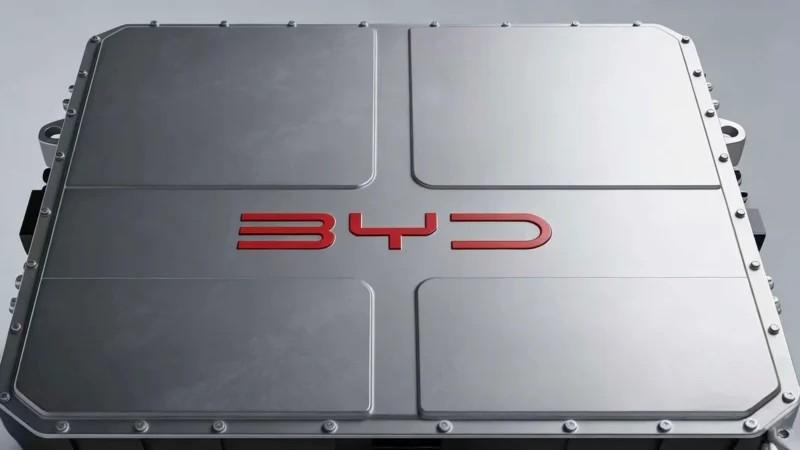
BYD has recently disclosed a patent application for a cathode composite structure intended for solid-state battery systems. Released by the China National Intellectual Property Administration on July 28, 2026, the filing outlines a dual-electrolyte method that combines halide and sulfide materials with the cathode active component. Patent CN202510126712.6 (publication CN122474592A) describes the use of smaller halide electrolyte particles together with larger sulfide electrolyte particles to form a composite electrode, with the aim of addressing interface stability during repeated charge–discharge cycling.
BYD Group Chief Scientist Lian Yubo has singled out solid–solid interface stability as a key barrier to solid-state battery commercialization, remarking that the technology is still in a “tackling stage.” Although the new patent sets out material design and preparation processes, it does not include production validation data, performance specifications, or evidence of vehicle testing.
This latest filing follows a number of earlier BYD patents in the solid-state space. In May 2026, the company applied for a patent covering a composite solid electrolyte membrane consisting of inorganic particles embedded within a polymer electrolyte fiber network, which highlights a separate sulfide-based strategy. BYD has also submitted cathode-related patents such as CN113725405A for a cathode composite structure and CN121237834A for a dual-layer cathode coating.
BYD Lithium Battery CTO Sun Huajun has previously indicated that the cathode active material fraction in its all-solid-state architecture exceeds 85%, though specifics on test conditions and performance outcomes remain undisclosed. While patent publications offer a window into research priorities, they do not confirm whether a technology is production-ready or earmarked for near-term vehicle integration.
The broader battery industry continues to pursue solid-state solutions, with experts emphasizing the difficulty of scaling laboratory research to high-volume manufacturing. For example, work from the Chinese Academy of Sciences suggests that optimizing sulfide particle size can improve capacity retention in laboratory tests. Still, significant technical and production challenges must be resolved before solid-state batteries achieve large-scale adoption.
Welcome to contact us:
Inquire more product details from the: Lithium Ion Battery Suppliers
WhatsApp/Wechat/Mobile: +86 13326321310
Email: info@battery-energy-storage-system.com
Website: www.battery-energy-storage-system.com
Ready to power your energy systems with the best in the industry?
Contact us today to get the latest pricing and discuss your needs with our team!
Next:CALB 3.2V 230Ah LiFePO4 Cells and 48V 60Ah LiFePO4 Battery Pack Shipped to Guadeloupe
Previous:GBS 3.2V 300Ah LiFePO4 Batteries and Daly 4S 12V 300A Smart BMS Shipped to Cyprus