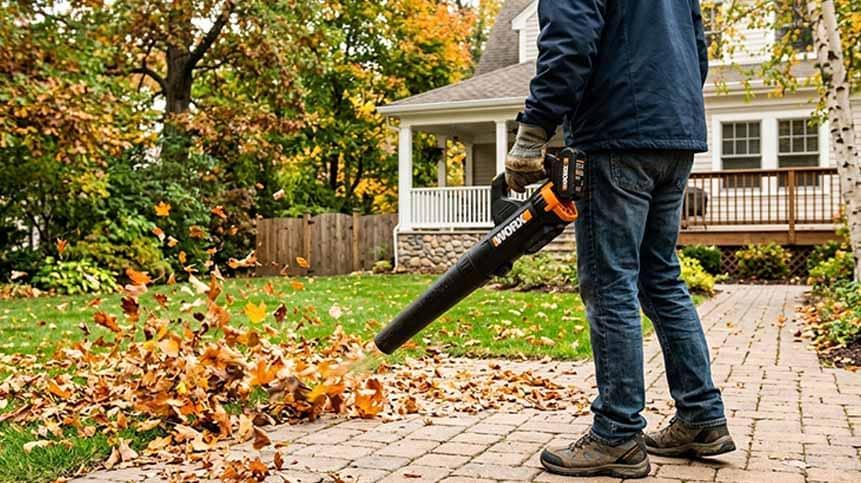
Choosing the right battery for your leaf blower has a direct impact on its power, runtime, and overall service life. Whether you’re tidying up a small garden or handling commercial landscaping jobs, the wrong battery leads to shorter work sessions, weaker performance, and more frequent replacements.
This guide explains voltage, capacity, compatibility, and care—so you can find a battery that matches both your blower and your workload.
A cordless leaf blower is only as good as the battery that powers it. The battery supplies the energy that spins the motor, determining how forcefully air is moved and how long you can work without stopping. An undersized or mismatched battery will leave you constantly reaching for the charger or unable to finish the job.
Almost all modern leaf blowers run on lithium-ion (Li-ion) batteries. Here’s how they stack up against older types:
Nickel-Cadmium (NiCd): Heavy, outdated, and affected by the “memory effect”—they lose capacity unless fully discharged before recharging. Not suited for today’s equipment.
Nickel-Metal Hydride (NiMH): A step up from NiCd, but still bulkier and less efficient than Li-ion. Rarely used in current blowers.
Lithium-Ion (Li-ion): Lightweight, powerful, and built to last. They recharge quickly, hold their charge well in storage, and don’t suffer from memory effect. This is the standard for all contemporary cordless blowers.
Voltage dictates how much force your blower can produce. A higher voltage generally delivers more power, which translates into higher airspeed (MPH) and greater air volume (CFM).
| Voltage Range | Best Suited For |
| 18V–20V | Light-duty tasks like small patios or garages |
| 36V–40V | Medium-duty work such as moderate leaf piles in average yards |
| 56V–80V | Heavy-duty or commercial use, wet leaves, and large areas |
Always use the voltage specified by your blower’s manufacturer. A lower-voltage battery will cause the tool to underperform; a higher-voltage battery most likely won’t fit and could damage the motor.
Amp-hours measure the battery’s energy capacity—think of it as the size of a fuel tank. A higher Ah rating means you can work longer before recharging.
2.0Ah: Provides about 15–25 minutes of runtime at medium speed. Lightweight and handy for quick jobs.
4.0–5.0Ah: Delivers roughly 30–50 minutes of operation. The best balance for most users.
6.0Ah and above: Gives you 60 minutes or more. Ideal for large properties, though the batteries are heavier and cost more.
Power tool brands use proprietary battery platforms. A battery from one brand will not work with a tool from another.
Example: A DeWalt 20V battery only fits DeWalt 20V tools. It won’t power a Ryobi, Makita, or any other brand’s blower.
This “ecosystem” approach makes it attractive to buy multiple tools from the same brand, letting you share batteries and chargers across your equipment.
Removable: The most common design. You can swap in a spare battery when one runs out and keep working. It also makes replacement easy once the battery eventually wears down.
Built-in: The battery is sealed inside the tool. This can result in a lighter, more streamlined blower, but once the battery dies, you have to stop and wait for a recharge. You also can’t upgrade to a higher-capacity battery later.
With proper care, a quality Li-ion battery should last 3–5 years or 300–500 charge cycles.
| Battery Capacity | Approximate Runtime |
| 2.0Ah | 15 – 20 minutes |
| 4.0Ah | 30 – 45 minutes |
| 5.0Ah+ | 45 – 60+ minutes |
While OEM (original equipment manufacturer) batteries are the safest choice, some companies specialize in high-quality replacements or performance upgrades.
Pros: They may offer higher capacity, extended lifespan, or a more attractive price compared to the OEM battery.
Cons: Quality varies widely. Ultra-cheap, unbranded batteries can be unsafe—risk of overheating or swelling—and may damage your tool. Always purchase from a reputable supplier that provides clear safety certifications (such as UL or CE).
Custom Solutions: Companies like BESS engineer batteries to match or exceed OEM specifications for specific models, which can be a reliable alternative for professionals or those looking for an upgrade.
Your aim should be to pair the battery with your blower and your typical workload. Start by confirming the voltage your blower requires. Then, choose a capacity (Ah) that gives you enough runtime to complete your regular tasks without constantly swapping batteries. Finally, stick with high-quality Li-ion batteries from your tool’s brand or a trusted third-party manufacturer, and care for them with the simple habits described above. This approach will keep your leaf blower performing reliably for many seasons to come.
Q: What’s the best battery for a typical homeowner?
A: A 40V or 56V leaf blower paired with a 4.0Ah or 5.0Ah Li-ion battery. This combination delivers enough power and runtime (30–50 minutes) for most properties without becoming too heavy.
Q: Can I use a higher Ah battery in my blower?
A: Yes. As long as the voltage matches, a higher Ah battery simply provides longer runtime. Be aware that the tool will be slightly heavier to handle.
Q: How can I tell when my battery is wearing out?
A: The clearest sign is dramatically reduced runtime. A battery that once lasted 40 minutes may now only last 15. Other signs include the blower losing power quickly under load, or the battery failing to hold a charge while in storage.
Q: Are off-brand batteries safe?
A: It depends. Reputable third-party brands that invest in proper engineering and safety testing can be safe and dependable. Steer clear of the cheapest options from unknown sellers—they often cut corners on essential safety features.
Welcome to contact us:
Inquire more product details from the: Lithium Ion Battery Suppliers
WhatsApp/Wechat/Mobile: +86 13326321310
Email: info@battery-energy-storage-system.com
Website: www.battery-energy-storage-system.com
Ready to power your energy systems with the best in the industry?
Contact us today to get the latest pricing and discuss your needs with our team!
Next:CALB 3.2V 230Ah LiFePO4 Battery Cells Shipped to the USA
Previous:3.3kW On Board Battery Charger delivered to Thailand