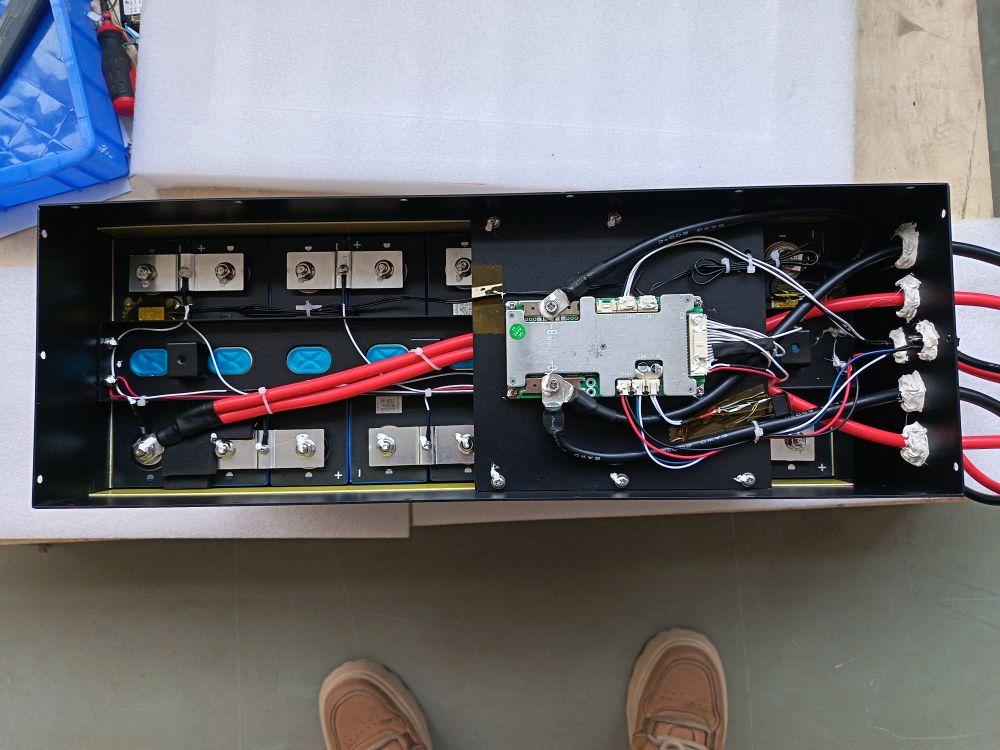
Every year, builders ruin expensive LiFePO4 battery banks by pairing them with the wrong Battery Management System. The cells might be top-tier CATL or Winston units, the wiring flawless, the layout meticulously planned—yet one undersized or poorly configured BMS can turn that investment into a dangerous liability. If you want to avoid that outcome, you need to know exactly how to match a BMS to your cells. This guide cuts through the confusion and gives you the essential selection criteria, no engineering degree required.
A BMS is not an optional accessory. It is the oversight layer that keeps your entire battery pack operating within safe limits. LiFePO4 chemistry is inherently stable, but it still fails when pushed past its voltage or temperature boundaries. A BMS monitors each cell individually and cuts power before damage occurs. It also balances cell voltages so no single cell bears excessive stress. The result is longer cycle life, safer operation, and a better return on your investment.
Specifically, a BMS delivers three non-negotiable protections:
- Overcharge and over-discharge prevention. Charging a LiFePO4 cell beyond 3.65V or draining it below 2.5V causes internal damage. A BMS acts as a hard cutoff, disconnecting the pack before these limits are reached.
- Active cell balancing. Cells in a pack never charge or discharge at exactly the same rate. Without balancing, one cell will inevitably drift high while another sinks low, permanently degrading the pack.
- Thermal protection. Extreme temperatures—especially charging below freezing—can destroy lithium cells. A BMS with temperature sensors prevents operation outside safe ranges.
Not all BMS units balance cells the same way. Understanding the difference determines how efficiently your system runs.
Passive balancing burns off excess energy from the highest-voltage cells as heat. It is simple, cheap, and widely available. For small 12V setups or budget builds where energy loss is acceptable, passive balancing works fine.
Active balancing transfers surplus energy from high cells to low cells instead of wasting it. This approach is far more efficient and keeps large battery banks synchronized much faster. The trade-off is cost: active balancing circuitry is significantly more expensive.
For large solar arrays, marine systems, or any setup with high-capacity cells, active balancing is usually worth the premium. For weekend campers or small backup systems, a passive BMS is perfectly adequate.
Beyond balancing, you need to decide how you will interact with the BMS. Traditional wired units are reliable and require no configuration—install them and forget them. Bluetooth-enabled models, however, let you monitor real-time cell voltages, adjust cutoff thresholds, and diagnose issues directly from a smartphone. For serious DIY builders or anyone managing a remote or large battery bank, Bluetooth connectivity is not a gimmick; it is an essential diagnostic tool.
When comparing BMS units, ignore the marketing noise and focus on five critical numbers:
1. Continuous current rating. This is the maximum current your BMS can handle continuously. If your inverter draws 100A, a 60A BMS will shut down or fail. Always choose a rating at least 20% above your maximum expected load.
2. Series cell count. Your BMS must match your battery's series configuration exactly. A 12V pack uses a 4S BMS, a 24V pack uses 8S, and a 48V pack uses 16S. Parallel connections do not change this requirement.
3. Balancing current. This determines how quickly the BMS evens out cell voltages. A 50mA balancer is slow but adequate for small cells. Large 280Ah cells need a balancer rated at 1A or 2A to keep the pack synchronized within a reasonable time.
4. Temperature cutoff sensors. Charging below freezing causes permanent lithium plating. Your BMS must have both high and low temperature cutoffs to protect the pack in extreme climates.
5. Low-voltage disconnect (LVD). This is the final safety net. When any single cell drops to a critical threshold—typically around 2.5V—the BMS disconnects the load to prevent irreversible chemical damage.
Even experienced builders make these mistakes. Avoid them at all costs.
- Undersizing the BMS for the load. Running a 3000W inverter through a 50A BMS will fry the board immediately. Skimping on amperage limits power output and creates a fire hazard.
- Ignoring balancing requirements. An unbalanced pack is a ticking time bomb. One cell overcharges while another drains to zero, and the entire pack becomes unusable.
- Skipping thermal protection. Enclosed battery compartments get hot. Without temperature sensors, you are flying blind until a thermal event occurs.
- Sloppy wiring. Loose balance leads or incorrect wiring sequence will destroy the BMS logic board the moment power is applied. Take your time and double-check every connection.
Selecting the right BMS does not require guesswork. Follow this practical sequence:
1. Calculate your maximum continuous current. Divide your highest wattage by system voltage. For example, a 2400W load on a 24V system draws 100A. Choose a BMS rated for at least 120–150A to maintain a safe margin.
2. Count your cells in series. Ignore parallel connections. If you have four cells in series, you need a 4S BMS. Eight cells in series require an 8S board; sixteen require a 16S board. This is non-negotiable.
3. Add the features your environment demands. Do you need remote monitoring? Choose Bluetooth. Are you running large-capacity cells? Demand a high-amperage active balancer. Will the pack operate in freezing conditions? Insist on low-temperature cutoff.
A BMS is not where you cut corners. It protects your cells, maintains balance, and extends the life of your entire system. By accurately calculating your current draw, matching your series configuration, and insisting on essential safety features like temperature sensors and adequate balancing current, you ensure your LiFePO4 bank stays safe, balanced, and ready to deliver reliable power for years.
Calculate your load. Verify your cell count. Choose the right protections. Then build with total confidence.
Welcome to contact us:
Inquire more product details from the: Lithium Ion Battery Suppliers
WhatsApp/Wechat/Mobile: +86 13326321310
Email: info@battery-energy-storage-system.com
Website: www.battery-energy-storage-system.com
Ready to power your energy systems with the best in the industry?
Contact us today to get the latest pricing and discuss your needs with our team!
Next:64 pcs Sinopoly 3.2V 200Ah LiFePO4 Batteries Shipped to Dominican Republic
Previous:12V 24Ah LiFePO4 Battery Packs and 6000mAh LiFePO4 Cells Shipped to Dubai