Choosing the ideal battery cell for your project—whether it’s an electric vehicle, a portable power station, a medical device, or a home energy storage system—is one of the most crucial and intricate decisions in product design. The battery cell serves as the heart of your power system, directly shaping performance, safety, lifespan, and cost. A wrong choice can result in poor performance, safety risks, or a product that fails to compete. This complete guide leads you through a systematic, multi-layered decision-making process so you can pick the cell that fits your application’s specific needs perfectly.
Start the selection process not with the battery, but with a thorough grasp of your device and its operating environment. This foundational step sets the stage for every decision that follows.
Primary Function and Use Case: Is your device a high-performance electric vehicle demanding maximum driving range, a solar storage system that will be deeply cycled every day for decades, or a tiny wearable where every millimeter counts? The core function determines which battery traits matter most.
Key Performance Parameters: Put numbers to your needs. What voltage and capacity (Ah) does your system require? Define the maximum continuous and peak current (A) the battery must supply. Establish the runtime needed between charges and the allowable charging time.
Environmental and Operational Conditions: Will the battery face extreme heat or freezing cold? Will it endure constant vibration, shock, or moisture? These factors heavily influence the chemistry and cell format you should choose. Also consider who will handle the battery—end users or trained technicians—as this affects safety and interface requirements.
Lifespan and Reliability: Determine the expected product life and the number of charge-discharge cycles before significant capacity loss. A consumer gadget may only need 500 cycles, while a stationary storage system might demand 6,000 or more.
Regulatory and Safety Standards: Identify any mandatory safety certifications (such as UL or IEC) for your target market and application. Medical, automotive, and aviation sectors have especially strict requirements.
A cell’s chemical makeup fundamentally dictates its behavior. Each chemistry balances energy density, power, safety, lifespan, and cost differently.
Lithium Iron Phosphate (LiFePO4 or LFP): This chemistry puts safety and long service life first. It offers exceptional thermal and chemical stability, making it highly resistant to thermal runaway. Its cycle life often surpasses 2,000 cycles and can reach 6,000–10,000 cycles in certain uses, far exceeding other lithium-ion types. The trade-off is a lower energy density (both Wh/kg and Wh/L) compared to cobalt-based chemistries, so it’s heavier and bulkier for the same stored energy. It’s the top choice when safety and total cost of ownership over a long lifespan are paramount—ideal for home energy storage systems (ESS), electric buses, and industrial equipment.
Lithium Nickel Manganese Cobalt Oxide (NMC/NCA): This family targets high energy density. It stores more energy in a smaller, lighter package than LFP, which is vital for maximizing the range of electric passenger cars and the runtime of premium portable electronics. However, it typically has a shorter cycle life (usually 1,000–2,000 cycles to 80% capacity) and requires a more advanced Battery Management System (BMS) due to lower thermal stability.
Other Chemistries: For special requirements, other choices exist. Lithium Titanate (LTO) provides an exceptionally long cycle life (up to 20,000 cycles) and outstanding performance in extreme temperatures, but at a very high cost and with low energy density. Traditional options such as lead-acid still have a place in ultra-low-cost, weight-insensitive applications, but they are far less efficient and have much shorter cycle lives.
The physical shape of the cell affects pack design, ease of manufacturing, thermal management, and energy density.
Cylindrical Cells (e.g., 18650, 21700, 26650): This is the most standardized and mature format. The sturdy metal casing delivers strong mechanical integrity and inherent safety against internal swelling. Standard sizes like the ubiquitous 18650 create a broad, competitive supply chain, lowering costs and providing second-source options that reduce supply chain risk. They are well suited for applications that demand high reliability and automated pack assembly, such as power tools, some EVs, and power banks, where the cylindrical shape can be efficiently arranged.
Pouch Cells (Polymer Cells): These cells use a flexible, laminated aluminum pouch rather than a rigid enclosure. This allows for highly customizable shapes and sizes, letting designers fill every available bit of space and achieve the best possible volumetric energy density. They are lightweight and, in a failure, typically swell rather than explode. However, they need external mechanical support within a battery pack and tend to be more vulnerable to physical damage. They dominate in smartphones, tablets, laptops, and drones, where slim, lightweight design is critical.
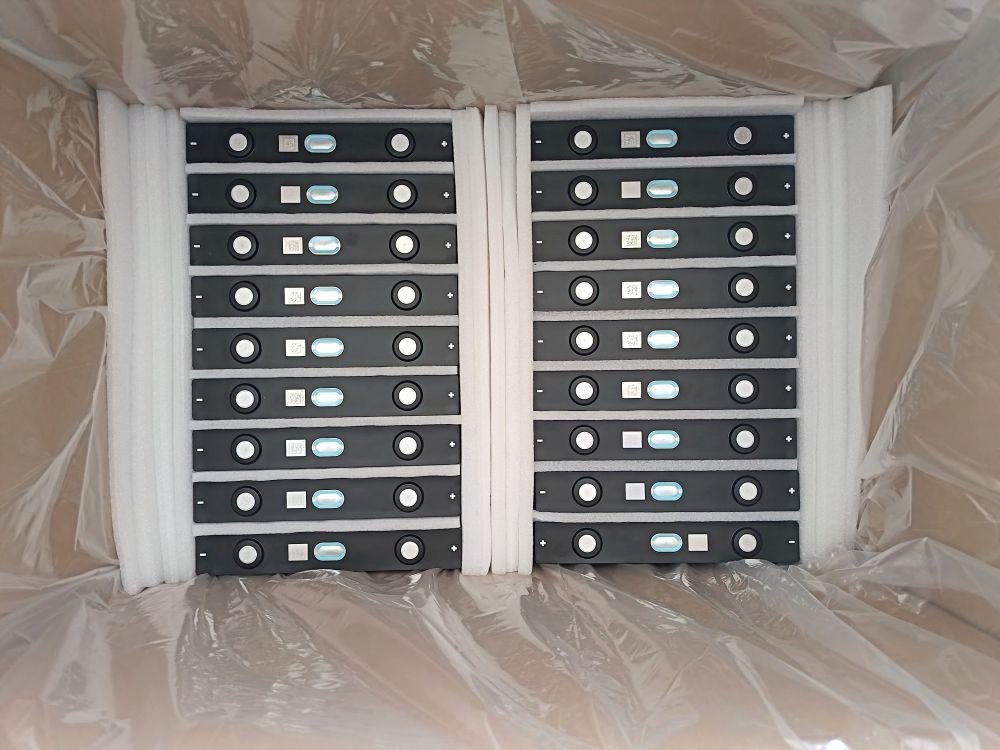
Prismatic Cells: These come in a rigid, usually rectangular metal casing (often aluminum). They strike a good balance between the consistency of cylindrical cells and the space efficiency of pouch cells. Their flat, stackable shape uses space efficiently in large battery packs, such as those for electric vehicles and home energy storage systems. Their large surface area can also aid thermal management.
Once you’ve narrowed down the chemistry and format, dig into the datasheets and compare cells from different manufacturers using hard data.
Energy Density: This is the amount of energy stored per unit mass (gravimetric, Wh/kg) or volume (volumetric, Wh/L). High gravimetric density is key for EVs and drones; high volumetric density is critical for smartphones.
Power Density & C-Rate: Can the cell supply the high burst currents your application needs? The continuous and peak discharge C-rate tells you this. A high-power cell may be necessary for power tools or vehicle acceleration, while an energy-optimized cell suits long-duration storage better.
Cycle Life and Depth of Discharge (DOD): Rated cycle life is always linked to a specific Depth of Discharge. A cell rated for 3,000 cycles at 80% DOD will have a much shorter lifespan if routinely discharged to 100%. Know your application’s typical DOD to make a meaningful comparison.
Operating Temperature Range: Verify that the cell can function within your device’s environmental extremes. Charging at low temperatures (often below 0°C/32°F) can permanently damage lithium-ion cells, so the BMS must enforce these limits.
Internal Resistance and Consistency: Low internal resistance means less voltage sag under load and greater efficiency. For multi-cell packs, high consistency across cells in capacity, voltage, and internal resistance is absolutely vital for safety, performance, and lifespan. Grade A cells from reputable manufacturers deliver this uniformity, while lower-grade (B, C, or recycled) cells introduce serious risks to pack balance and safety.
Even the best cell on paper is useless if you can’t source it reliably or if its quality varies.
Supplier Qualification: Give priority to established Tier 1 manufacturers with a solid track record. They use fully automated production lines and rigorous quality control, which are essential for cell consistency and safety. Always request and check factory test reports, capacity grading data, and batch consistency documentation.
Long-Term Availability: A cell model’s commercial production life is typically only 3–5 years. For products with lengthy lifecycles, you must either select a widely used, commodity cell likely to remain in production for years, or plan for a future redesign. Qualifying a second-source cell from the beginning is a smart risk-reduction strategy.
Total Cost of Ownership (TCO): Look past the upfront cell price. Factor in cycle life, efficiency, and required maintenance. A more expensive LiFePO4 cell with 6,000 cycles may offer a much lower cost per cycle over its lifetime than a cheaper NMC cell with 1,200 cycles, particularly for stationary storage.
Selecting the right battery cell is a strategic engineering choice that balances performance, safety, longevity, and cost. There is no universal “best” cell—only the best cell for your specific application. By following this process rigorously—starting with a clear definition of your requirements, then systematically choosing the right chemistry, format, and specifications from a qualified supplier—you build the foundation for a successful, safe, and competitive product. Keep in mind, the battery cell isn’t just a component; it’s a defining element of your device’s capability and user experience. The time you invest in this selection process is one of the highest-return activities in product development.
Inquire more product details from the: Lithium Ion Battery Suppliers
WhatsApp/Wechat/Mobile: +86 13326321310
Email: info@battery-energy-storage-system.com
Next:CATL Signs World's Largest 60 GWh Sodium Ion Battery Deal with HyperStrong
Previous:Sungrow Unveils Full-Scenario Solution at GRES 2026