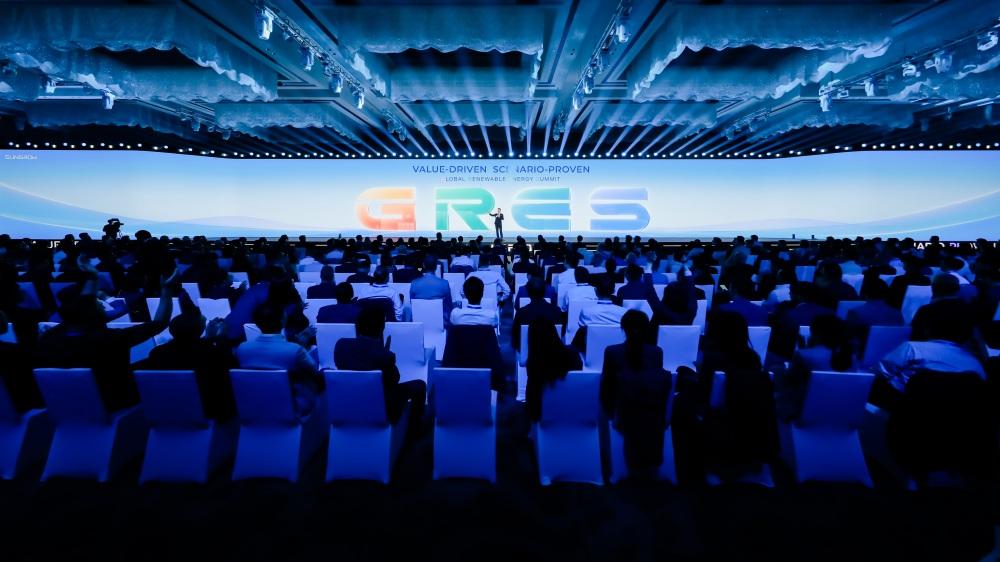
April 26th—Hefei, China—Sungrow, a world-leading provider of PV inverters and energy storage systems (ESS), presented its full-scenario solution at the Sungrow Global Renewable Energy Summit (GRES) 2026 on April 24, demonstrating how integrated energy systems can tackle rapidly rising power demand and structural issues facing industries across the globe.
Sectors including mining & microgrids, hydrogen production, and EV charging are growing at an unprecedented pace, making power supply increasingly mission-critical. Third-party analysis indicates that combined annual electricity consumption from these sectors could reach 4,000 TWh by 2030, while electricity costs have already emerged as a significant operational burden.
Although all these industries require reliable and affordable energy, each has its own distinct pain points. Moreover, wide variations in operating environments, grid strength, load profiles, and power quality requirements highlight the importance of scenario-specific energy solutions. Sungrow believes that high-quality, tailored energy solutions are essential to addressing the diverse demands of different applications.
AIDC Scenario
In the digital age, rapid advances in AI are driving surging power demand in data centers, creating a need for a next-generation power supply architecture defined by high efficiency, high density, and strong resilience. Drawing on its expertise in power electronics and renewable energy, Sungrow entered the Artificial Intelligence Data Center (AIDC) sector last year with a full grid-to-chip solution. This year, Sungrow will introduce a dedicated Solid-State Transformer (SST) solution for data centers, greatly reducing footprint while enhancing efficiency. The company will also integrate grid-forming technology into AIDC ESS to mitigate grid disturbances and improve system stability.
Mining Microgrid Scenario
Most mines are situated in remote areas with limited grid access, complex loads, and strict power stability demands, making energy supply a major challenge. Sungrow addresses this with an integrated PV–wind–storage–EV charger–controller solution, lowering energy costs by 20–50% compared with diesel generators. Given the variability of mining loads, Sungrow employs advanced simulation capabilities to provide customized solutions with optimized equipment configurations, ensuring reliable power and reduced CAPEX. In addition, a five-layer progressive protection system further secures stable operations even under extreme conditions.
PV-ESS-EV Charging Integrated Scenario
Many EV charging projects suffer from poor coordination among system components, leading to underperformance and lower returns. Sungrow meets this challenge with a one-stop, fully integrated solution that enables deep synergy across equipment and incorporates AI-driven operations, boosting overall revenue by more than 50%. At the same time, grid-forming technology has been expanded to C&I applications to mitigate grid fluctuations caused by large-scale ultra-fast charging. Furthermore, Sungrow’s systems support seamless integration with Virtual Power Plants (VPPs) through unified interfaces, unlocking greater value through diversified, forward-looking revenue streams.
Hydrogen Production Scenario
In hydrogen production applications, Sungrow optimizes equipment configuration, cutting CAPEX by over 20% through PV–wind–storage–hydrogen integration and system-level simulation. Meanwhile, PV–storage–hydrogen DC coupling and flexible production technologies improve energy efficiency and reduce electricity costs by more than 10%.
Renewable energy is shifting from a supplementary resource to a primary power source. This transition fuels demand for premium energy solutions built on multi-energy integration for cost-efficient power, systematic grid-forming technologies for enhanced stability, and customized designs tailored to diverse scenarios. Sungrow holds that the deep integration of premium products and proven expertise is key to delivering truly scenario-adapted solutions.
Moving forward, Sungrow will continue to foster a more flexible, resilient, and sustainable energy landscape, helping industries satisfy growing energy needs and accelerate the shift to a low-carbon future.
Next:How to Choose the Right Battery Cell for Your Application: Expert Selection Guide
Previous:18650 Battery Specs Guide: Size, Voltage, Capacity and How to Choose the Right Cell