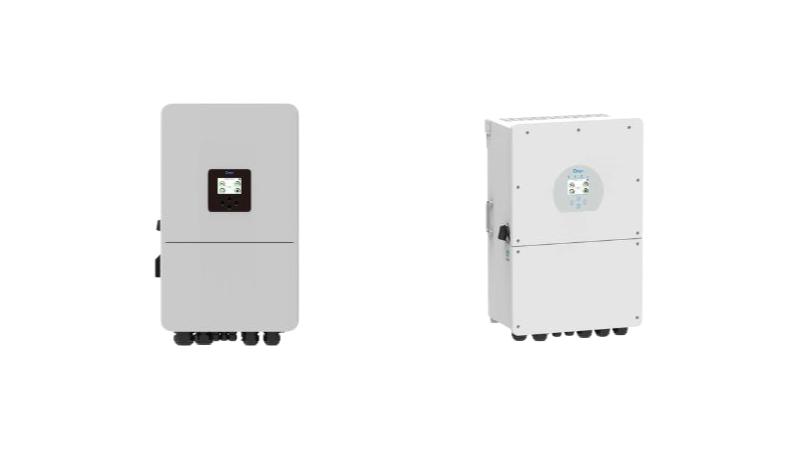
Choosing the right inverter is one of the most critical steps in planning a solar energy system. Whether you're setting up a home solar array, a commercial battery storage solution, or an off-grid retreat, the inverter plays a central role in how efficiently power is captured, stored, and used.
The two most widely considered options are hybrid inverters and off-grid inverters. Although both convert DC electricity from solar panels into AC electricity for everyday use, they are built for fundamentally different situations.
This guide walks through how each type works, weighs their strengths and weaknesses, and helps you decide which system aligns best with your energy priorities.
A hybrid inverter merges the functions of a solar inverter, battery charger, and battery inverter into one smart unit. It manages energy flowing from three key sources:
- Solar panels
- Battery storage
- The utility grid
Unlike standard grid-tied inverters, a hybrid unit can store surplus solar power in batteries rather than sending it all to the grid immediately. This gives homeowners and businesses the flexibility to increase self-consumption, cut electricity costs, and maintain backup power when the grid goes down.
A hybrid inverter constantly tracks energy generation and consumption, automatically selecting the most efficient power source.
Solar Priority Mode
During the day, solar energy powers the home’s appliances first. When production exceeds what the house needs:
- Batteries are recharged
- Any remaining surplus can be exported to the grid (where allowed)
Battery Backup Mode
If the grid fails, the inverter disconnects from the utility supply within milliseconds and draws from the batteries. Essential appliances stay running without any manual steps.
Grid Support Mode
When solar output drops and battery reserves dip too low, the inverter pulls electricity from the grid to keep everything powered without interruption. Many systems can also be programmed to charge batteries when utility rates are cheapest.
Battery care is one of the strongest features of hybrid systems. Modern hybrid inverters use intelligent charging logic that:
- Prevents overcharging
- Avoids deep discharge damage
- Balances charge cycles
- Extends overall battery life
- Works with multiple battery chemistries
Most hybrid inverters are compatible with:
- LiFePO4 batteries
- Lithium-ion batteries
- Lead-acid batteries
- Gel batteries
- AGM batteries
Integrated MPPT (Maximum Power Point Tracking) technology continuously fine-tunes voltage and current to squeeze the most energy from the solar array.
Today’s hybrid systems include sophisticated energy management tools. Common capabilities include:
- Time-of-use charging
- Peak shaving
- Load prioritization
- Zero-export control
- Remote monitoring via mobile apps
- Cloud-based diagnostics
- Real-time power flow visualisation
These features help users shrink electricity bills while making the most of their renewable energy.
Pros
- Works with solar, batteries, and the grid
- Delivers automatic backup during outages
- Requires a smaller battery bank than off-grid setups
- Can export surplus power via net metering (where available)
- Easy to expand as energy demands increase
- Reduces electricity bills through smart energy management
- Great fit for homes and commercial buildings
Cons
- Depends on having a grid connection
- Higher upfront inverter cost
- Grid interconnection may require permits and inspections
- Backup runtime is limited by battery capacity
An off-grid inverter operates completely independently of the utility grid. The entire electrical system relies on:
- Solar panels
- Battery storage
- An optional backup generator
Since there’s no grid tie, every watt consumed must be generated and stored on site. These systems are commonly found in remote locations where utility service isn’t available or is too expensive to bring in.
During sunny periods, solar panels produce DC electricity. The inverter transforms it into AC power for household loads and simultaneously charges the battery bank. Once the sun sets or during prolonged cloudy weather, stored battery energy supplies all electrical needs. If battery levels drop dangerously low, many systems automatically fire up a backup generator.
A complete off-grid installation generally includes:
- Solar PV array
- Off-grid inverter
- Battery bank
- MPPT charge controller
- Battery Management System (BMS)
- Backup generator (optional)
- Monitoring system
Accurate system sizing is crucial because there’s no grid to fall back on.
Battery capacity is vital for off-grid reliability. Most residential systems are designed for 2–3 days of autonomy, ensuring continuous operation even during extended cloudy spells. Typical system sizes include:
| Component | Typical Size |
| Solar Array | 5–15 kW |
| Battery Storage | 10–30 kWh |
| Backup Generator | Optional |
Larger homes may need considerably more storage depending on daily energy use.
Pros
- Total energy independence
- No utility bills
- Unaffected by grid outages
- Perfect for remote locations
- No net metering or utility approvals needed
- Full control over your power system
Cons
- Higher upfront battery investment
- Requires a larger solar array
- Backup generator is often recommended
- Battery replacements add to long-term costs
- Demands careful energy management
| Feature | Hybrid Inverter | Off Grid Inverter |
| Utility Grid Connection | Yes | No |
| Battery Support | Yes | Yes |
| Solar Panels | Yes | Yes |
| Backup Power | Yes | Yes |
| Sell Electricity to Grid | Yes | No |
| Battery Size | Smaller | Larger |
| Solar Array Size | Moderate | Larger |
| Power Source Management | Solar + Battery + Grid | Solar + Battery |
| Energy Independence | Partial | Complete |
| Initial Investment | Moderate | Higher |
| Best For | Homes & businesses with grid | Remote properties & independent living |
Conversion Efficiency
Both hybrid and off-grid inverters typically deliver conversion efficiencies between 95% and 99%, varying by manufacturer and operating conditions. The main real-world differences come from battery charge/discharge losses, not the inverter hardware itself.
MPPT Performance
Both types benefit from multiple MPPT inputs, enabling solar arrays with different orientations or partial shading to still harvest maximum energy. Hybrid setups often achieve higher overall energy utilisation because surplus power can either top up batteries or be sent to the grid.
System Flexibility
Hybrid systems offer substantially more operational freedom through:
- Time-of-use optimisation
- Peak demand reduction
- Smart load management
- Grid export control
- Remote software updates
Off-grid systems are squarely focused on maximising energy autonomy and keeping battery reserves adequate.
Although hybrid inverters themselves generally cost more, the overall system price can be lower because less battery capacity is needed.
| Cost Factor | Hybrid | Off Grid |
| Inverter | Higher | Lower |
| Batteries | Lower | Higher |
| Solar Panels | Moderate | Higher |
| Generator | Usually not needed | Often required |
| Long-Term Operating Cost | Lower | Higher |
For most grid-connected homeowners, a hybrid system strikes a better balance between upfront investment and real-world performance.
Choose a Hybrid Inverter If:
- You have reliable grid power
- You want backup protection during outages
- Reducing electricity bills is a priority
- You plan to add battery storage
- You intend to join a net metering programme
- You may expand your solar system later
Hybrid inverters are an excellent match for homes, commercial buildings, and businesses aiming for higher efficiency while staying connected to the grid.
Choose an Off Grid Inverter If:
- Grid power isn’t available
- Getting a grid connection is excessively expensive
- You want full energy independence
- You own a remote cabin, farm, or rural property
- Complete control over your power system matters most
Off-grid systems shine in locations where self-sufficiency holds greater value than a utility link.
Both inverter types need regular upkeep to stay reliable over the long haul. Recommended maintenance includes:
- Cleaning solar panels periodically
- Inspecting wiring and connections
- Monitoring battery health
- Updating inverter firmware
- Checking MPPT performance
- Testing backup systems
Off-grid systems may also require extra attention to backup generators and more frequent battery inspections.
Both hybrid and off-grid inverters are capable, well-engineered solutions, but they serve distinct energy goals.
A hybrid inverter is the ideal fit for grid-connected homes and businesses, delivering lower power bills, smart energy management, and dependable backup with relatively modest battery needs.
An off-grid inverter, by contrast, is purpose-built for complete energy independence. While it calls for a bigger investment in solar panels and batteries, it provides reliable electricity in remote locations where a grid connection isn’t an option.
By carefully weighing your location, electricity consumption, budget, and long-term energy ambitions, you can confidently select the inverter system that offers the strongest blend of performance, resilience, and return on investment.
Can a hybrid inverter work without the utility grid?
Yes. Many modern hybrid inverters support off-grid operation when paired with adequate battery storage. However, the battery bank must be sized correctly to sustain power through extended low-sun periods.
Can I upgrade an off-grid system to a hybrid inverter?
Yes. This can be done by swapping the inverter and adding the necessary grid-interactive components, including compatible battery management and utility protection gear. Depending on the existing setup, modifications to the battery bank or solar array might also be required.
Which inverter is more efficient?
Both types generally hit conversion efficiencies between 95% and 99%. The biggest performance differences in practice come from overall system design, storage capacity, and energy management strategy rather than the inverter’s efficiency rating alone.
Do hybrid inverters require batteries?
No. Many hybrid inverters can start operating without batteries and allow storage to be added later. This makes them a smart choice for users who plan to expand their system over time.
Welcome to contact us:
Inquire more product details from the: Lithium Ion Battery Suppliers
WhatsApp/Wechat/Mobile: +86 13326321310
Email: info@battery-energy-storage-system.com
Website: www.battery-energy-storage-system.com
Ready to power your energy systems with the best in the industry?
Contact us today to get the latest pricing and discuss your needs with our team!
Next:Shipment of 48V 150A and 300A Forklift Battery Chargers to Korea
Previous:8 units 48V 100Ah LiFePO4 batteries shipped to Puerto Rico for a home energy storage system