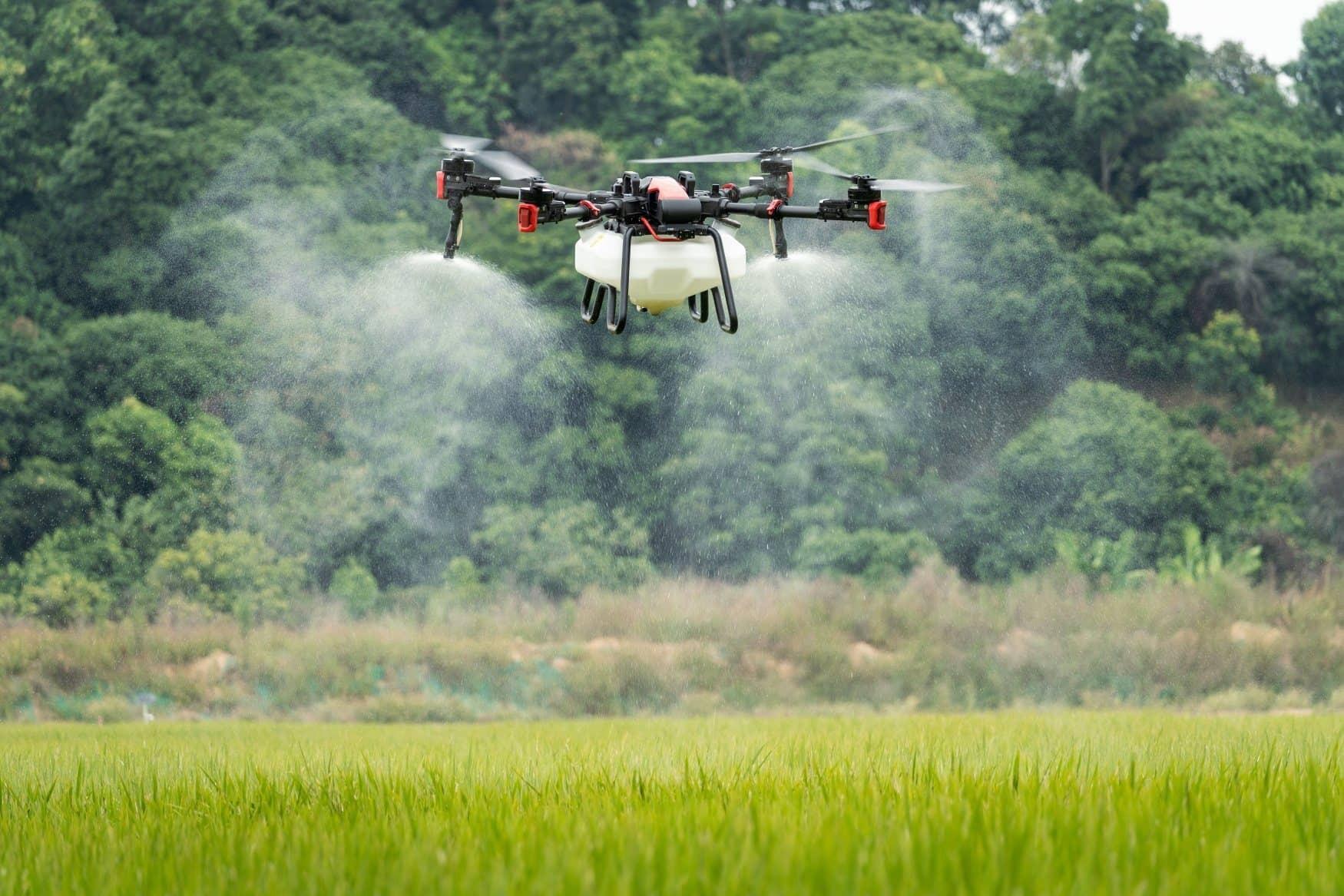
Spray drones are revolutionizing precision agriculture by enabling highly efficient, targeted crop treatment. These UAVs have become essential tools for modern farmers looking to reduce chemical usage while boosting field productivity. The performance of these aerial systems depends fundamentally on their power source—specifically, lithium-ion batteries—which directly impact flight time, payload capacity, and mission reliability. This guide outlines key factors for matching Li-ion batteries to agricultural drone needs, with a focus on payload traits and operational parameters to maximize field performance.
Spray drones, or agricultural UAVs, are specialized aerial platforms designed for precise distribution of farm inputs. They carry either liquid formulations (such as pesticides or liquid fertilizers) or granular materials (like seeds or powdered amendments) using different application mechanisms. Compared to traditional ground equipment, they offer better accessibility, reduced chemical drift, and higher application accuracy across diverse terrains.
Core Operational Capabilities
Liquid Application Systems
- Programmable flight paths for precision spraying
- Advanced nozzles for even droplet distribution
- Real-time flow adjustment using multispectral data
- Drift-reduction features for environmental protection
Granular Distribution Systems
- Pneumatic or mechanical spreaders for uniform particle dispersal
- Variable-rate seeding capability
- Bulk material handling for large-scale operations
- Terrain-adaptive spreading patterns
Payload capacity typically ranges from 5–100 kg and varies based on:
Material Density Differences
- Liquids: ~1 kg/L (water-based solutions)
- Granulars: 0.4–0.8 kg/L (varies by material)
Distribution System Weight
- Spray systems need pumps and liquid lines (+15–25% of system weight)
- Spreaders use simpler mechanical designs
Flight Stability Requirements
- Liquid payloads require stabilization to manage sloshing
- Granular payloads maintain consistent mass distribution
Voltage Matching
- Light payload (≤20 kg): 6S (22.2V) configurations
- Medium payload (20–40 kg): 12S (44.4V) systems
- Heavy payload (≥40 kg): 14S+ custom solutions
Discharge Rate Optimization
- Base C‑rate = (Motor Power × Safety Margin) / (Battery Capacity × Voltage)
- Typical requirements:
• Light: 10–15C continuous
• Medium: 15–25C sustained
• Heavy: 25C+ with peak handling
Energy Density Prioritization
- Target ≥200 Wh/kg for optimal flight time
- Balance capacity gains against added weight
Operational Endurance Calculation
Flight Time (min) = [Battery Capacity (Ah) × 60 × Efficiency Factor] / Current Draw (A)
Where:
- Efficiency Factor: 0.85–0.92 for LiPo
- Current Draw = Total Power (W) / Voltage
Integrated Thermal Management
- Active cooling for high-temperature conditions
- Self-heating for cold-weather operation
Smart Power Monitoring
- Real-time capacity tracking
- Cell balancing during charge/discharge
- Fault prediction algorithms
Rapid Recharge Compatibility
- ≤1C standard charging
- 2C+ fast-charge capability (with thermal safeguards)
For a 12S (44.4V) drone carrying a 25 kg liquid payload:
Power Requirements
- Total thrust: ≈150 N
- Motor efficiency: 8 g/W
- Required power: 25,000 g / (8 g/W) = 3,125 W
Battery Specification
- Minimum current: 3,125 W / 44.4 V ≈ 70 A continuous
- For 15‑minute flight: 70 A × 0.25 h = 17.5 Ah
- With 20% buffer: 21 Ah battery
Optimal Choice
- 44.4V 22,000 mAh LiPo
- 25C continuous discharge
- ≤3.5 kg weight
Hybrid Power Configuration
- Combine high‑C and high‑capacity cells
- Use parallel battery connections for load sharing
Mission-Specific Packs
- High-density batteries for large-area coverage
- High‑C batteries for missions with elevation changes
Predictive Maintenance
- Cycle life tracking
- Internal resistance monitoring
Solid-State Batteries
- Potential to double energy density
- Improved thermal stability
Hybrid Fuel Cell Systems
- Solutions for extended endurance
- Rapid refueling capability
Optimal battery selection involves analyzing three key parameters:
1. Specific Energy (Wh/kg) – determines flight duration
2. Specific Power (W/kg) – determines payload capability
3. Cycle Life – affects operational costs
- ≥200 Wh/kg energy density
- ≥5C continuous discharge rating
- IP54+ environmental protection
- Comprehensive BMS integration
By aligning battery specifications with operational demands and payload characteristics, agricultural operators can maximize spray drone efficiency while ensuring safe and sustainable field operations.
Next:SAMSUNG SDI and KGM Partner on Next-Generation EV Battery Pack