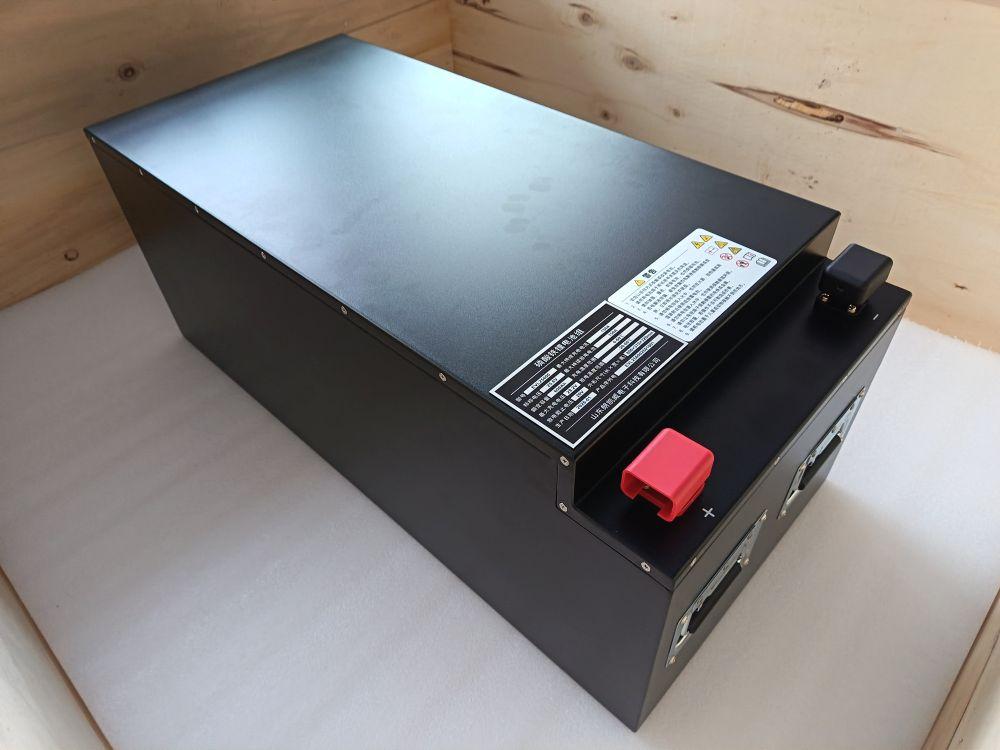
A lithium battery overvoltage alarm is among the most important protective events in an energy storage system. When integrators or commercial users deploy LiFePO4 packs in solar storage, backup power, RV, marine, or industrial settings, an overvoltage condition means that at least one cell has moved beyond its permitted charging ceiling.
This is not the same as a low-voltage notice. It should not be dismissed or cleared without investigation. If charge current keeps flowing after a cell has passed its maximum voltage, the cell may vent gas, degrade its electrolyte, swell, and—under worst-case conditions—suffer thermal runaway. A clear understanding of the triggers, diagnostic path, and safe remedies is therefore necessary to safeguard the battery and the rest of the electrical system.
This article covers what overvoltage means, voltage limits for widely used chemistries, frequent root causes, troubleshooting methods, and corrective measures for integration and maintenance teams.
An overvoltage state exists when either the complete pack or a single cell is measured above the upper voltage limit set by its maker, whether during charge or at rest.
Each lithium chemistry has a maximum permitted charge voltage. In a LiFePO4 pack, that value is commonly 3.65 V per cell, with 3.2 V as the nominal figure. Once a cell passes 3.65 V, the BMS is expected to enter overvoltage protection and open the charging path. If the BMS does not act, cell damage can follow.
The event may be pack-level or cell-level. A pack can display an apparently normal total voltage while one cell is already beyond its ceiling. For this reason, monitoring each cell is a more trustworthy way to catch overvoltage early than relying only on total pack voltage.
The precise trip point varies with chemistry and manufacturer requirements.
Typical LiFePO4 cell values:
- Nominal voltage: 3.2 V
- Full charge voltage: 3.65 V
- Overvoltage protection: often 3.65–3.8 V, based on BMS configuration
In a 16S 51.2 V (48 V) solar storage pack, full charge is about 58.4 V. If the pack rests above 58.4 V, or if charging continues beyond the BMS cutoff, overvoltage is present.
NMC and NCA cells usually have nominal voltages near 3.6–3.7 V and full charge near 4.2 V. Their protection thresholds are therefore higher. Even so, they tolerate overvoltage less well than LiFePO4 and can reach thermal runaway with less margin.
Use the cell datasheet, not generic assumptions. Models within the same chemistry family may have different upper limits.
Several conditions can push a lithium battery beyond its safe voltage.
A frequent cause is using a charger made for another chemistry. For example, a lead-acid charger set to 14.4 V on a 12 V system can overcharge a 12.8 V LiFePO4 battery because both its voltage target and its termination logic are mismatched. A LiFePO4 charger must follow the correct CC-CV profile and stop at the proper cell voltage.
A defective BMS may miss overvoltage or fail to open the charge circuit at the trip point. Alternatively, its overvoltage threshold may be set too high for the installed cell model. BMS protection parameters should be checked against cell manufacturer data during commissioning.
Cells in a series string rarely behave identically. Differences in capacity or internal resistance make some cells charge faster. The weakest cell can hit its upper limit while the rest of the string is still below full charge. Because the charger sees only the average pack voltage, it keeps delivering current, and the high cell continues to be overcharged. Cell balancing is therefore not optional.
Programmable chargers sometimes let users define absorption or float voltage. If those values are above the battery’s full-charge voltage, the charger will keep forcing current into the battery after it should stop. This is a common commissioning mistake.
When several strings are paralleled, differences in voltage or state of charge can drive current from the stronger string into the weaker one. That cross current can overcharge cells in the lower string even after the external charger has been turned off.
Elevated ambient temperature speeds up electrochemical reactions and can raise cell voltage during charging. Charging above the manufacturer’s recommended temperature window increases the chance of overvoltage and anode lithium plating.
In networked systems, a breakdown in communication between BMS and charger can stop the charger from receiving the “stop charging” command. The charger then continues according to its own voltage limit, which may be higher than the BMS threshold.
Before a severe failure, overvoltage often leaves observable clues. Possible signs include:
- BMS overvoltage alarm or fault code
- Charger that does not terminate at the expected voltage
- Cell voltages above the manufacturer’s limit
- Swollen or bulging battery case
- Abnormal heat from the battery or charging cables
- Electrolyte smell or venting
- Lower capacity or shorter runtime
- System shutdown or protective disconnection
In a custom pack installation, the BMS log should capture each event’s cell voltage and timestamp. Those records help determine whether the problem is occasional or recurring.
Overvoltage is not merely a performance problem. It is a safety hazard.
Charging a lithium cell past its upper voltage limit causes electrolyte decomposition and gas formation inside the cell. Internal pressure rises, which can lead to swelling or venting. In severe cases, overvoltage combined with heat and an internal short can initiate thermal runaway.
LiFePO4 is less prone to thermal runaway from overvoltage alone than NMC, but repeated overvoltage still inflicts permanent capacity loss and accelerates aging. With any lithium chemistry, once overvoltage is confirmed, charging must stop immediately and the battery must be isolated until the root cause is found.
A structured troubleshooting process avoids unnecessary replacement and reveals the actual cause.
Use the BMS interface or a multimeter to check every cell. If only one or two cells are high while the rest are normal, imbalance or a failing cell is likely. If every cell is uniformly high, charger or BMS settings are more probable.
Measure charger output while it is connected and running. Compare that reading with the battery’s full-charge specification. If output exceeds the battery limit, the charger or its settings are responsible.
Inspect the overvoltage trip threshold, voltage calibration, and fault history. Confirm the BMS is set for the correct chemistry and series count.
Loose or corroded terminals can corrupt voltage sensing. A poor sense-wire connection may cause the BMS to read lower than the real cell voltage, delaying or preventing overvoltage cutoff.
Determine whether overvoltage happens only in hot conditions or during particular charge cycles. Such patterns often point to thermal or charging-profile problems rather than hardware failure.
The right remedy follows from the diagnosed cause.
If charger voltage is excessive or the unit is intended for another chemistry, reprogram it or install a compatible LiFePO4 charger. Confirm that constant-voltage output matches the battery’s full-charge voltage.
If imbalance is the cause, perform a top balance using an active-balancing BMS or a dedicated balancer. In severe cases, manually discharge the high cell until it matches the others before balancing.
If protection does not trip at the correct voltage, verify and correct configuration first. If the BMS hardware has failed, replace it. Never run a lithium battery without working overvoltage protection.
If one cell repeatedly overvoltages and cannot be balanced, or if it is swollen, isolate and replace it. Keeping a damaged cell in service endangers the whole pack.
Bring all parallel strings to the same voltage before connecting them. Where needed, use a combiner box with fuses and diodes to block cross current between mismatched strings.
Prevention lowers the chance of overvoltage events:
- Use a charger made and configured for the battery chemistry.
- Verify BMS overvoltage thresholds during commissioning.
- Monitor and balance cells regularly.
- Keep the battery within the manufacturer’s temperature range.
- Avoid very high charge currents unless both cells and BMS are rated for them.
- Periodically inspect wiring and sense connections.
- Choose a BMS with cell-level monitoring, not pack-level only.
The strongest overvoltage protection comes from a correctly configured BMS with cell-level voltage sensing plus a charger that either communicates with the BMS or follows the proper voltage profile.
In solar systems, overvoltage frequently appears when a charge controller is left on a lead-acid setting or when MPPT bulk voltage exceeds the LiFePO4 limit. Set absorption and float voltages for lithium chemistry.
These installations often mix chemistries or retain chargers built for the original lead-acid bank. After a lithium upgrade, the converter charger, inverter charger, and alternator regulator must be adjusted or replaced for lithium profiles.
Industrial UPS units may have configurable charge voltages set for the original battery type. A lithium retrofit requires updating those values and confirming compatibility with the battery BMS.
Not every overvoltage event means the battery is finished. A single event caused by a wrong charger setting can often be resolved by correcting the charger and letting the battery rest.
Consider replacement if:
- Cells keep overvoltage even with correct charger and BMS settings.
- One or more cells are swollen or deformed.
- The battery cannot maintain balanced charge across all cells.
- Capacity has dropped significantly.
- Overvoltage occurs even at low charge current.
- BMS logs show frequent, unresolved overvoltage alarms.
Lithium battery overvoltage is a serious protective event that calls for fast diagnosis. The usual culprits are charger settings, BMS configuration, cell imbalance, and parallel string mismatch. By checking individual cell voltages, charger output, BMS logs, and connections, integrators can locate the root cause without jumping straight to battery replacement.
For LiFePO4 pack systems, the most dependable protection combines a properly configured BMS with cell-level monitoring and a matched lithium charger. When overvoltage occurs, stop charging, isolate the affected cells, and correct the underlying cause. That approach prevents permanent damage and preserves long-term system safety.
A LiFePO4 cell is normally full at 3.65 V. Sustained voltage above 3.65 V is overvoltage. In a 16S 51.2 V pack, full charge is roughly 58.4 V; readings above that suggest a possible overvoltage condition.
Yes. Incorrect calibration, an unsuitable threshold, or a failed protection circuit can produce false alarms or fail to alarm during a real event. Check BMS settings and compare its readings with a multimeter before blaming the battery.
If an external cause such as a charger setting was responsible, and there is no swelling or capacity loss, use may continue after the charger is corrected. If the event was severe or physical damage is present, inspect the cells and replace them if needed.
Replace or reprogram the charger, charge controller, and inverter charger for the correct lithium voltage and profile. Install a BMS with cell-level monitoring, and verify every charge source—including alternators and solar controllers—before commissioning.
Overvoltage means cell or pack voltage has exceeded the safe upper limit. Overcharge means charging has continued beyond full capacity. Overcharge commonly causes overvoltage, but overvoltage can also result from imbalance, parallel string mismatch, or BMS failure even when the charger seems to behave normally.
Welcome to contact us:
Inquire more product details from the: Lithium Ion Battery Suppliers
WhatsApp/Wechat/Mobile: +86 13326321310
Email: info@battery-energy-storage-system.com
Website: www.battery-energy-storage-system.com
Ready to power your energy systems with the best in the industry?
Contact us today to get the latest pricing and discuss your needs with our team!
Next:Drone Battery Supplier for UAVs and Industrial Drones
Previous:504 pcs EVE 3.2V 230Ah LiFePO4 Batteries Shipped to Taiwan, China