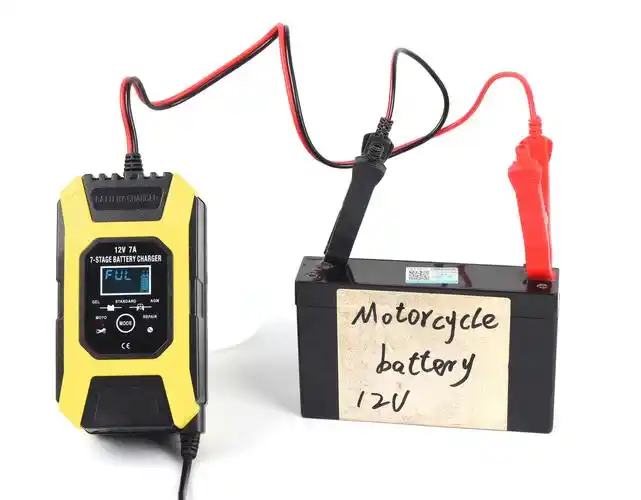
In a world that never stops scrolling, streaming, and connecting, keeping your devices powered up isn't just convenient—it’s essential. Whether you're stuck on a long commute, heading off-grid for the weekend, or grinding through a 12-hour workday, having a reliable way to charge on the go is non-negotiable. But here’s the thing: while most people toss around the terms portable battery charger and power bank like they’re the same thing, they’re actually not.
So, what’s the real difference? Let’s clear it up.
A portable battery charger is the big-picture category—anything that can charge your devices when you’re away from a wall outlet. Think solar panels, car jump starters, and yes, power banks.
A power bank, on the other hand, is a specific type of portable charger. It packs its own internal battery so it can store energy and deliver it later—no plug required at the moment of use.
A portable battery charger is any device that juices up your gadgets when you're out and about. It’s an umbrella term covering a bunch of different technologies built for different scenarios.
Common types include:
Power banks: Compact battery packs made for phones and small electronics.
Solar chargers: Panels that turn sunlight into power.
Car battery chargers: Gear built to revive or jump-start a vehicle.
Laptop battery packs: High-output beasts designed to keep your workstation running anywhere.
Key traits:
May pull power from USB, AC, solar, or even your car’s 12V outlet.
Might or might not have an internal battery.
Can charge everything from an iPhone to an F-150.
Often come with extras like wireless charging or multiple ports.
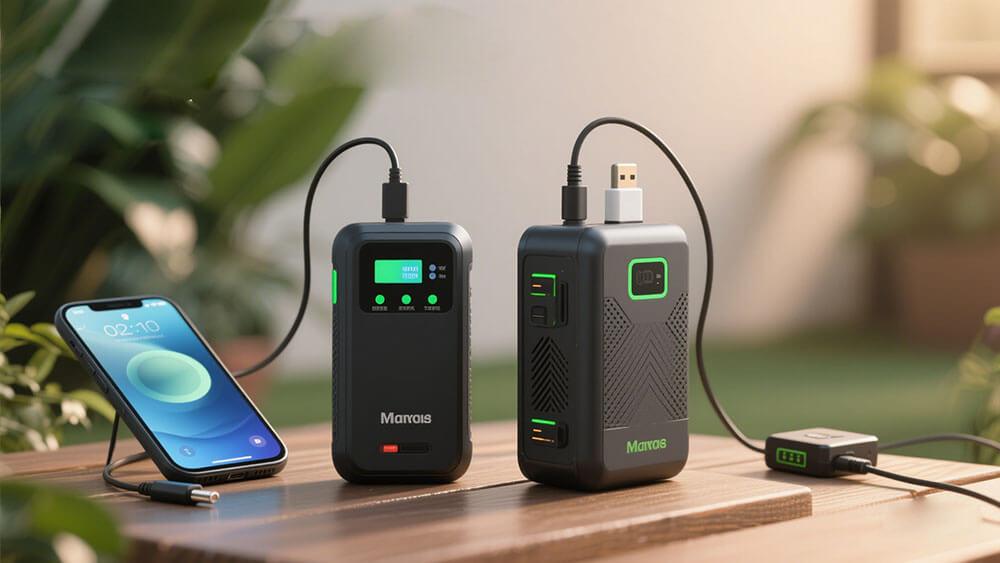
A power bank is a portable charger with a rechargeable battery built right in. You charge it up when you have access to power, and it holds that energy until your phone, tablet, or earbuds are begging for a refill.
Core features:
Always includes an internal battery.
Capacities typically range from a pocket-friendly 5,000mAh to a beastly 50,000mAh.
Outputs are usually USB or wireless.
Designed for smartphones, wearables, tablets, and more.
Both devices get power from point A to point B—but they go about it differently.
A power bank needs to be pre-charged. It stores that energy internally until you need it.
A portable battery charger might store energy—or it might generate it on the spot (like a solar charger pulling juice straight from the sun).
| Feature | Portable Battery Charger | Power Bank |
| Internal battery | Optional | Always included |
| Needs a live power source | Sometimes | No |
| Best for | Laptops, cars, camping trips | Phones, tablets, everyday use |
| Charging methods | Solar, car outlet, USB, AC | USB, wireless |
| Capacity range | 5,000mAh – 1,000,000mAh | 5,000mAh – 50,000mAh |
Quick rundown:
Internal battery: Power banks always have one. Other portable chargers? Not necessarily.
Power source: Once a power bank is charged, it’s independent. Others may need sunlight, a car, or an outlet on the spot.
Usage: Power banks are for mobile electronics. Broader portable chargers can handle everything from laptops to dead car batteries.
Best use case: Power banks are your everyday carry. Other chargers shine in emergencies or rugged scenarios.
It really comes down to how you live and what you need to power.
Go with a power bank if you want something lightweight and ready to go—perfect for topping off your phone during a long day out.
Choose a portable battery charger if you're dealing with bigger gear, heading off-grid, or need flexible input options like solar or AC.
Here’s a quick look at the most popular options out there:
Power banks: Compact, convenient, and made for daily drivers like phones and smartwatches.
Solar chargers: Eco-friendly and built for the trail, not the outlet.
Car battery chargers: Heavy-duty tools that can bring a dead vehicle back to life.
Laptop battery packs: High-capacity chargers built to keep you productive when you're away from a desk.
Before you hit “buy,” think about these factors:
Battery capacity (mAh or Wh): This tells you how much juice it actually holds.
Charging speed (W or A): Higher numbers mean faster refuels.
Portability: Do you want something pocket-sized or backpack-ready?
Number of ports: Handy if you’re charging multiple devices at once.
Durability: Rugged builds and waterproofing matter if you're taking it off-road or outdoors.
Portable Battery Charger Pros:
Super versatile
Can charge a wide range of devices
Multiple ways to get power
Cons:
Some models still need a live source to work
Power Bank Pros:
Compact and convenient
Stores energy for later
Perfect for travel and emergencies
Cons:
Limited by its own battery size and capacity
Q: What’s the main difference between a power bank and a portable battery charger?
A: A power bank always has a built-in battery. A portable battery charger might not—it could run on solar or plug straight into a car.
Q: Can I use a power bank while it’s charging?
A: Yes, most support pass-through charging. Just keep in mind it might not be great for long-term battery health.
Q: How long do power banks usually last?
A: Around 300 to 500 charge cycles—roughly 2 to 3 years depending on how often you use it.
Q: Can I bring a power bank on a plane?
A: Yes, but usually only under 100Wh in your carry-on. Always double-check with your airline.
Q: Will a power bank charge my laptop?
A: Only if it’s a high-capacity model with USB-C Power Delivery (PD) support.
Previous:HiTHIUM Unveils ∞Power Flexsso: Weight-Optimized BESS at Key Energy Italy