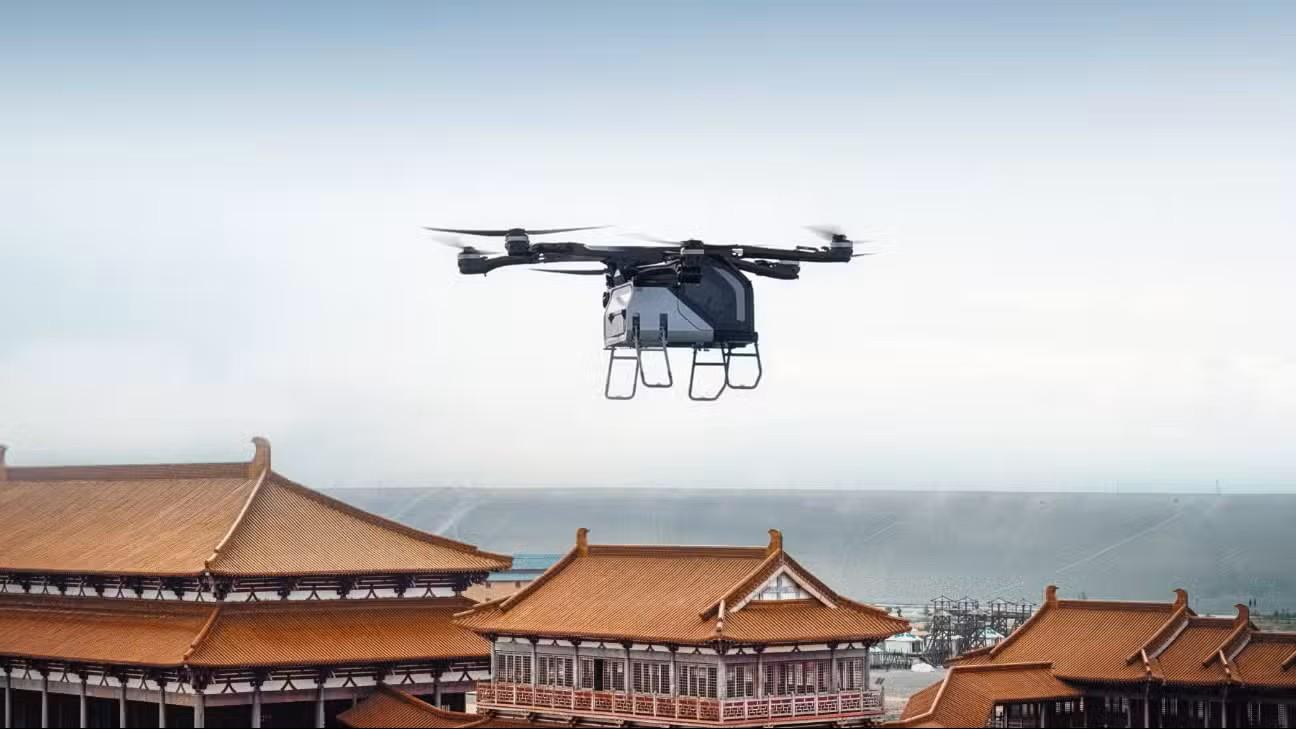
Chinese battery manufacturer CALB has initiated mass production of aviation-grade batteries tailored for Aridge, the electric vertical takeoff and landing (eVTOL) subsidiary of Xpeng. Production kicked off at CALB’s Chengdu facility, a significant milestone that advances Aridge’s goal of launching its modular flying car—codenamed X3-F—later this year.
The new power cells feature a high-silicon and high-nickel chemistry, boasting an energy density of up to 360 Wh/kg and a maximum discharge rate of 25C. CALB reports that the batteries successfully passed a 15.2-meter drop test without catching fire, exploding, or leaking, and their thermal safety design meets aviation airworthiness standards. More than 100,000 cells have been validated to comply with both automotive regulations and aviation certifications.
Founded in 2013 and formally established in 2020, Aridge is majority-owned by Xpeng and its chairman and CEO, He Xiaopeng. The company previously announced plans to achieve mass production and delivery of its Land Aircraft Carrier by 2026, with a target final market price of no more than 2 million yuan (approximately $290,000). Additionally, Aridge recently secured nearly $200 million in funding, bringing its total equity financing to around $1 billion.
In China’s highly competitive power battery sector, CALB holds the third-largest domestic installation share as of February, with a 6.00% market share, according to the China Automotive Battery Innovation Alliance. Industry leaders CATL and BYD continue to dominate, jointly accounting for over 62% of installations during the same period. CALB’s entry into the eVTOL market underscores its strategy to strengthen its position by innovating in advanced application fields beyond traditional electric vehicles.
Next:Lithium Forklift Battery Solutions Guide: Maximizing Efficiency and Safety
Previous:Battery Aging Explained: What Reduces Lithium Ion Battery Life and How to Prevent Capacity Loss