Correctly charging multiple batteries is key to maximizing performance, extending service life, and staying safe. Whether your setup powers an RV, a solar array, a boat, or a backup supply, knowing how to charge two 12V batteries in series and parallel helps you avoid expensive mistakes and premature battery damage.
In this detailed guide, you’ll learn how series and parallel battery configurations differ, the safety steps to follow, and clear, step-by-step instructions for charging two 12V batteries the right way. By the end, you’ll know exactly which method suits your needs and how to carry it out safely and efficiently.
Before you hook up a charger, it’s vital to grasp how batteries behave when wired in series or parallel. The configuration determines voltage, current, and overall system performance.
What Is a Series Battery Connection?
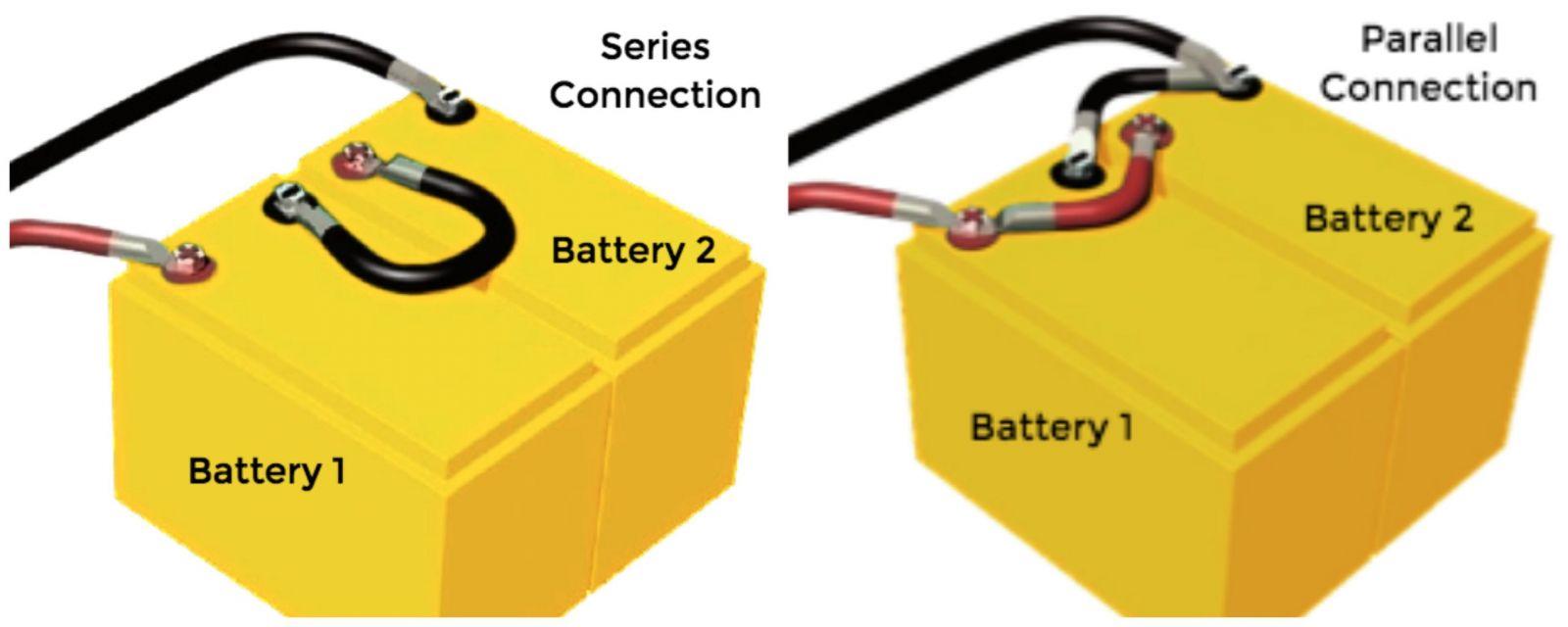
A series connection links batteries end to end. You join the positive (+) terminal of the first battery to the negative (–) terminal of the second. The two remaining free terminals serve as the output of the battery bank.
Key characteristics of a series connection:
- Voltage increases
- Current capacity (amps) remains the same
- Battery capacity (Ah) stays unchanged
Example:
Two 12V batteries connected in series deliver 24 volts, while the current capacity matches that of a single battery.
Series wiring is ideal when your equipment or charger needs a higher voltage, such as 24V inverters or industrial systems.
What Is a Parallel Battery Connection?
A parallel connection places batteries side by side. You connect positive to positive and negative to negative.
Key characteristics of a parallel connection:
- Voltage stays the same
- Current capacity increases
- Battery capacity (Ah) increases
Example:
Two 12V batteries connected in parallel still provide 12 volts, but both available current and runtime double.
Parallel wiring is commonly used when longer runtime is required at the original voltage, like in solar energy storage or backup power systems.
Series vs. Parallel – Quick Comparison
- Voltage – Series: increases; Parallel: stays the same
- Current – Series: same as one battery; Parallel: increases
- Capacity (Ah) – Series: same as one battery; Parallel: increases
- Power Output – Both increase
- Typical Use – Series: higher-voltage systems; Parallel: longer runtime
Battery charging involves both electrical energy and chemical reactions, so safety must always come first.
Before you begin:
- Wear acid-resistant gloves and safety goggles
- Work in a well-ventilated area, especially when handling lead-acid batteries
- Disconnect all electrical loads from the batteries
- Inspect batteries for leaks, swelling, cracks, or corrosion
- Never charge a damaged or leaking battery
- Use a charger that matches both the voltage and battery chemistry
- Double-check polarity before attaching any cables
It’s highly recommended to use a digital multimeter to verify voltage levels before and after charging. This helps you spot weak or unbalanced batteries before they cause problems.
Charging batteries in series demands careful attention to voltage and charger compatibility. Follow the steps below.
Step 1: Prepare for Safe Charging
Put on protective equipment and place the batteries on a stable, non-conductive surface. Disconnect all devices that were drawing power from them.
Step 2: Gather the Required Tools
You will need:
- A digital multimeter or voltmeter
- Jumper cables
- A charger rated for the total system voltage (24V)
Step 3: Connect the Batteries in Series
With jumper cables:
- Connect the positive terminal of Battery 1 to the negative terminal of Battery 2
- Leave the remaining positive and negative terminals free
This gives you a 24V battery bank.
Step 4: Check the Combined Voltage
Measure the voltage across the free terminals with a multimeter. You should see a reading close to 24 volts.
If the reading is significantly lower, charge each battery on its own first, then proceed.
Step 5: Connect the Charger Correctly
- Attach the charger’s positive lead to the free positive terminal
- Attach the charger’s negative lead to the free negative terminal
Set the charger to the appropriate voltage and charging mode according to the manufacturer’s instructions.
Step 6: Start and Monitor Charging
Switch on the charger and keep an eye on the process. Look out for overheating, unusual smells, or irregular voltage readings. Never overcharge, as it shortens battery life.
Step 7: Disconnect and Test
Once charging is complete:
- Turn off the charger
- Disconnect all cables
- Measure the final voltage; it should be around 24V
If the voltage is uneven or unstable, check each battery separately.
Pro Tip: Always use batteries that match in type, age, and capacity when charging in series to prevent imbalance.
Parallel charging is simpler and works well with a standard 12V charger.
Step 1: Match the Batteries
Make sure both batteries:
- Are the same type and capacity
- Have a similar state of charge
- Show no signs of physical damage
Step 2: Connect Batteries in Parallel
Using jumper cables:
- Join positive to positive
- Join negative to negative
All connections must be tight and secure.
Step 3: Connect the Battery Charger
Because the batteries share the same voltage:
- Clip the charger’s positive lead to any positive terminal
- Clip the charger’s negative lead to any negative terminal
Step 4: Start Charging
Turn on the charger and monitor the process—especially the first time you charge these batteries in parallel.
Step 5: Monitor and Maintain
Check the voltage periodically to make sure both batteries charge evenly. Inspect terminals and cables for corrosion. If you spot corrosion, clean it with a baking soda and water solution.
To get the most out of your batteries, follow these best practices:
- Use a smart charger with automatic shut-off to prevent overcharging
- Avoid deep discharges whenever possible
- Keep batteries away from extreme heat or cold during charging
- Prevent uneven charging by using high-quality chargers and well-matched battery sets
- For lithium-ion batteries, recharge before the level drops below 20%
- Opt for slow or moderate charging speeds rather than fast charging to reduce heat and extend lifespan
Learning how to charge two 12V batteries in series and parallel gives you greater flexibility and control over your power system. A series connection boosts voltage from 12V to 24V, perfect for higher-voltage equipment. A parallel connection keeps voltage at 12V while increasing current capacity and runtime.
By following proper safety measures, using the right charger, and applying the step-by-step instructions in this guide, you can charge your batteries safely, efficiently, and with full confidence. Correct charging not only improves performance but also significantly lengthens battery life.
1. Can I charge two 12V batteries in series?
Yes, but you must use a charger that matches the combined voltage—typically a 24V charger.
2. Is it better to charge batteries in series or parallel?
That depends on your charger and system requirements. Use series for higher voltage; choose parallel for higher current and longer runtime.
3. Do I need to disconnect batteries to charge them in series?
No. The batteries can stay connected while charging, provided the charger is rated for the total system voltage.
Inquire more product details from the: Lithium Ion Battery Suppliers
WhatsApp/Wechat/Mobile: +86 13326321310
Email: info@battery-energy-storage-system.com
Website: www.battery-energy-storage-system.com
Next:EVE Energy Signs 8GWh Energy Storage Deal with India's GNEPL
Previous:REPT BATTERO Unveils 6-Minute Flash Charging and New Battery Tech at 2026 Beijing Auto Show