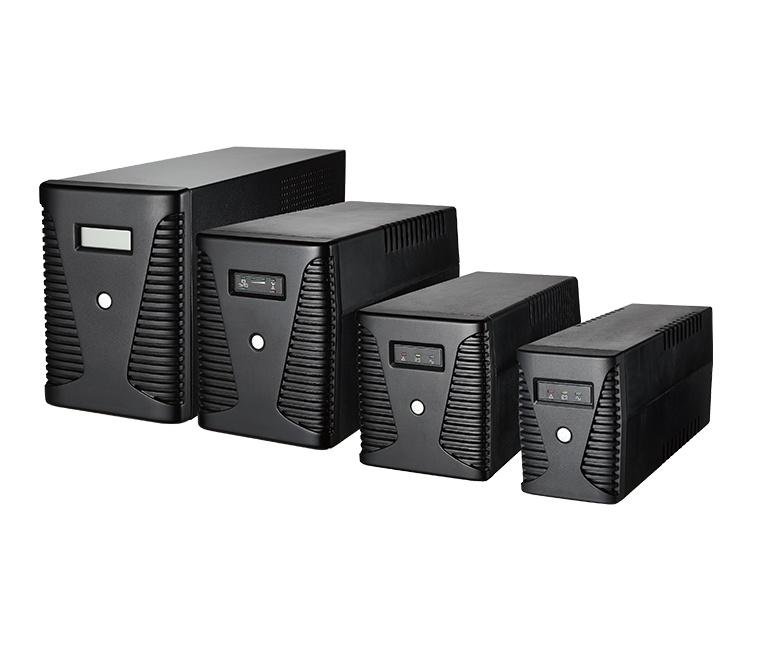
Every uninterruptible power supply depends on its battery bank—the energy reservoir that supplies instantaneous power when the main electrical feed fails. Unlike generators, which need time to start and warm up, batteries deliver power with virtually no delay, typically bridging the gap within milliseconds of a grid disturbance.
UPS systems fulfill three core functions:
- Backup power: Keeping critical loads running during outages until utility service is restored or generators come online.
- Power conditioning: Smoothing out voltage dips, spikes, and electrical noise to protect sensitive equipment.
- Bridge power: Ensuring a seamless handoff between the grid and backup generation without interrupting the load.
The battery bank directly governs two critical UPS specifications: runtime (how long the system can sustain the load) and power capacity (the maximum load the system can support).
Under normal conditions, the UPS draws power from the utility while simultaneously keeping its battery bank at full charge through a built-in charger. When the grid voltage falls below acceptable levels or fails completely, the UPS switches instantly to battery power, converting the DC battery voltage into clean AC for the connected equipment.
Transfer time varies according to UPS topology:
- Online double-conversion UPS: Zero transfer time because the load is always supplied via the inverter. Upon grid failure, the battery takes over from the rectifier seamlessly.
- Line-interactive UPS: Transfer times between 2 and 10 milliseconds, suitable for most commercial uses.
- Standby/offline UPS: Transfer times of 10 to 25 milliseconds, adequate for less sensitive equipment.
For mission-critical environments such as data centers and healthcare facilities, online double-conversion UPS units with correctly sized battery banks are the standard requirement.
Valve-regulated lead-acid batteries have been the workhorse UPS battery technology for decades. These are sealed, maintenance-free units that immobilize the sulfuric acid electrolyte using absorbent glass mat (AGM) or gel.
Key characteristics of VRLA UPS batteries:
- Nominal voltage: 2V, 6V, or 12V per unit
- Typical capacity: 5Ah to over 200Ah for UPS-grade units
- Service life: 3 to 5 years under typical conditions; 7 to 10 years for premium long-life models at 25°C
- Upfront cost: Lowest initial capital cost per kilowatt-hour
- Maintenance: Minimal—no watering needed, but periodic testing and scheduled replacement are required
VRLA batteries are well understood, widely available, and compatible with nearly all legacy UPS systems. Their chief drawbacks are relatively short service life, poor high-temperature tolerance, and substantial weight.
Lithium-ion UPS battery solutions have seen rapid adoption recently, driven by falling costs and strong performance advantages. Most lithium UPS systems employ lithium iron phosphate (LFP) chemistry, chosen for its excellent safety profile and long cycle life.
Key advantages of lithium-ion UPS batteries:
- Service life: 10 to 15 years or more—roughly two to three times longer than VRLA
- Energy density: Two to three times higher, cutting footprint and weight by 50 to 70 percent
- Cycle life: Thousands of deep cycles with minimal capacity fade
- Temperature tolerance: Better operation in warmer settings, lowering cooling demands
- Depth of discharge: Can routinely run at 90 percent or more DOD without accelerated aging
The main obstacle remains higher upfront cost—typically two to three times that of equivalent VRLA systems. However, longer life and reduced maintenance often yield a lower total cost of ownership over the complete lifecycle.
| Factor | VRLA (Lead-Acid) | Lithium-Ion (LFP) |
| Upfront cost | Low | High (2–3x VRLA) |
| Service life | 3–7 years | 10–15 years |
| Energy density | Lower | 2–3x higher |
| Weight | Heavy | 50–70% lighter |
| Cycle life | 200–500 full cycles | 3,000–6,000+ cycles |
| Optimal temperature | 20–25°C | 20–30°C (more forgiving) |
| Footprint | Larger | Much smaller |
| TCO (10-year horizon) | Higher | Lower |
For short-cycle replacements and budget-limited projects, VRLA remains the default option. For new installations, data center deployments, and applications where floor space is at a premium, lithium-ion UPS battery systems are increasingly the preferred choice.
UPS systems are classified by their input/output voltage configuration, which directly affects battery bank design:
- Single-phase UPS systems (typically 1kVA to 20kVA) serve small server rooms, network closets, and individual equipment racks. Their battery banks use lower-voltage strings—often 48V to 192V DC—and are usually integrated within the UPS cabinet or supplied as external battery modules.
- Three-phase UPS systems (from 10kVA up to multi-MVA) power entire data centers, manufacturing plants, and hospital campuses. These systems operate at much higher battery voltages—commonly 384V, 480V, or 540V DC—requiring many more battery cells in series. Three-phase UPS battery banks are normally housed in dedicated battery rooms or outdoor enclosures.
UPS battery banks are built by connecting battery units in series to achieve the required DC bus voltage, with parallel strings added to increase capacity and runtime.
For reliability, critical UPS systems often employ N+1 redundant battery strings: if one string fails or is taken offline for maintenance, the remaining strings continue to support the full load. Top-tier data centers may implement 2N redundancy—two fully independent battery systems feeding separate UPS buses.
String design must consider:
- End-of-discharge voltage at the minimum state of charge
- Voltage drop across cabling and protection devices
- Battery aging and capacity fade over the service life
- Temperature derating factors
Proper string design guarantees the UPS maintains rated output voltage throughout the entire discharge cycle, even under end-of-life battery conditions.
Sizing a UPS battery bank starts with two inputs: the load power (in kW or kVA) and the required backup runtime (in minutes or hours).
Typical runtime targets by application:
- IT/Server rooms: 5 to 15 minutes (enough for generator startup)
- Data centers: 15 to 30 minutes at full load
- Healthcare / life safety: 60 to 120 minutes or longer
- Industrial processes: Varies widely based on shutdown procedures
Battery capacity is estimated using the formula:
Required battery capacity (Ah) = (Load power × Runtime) / (DC bus voltage × Efficiency × DOD)
In practice, integrators rely on manufacturer discharge curves and sizing software rather than simple formulas, as battery capacity changes significantly with discharge rate, temperature, and age. A safety margin of 15 to 25 percent is typically added to account for degradation over the battery’s service life.
The most fundamental specification is runtime at rated load. It is important to note that UPS battery runtime is nonlinear—discharging at higher rates yields less total capacity than the nameplate rating implies. A battery rated at 100Ah at the 10-hour rate might deliver only 70Ah when discharged over 30 minutes.
When specifying batteries, always verify runtime at the actual discharge rate the UPS will experience, not just the nameplate capacity. Reputable manufacturers supply detailed discharge curves for various rates and temperatures.
Temperature is the single most influential factor affecting UPS battery life. VRLA batteries are rated at 25°C (77°F), and every 8 to 10°C rise above that roughly halves service life. For lithium-ion batteries, the effect is less dramatic but still noteworthy.
Battery rooms should be climate-controlled to hold temperatures steady within the manufacturer’s recommended range. Poor ventilation, direct sunlight, or proximity to heat-producing equipment can drastically shorten battery life and raise the risk of failure.
Humidity also matters—extremely dry air can dry out seal components, while high humidity encourages corrosion on terminals and connections.
All UPS batteries need periodic maintenance, though the extent varies considerably by chemistry:
VRLA batteries require:
- Quarterly visual inspections and voltage readings
- Annual or semiannual load testing
- Regular checks of terminal torque
- Replacement on a fixed schedule (typically every 3–5 years)
Lithium-ion UPS batteries require:
- Minimal physical inspection (the BMS monitors cell health continuously)
- Periodic firmware updates for the BMS
- Less frequent replacement (10–15 year intervals)
For facilities with limited on-site electrical staff, the reduced maintenance burden of lithium-ion systems is often a decisive factor.
UPS battery service life hinges on chemistry, operating conditions, and cycling frequency.
Under ideal conditions (25°C ambient, minimal cycling, float charging):
- Standard VRLA: 3 to 5 years
- Premium long-life VRLA: 7 to 10 years
- Lithium-ion (LFP): 10 to 15+ years
In real-world installations with elevated temperatures and occasional discharge cycles, actual service life is often 20 to 40 percent below the manufacturer’s rated figure. This is why conservative sizing and proper environmental control are so important.
Batteries do not fail without warning—they degrade gradually. Common warning signs include:
- Increased internal resistance (measured through conductance testing)
- Reduced actual runtime relative to rated capacity
- Swollen or bulging battery cases (VRLA)
- Elevated surface temperatures during charging
- Consistently low voltage readings on individual units
Regular battery testing—either through full discharge tests or conductance-based impedance testing—is essential for identifying aging batteries before they fail. Critical facilities typically perform annual capacity tests and quarterly conductance monitoring.
Proactive UPS battery replacement planning averts unexpected failures and avoids the cost of emergency replacement. Best practices include:
- Age-based replacement schedule: Replace batteries at 80 percent of their rated service life, not at the point of failure.
- Batch replacement: Replace all batteries in a string simultaneously to avoid mixing new and aged units.
- Spare inventory: Keep critical spare batteries on hand for emergency swap-outs.
- Disposal planning: Arrange for proper recycling—lead-acid and lithium batteries are both recyclable but require different processing.
For large installations, phased replacement programs can spread capital expenditure across multiple budget cycles while maintaining system reliability.
The UPS battery is a critical but often overlooked element of business continuity infrastructure. Whether specifying a new system or planning a battery replacement, understanding the tradeoffs between VRLA and lithium-ion chemistries, proper sizing methods, and maintenance requirements is essential for system integrators and procurement professionals.
As lithium-ion costs continue to fall and UPS platforms increasingly support both chemistries natively, the industry is undergoing a gradual but unmistakable shift toward lithium solutions. However, VRLA batteries remain a cost-effective and reliable choice for many applications, especially shorter-duration backup and retrofit scenarios. The optimal choice always depends on the specific application requirements, operating environment, and a total cost of ownership analysis over the full system lifecycle.
Standard VRLA UPS batteries last 3 to 5 years under typical operating conditions, while premium long-life models can reach 7 to 10 years in controlled environments. Lithium-ion UPS batteries generally last 10 to 15 years or more. Actual lifespan depends heavily on ambient temperature, discharge frequency, depth of discharge, and charging voltage quality. Operating consistently above 25°C significantly accelerates degradation for all chemistries.
Yes, but it requires more than a simple battery swap. Lithium-ion batteries operate at different voltage profiles and need a compatible battery management system (BMS). The UPS charger must support lithium-ion charging profiles, and the UPS itself may need a firmware update or hardware modification. Many modern UPS platforms offer both lead-acid and lithium options from the factory, but retrofitting older units demands careful engineering assessment and manufacturer approval.
Begin with your load power (kW) and required runtime (minutes). Determine the UPS DC bus voltage, then use the battery manufacturer’s discharge curves to find the needed capacity at your specific discharge rate. Divide the total required capacity by the per-unit capacity to find the number of parallel strings, and divide the target voltage by the per-unit voltage to determine the series count per string. Always add a 15–25 percent degradation margin. Most UPS manufacturers offer free sizing calculators or engineering support for this task.
UPS batteries are designed specifically for float-charge standby service—sitting fully charged for long periods and delivering high current for relatively short durations during outages. They are optimized for long shelf life and reliable high-rate discharge, not deep cycling duty. General-purpose deep-cycle batteries (such as those used in solar systems or forklifts) are built for frequent deep discharge and would perform poorly in UPS float service, with shorter life and unreliable high-rate output.
Industry best practice recommends quarterly visual inspections and conductance/impedance testing for VRLA battery systems, plus annual capacity load testing for critical applications. Lithium-ion systems need less frequent physical testing since the BMS continuously monitors cell health, but annual system-level verification is still advised. Facilities governed by regulatory requirements (healthcare, data center certifications, financial services) may face more frequent testing mandates.
Welcome to contact us:
Inquire more product details from the: Lithium Ion Battery Suppliers
WhatsApp/Wechat/Mobile: +86 13326321310
Email: info@battery-energy-storage-system.com
Website: www.battery-energy-storage-system.com
Ready to power your energy systems with the best in the industry?
Contact us today to get the latest pricing and discuss your needs with our team!
Next:5 Customized Designs of 12V Lithium Battery Packs for Surveillance Cameras
Previous:3.3kW On Board Battery Chargers Shipped to Caribbean